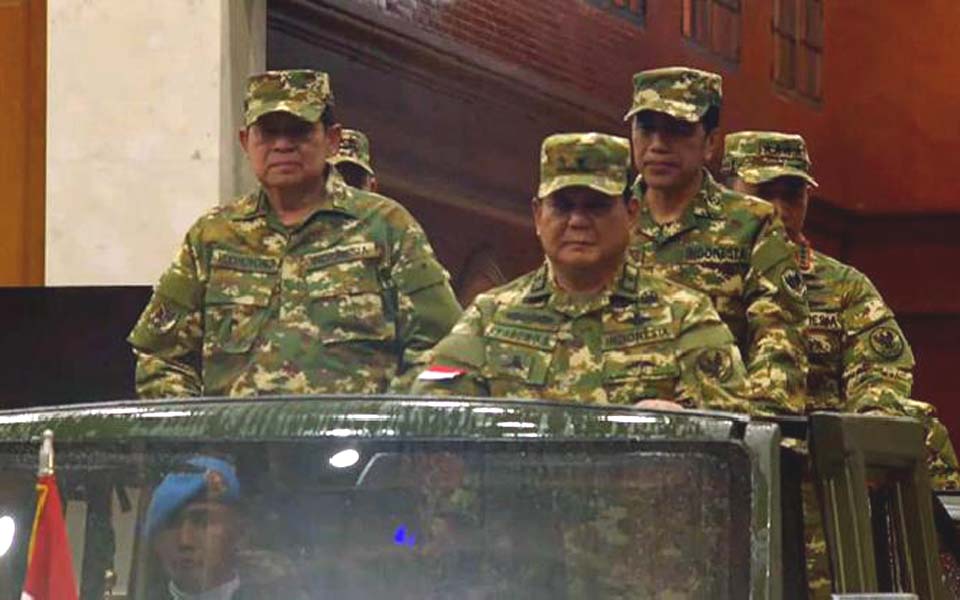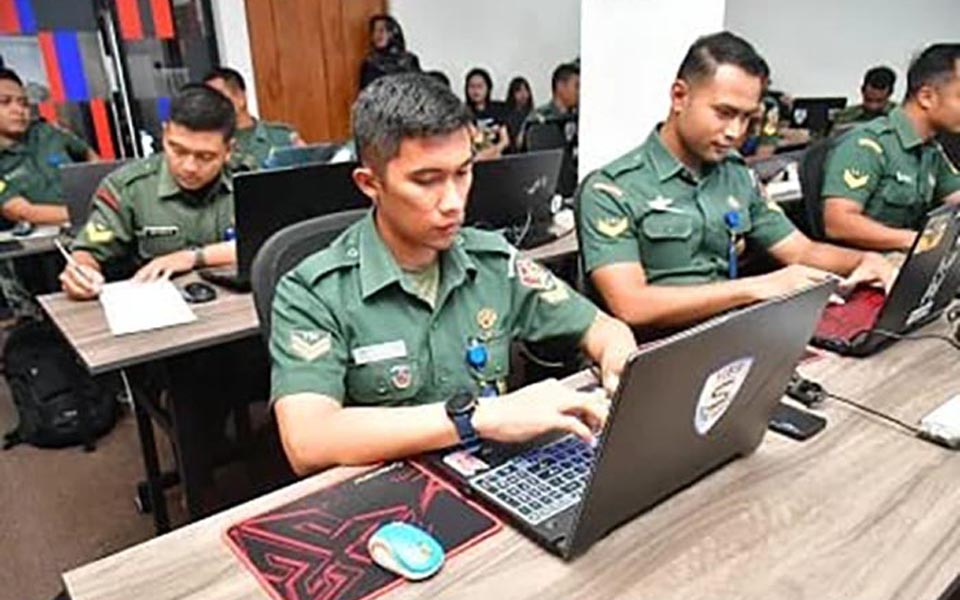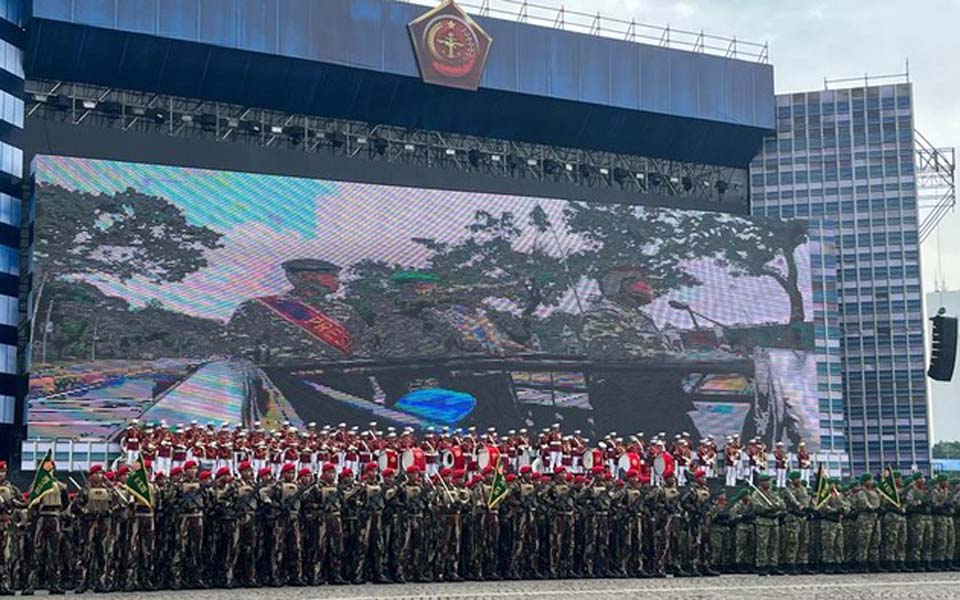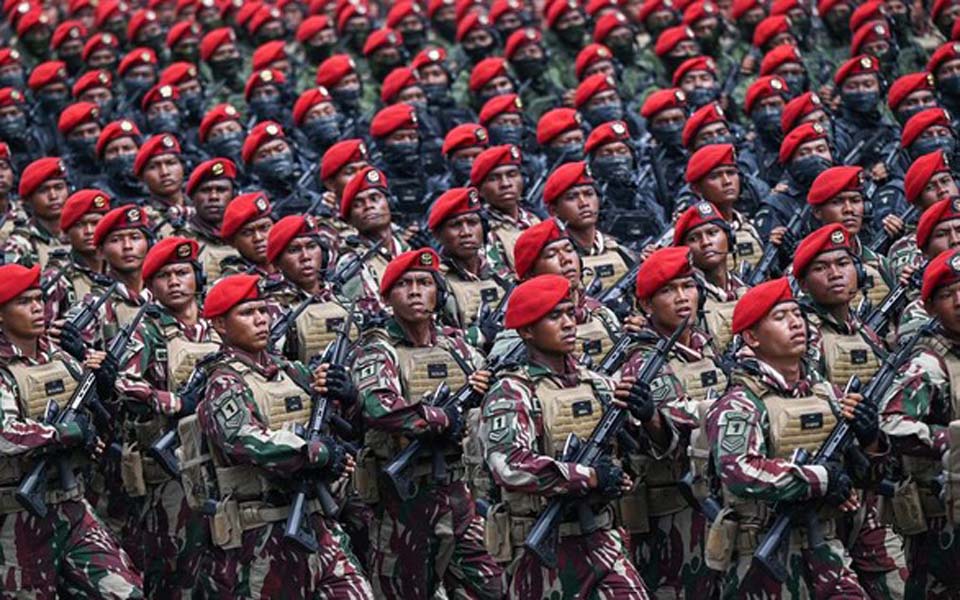


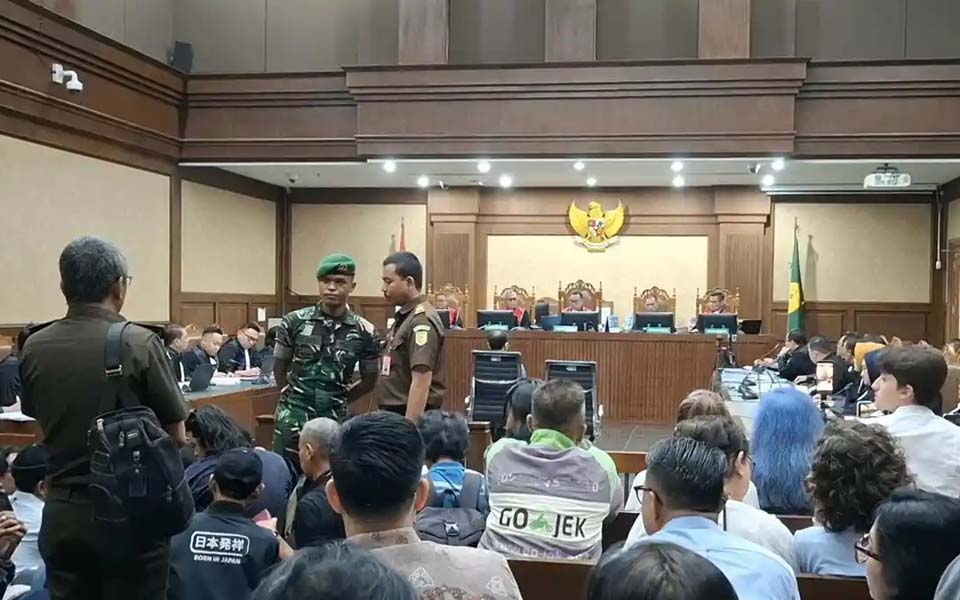
Reza Deni, Jakarta – The presence of Indonesian Military (TNI) personnel at the corruption trial of former Minister of Education, Culture, Research and Technology Nadiem Makarim at the Jakarta Corruption Court has drawn strong criticism from Amnesty International Indonesia.
Amnesty International Indonesia Executive Director Usman Hamid emphasised that the TNI is not a security unit for the prosecutor's office, let alone a public courtroom.
"The TNI is a state instrument in the defence sector, not a security unit in a courtroom. The TNI is not a prosecutor's security guard", said Hamid in a message received on Tuesday January 6.
According to Hamid, the court is a judicial authority that must be independent and free from interference, including from elements of the military.
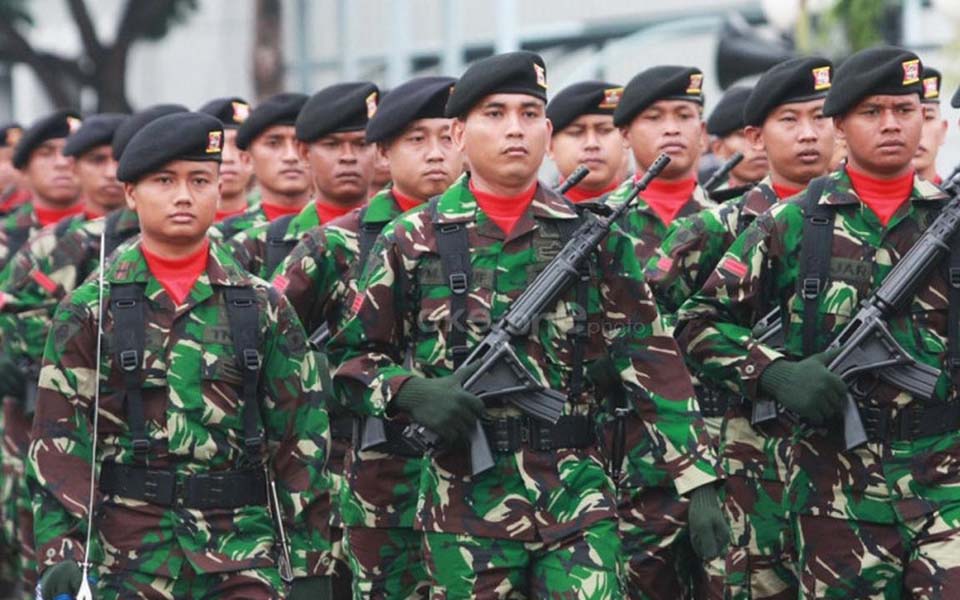
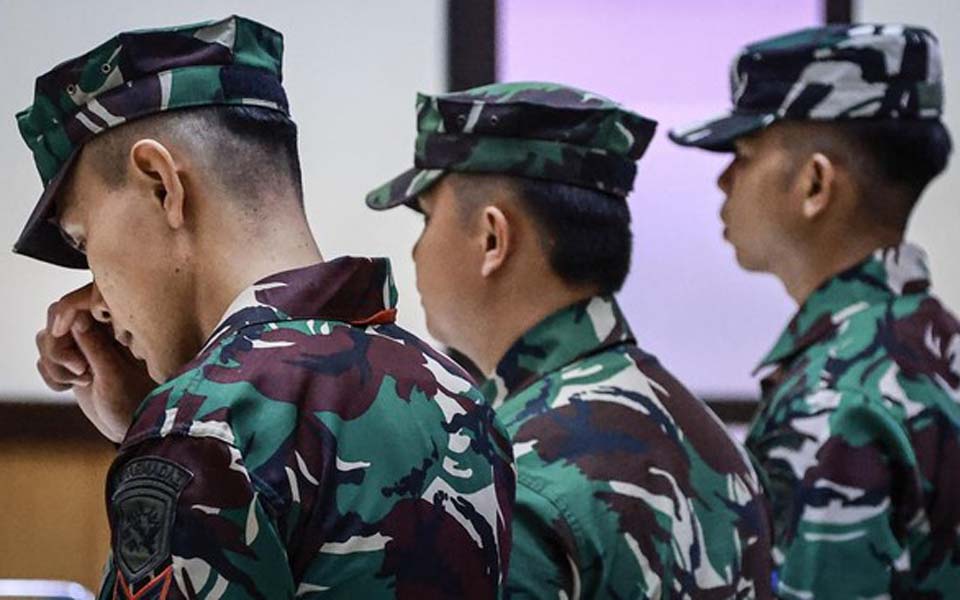
He believes the presence of TNI personnel in combat uniform actually creates an atmosphere of intimidation.
"A trial free from pressure is a prerequisite for a fair trial. The presence of military personnel in combat uniforms puts psychological pressure on judges, witnesses, defendants and legal counsel", he said.
Hamid said that the presence of the TNI soldiers violated regulations and that they appreciate the presiding justice's decision to ask them to leave the courtroom.
"Not only did they obstruct the view of visitors and journalists, but they also violated the law. The presiding judge was right to ask them to step back", he said.
Hamid also urged the prosecutor's office to stop using militaristic security measures in court. Using the pretext of the Memorandum of Understanding (MoU) between the prosecutor's office and the TNI is irrelevant in the courtroom.
"The MoU is not binding on the court. The prosecutor's office must understand the TNI's constitutional function", Hamid said.
Hamid also touched on the prosecutor's office's reluctance to use National Police (Polri) for security, which according to Hamid reflects political overtones in the handling of the case and demonstrates a latent conflict between the prosecutor's office and the National Police.
Furthermore, Amnesty considers this incident contradictory to the President's stated commitment not to revive militarism.
"The reality in the Corruption Court and the expanding role of the military in the bureaucracy actually normalises militarism within the civilian administration", said Hamid.
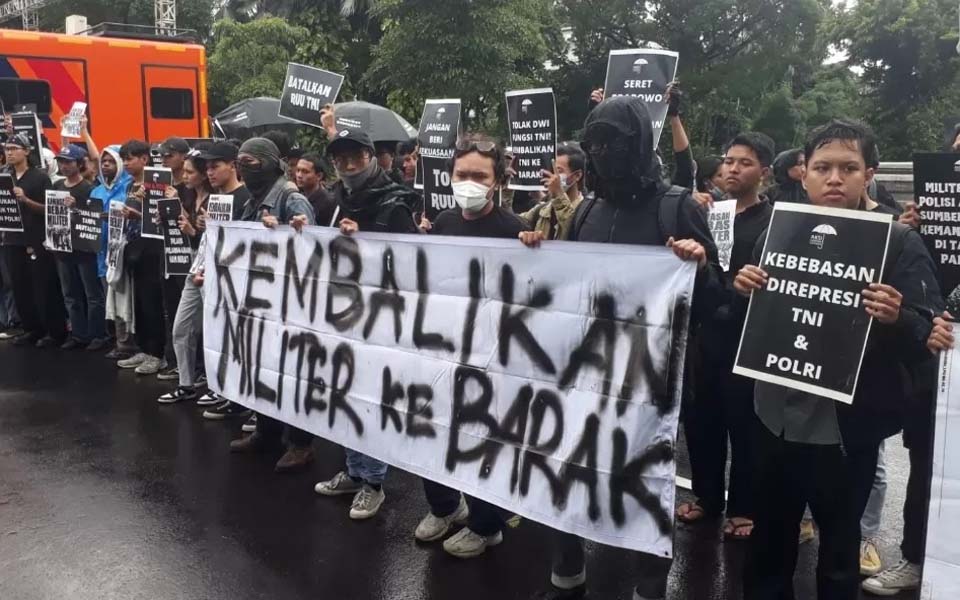
In order to maintain judicial integrity and civilian supremacy, Amnesty is urging an end to the militarisation of courtrooms.
"It is enough for the TNI to guard trials in military courts. The military must return to its constitutional function", he concluded.
AGO's response
Earlier, the Attorney General's Office (AGO) spoke out about the involvement of TNI members in providing security for the first trial of the Chromebook procurement corruption case involving Nadiem Makarim at the Jakarta Corruption Court on Monday January 5.
Riono Budisantoso, the director of prosecution at the Attorney General's Office's Special Crimes Division, stated that the AGO's involvement of the TNI was actually carried out to secure several activities that were deemed risky.
"As far as I know, security by the TNI has been in place for some time, in this case an assessment of the risks indicated the need for it", Budisantoso said when sought for confirmation by Tribunnews.com on Monday.
Related to this, Budisantoso also stated that the involvement of the TNI was not solely to secure the trial involving certain figures, including Makarim.
He explained that security involving the TNI was also implemented for all prosecutorial activities, particularly those related to special crimes (Pidsus).
"Security involving TNI personnel is implemented for all prosecutorial activities, in this case the Attorney General's Office Pidsus Division as long as it is deemed necessary", he said.
"Not just for trials, but also for other activities in the framework of carrying out the duties and functions of the prosecutor's office", he added.
The presence of TNI personnel at Makarim's trial was revealed after presiding judge Purwanto S. Abdullah asked the TNI personnel on standby in the courtroom to move.
The trial on Monday was scheduled to include the reading of the defendant Makarim's exception to the charges.
According to Tribunnews.com's observations in the Hatta Ali courtroom at around 2 pm, more than one TNI member was on guard at the trial.
The TNI members on duty was seen standing in the middle of the courtroom, or more precisely at the small entrance that forms part of the wooden fence separating the courtroom from the visitor's area.
On the other hand, the courtroom was extremely crowded. In fact, some media crews and other visitors had to sit on the floor because the visitor's seats were full.
Then, at the very back of the visitor seats were rows of cameras operated by journalists from several television stations covering the trial.
Concerned over the potential disruption to the journalists' coverage and the obstruction of the visitor's view, Abdullah asked the TNI members in the courtroom to move back behind the visitor seats.
"Before we continue, these TNI colleges, where are they from? Maybe you can take a position, don't stand there Pak [Sir], because it's obstructing the cameras. You can accommodate it Pak, you can move back. Later when (the trial) closes, then you can come forward. Because it's also disturbing those behind you, you can accommodate this Pak", said Abdullah.
"Can you move back even further Pak, move back. When the trial closes, if you want to come in, please do. So as not to disturb your media colleagues, yes. Please continue", Abdullah concluded.
Makarim's trial in the Chromebook laptop procurement corruption case has already been postponed twice. This was due to Makarim's health which requires him to undergo post-operative recovery.
[Translated by James Balowski. The original title of the article was "Amnesty International Soroti Tentara di Sidang Nadiem Makarim: TNI Bukan Satpam Jaksa".]