

Haryanti Puspa Sari, Jessi Carina, Jakarta – The Commission for Missing Persons and Victims of Violence (Kontras) is questioning Indonesia's suitability for the presidency of the United Nations (UN) Human Rights Council.
This is because according to Kontras, this position enlarges the spotlight on Indonesia's selective silence on various human rights issues, both domestically and in humanitarian crises at the regional and global level.
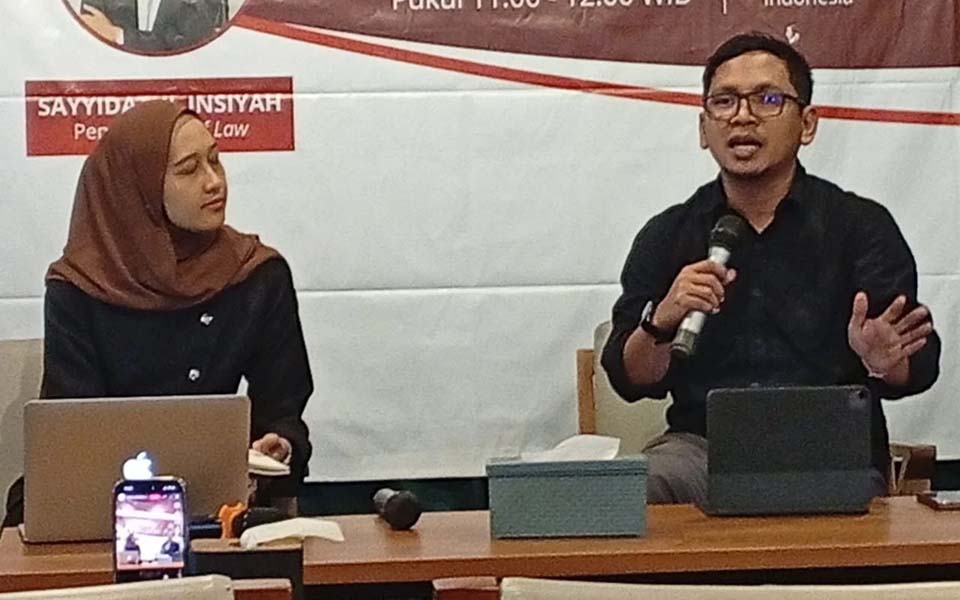
"This situation gives rise to serious doubts about Indonesia's suitability as the president of the UN Human Rights Council", said Kontras Coordinator Dimas Bagus Arya in a press release on Thursday January 8.
Arya stated that the UN Human Rights Council, which is a forum that normatively places dialogue and participation at the heart of its work, is instead led by a country that frequently ignores public aspirations and criminalises expression and protest and erodes civil liberties.
In this context, he said, a fundamental question arises, has Indonesia demonstrated practices consistent with this mandate within its own country?
"Instead of facilitating dialogue, the practice of fulfilling demands for aspirations in Indonesia in fact tends to delegitimise critical public voices, leading to the erosion of civil liberties", he said.
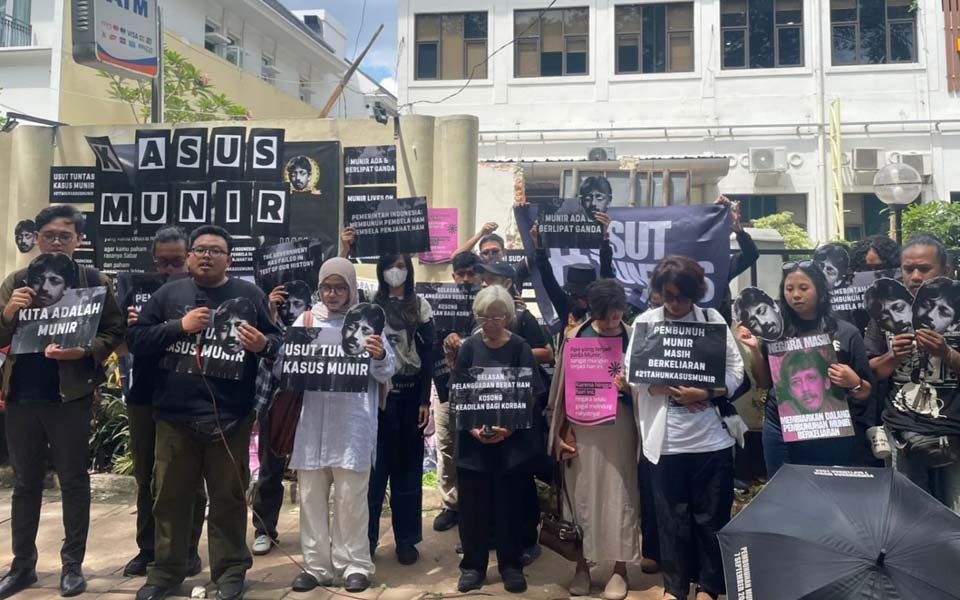
Arya said that regarding the state's role in protecting human rights defenders, the experience of these actors actually shows a pattern of criminalising civil society advocacy work.
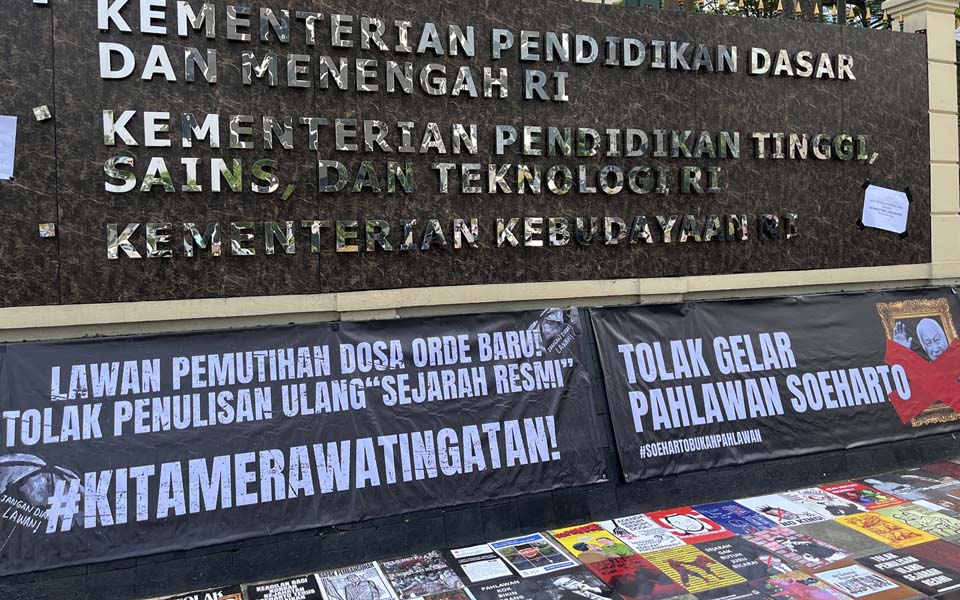
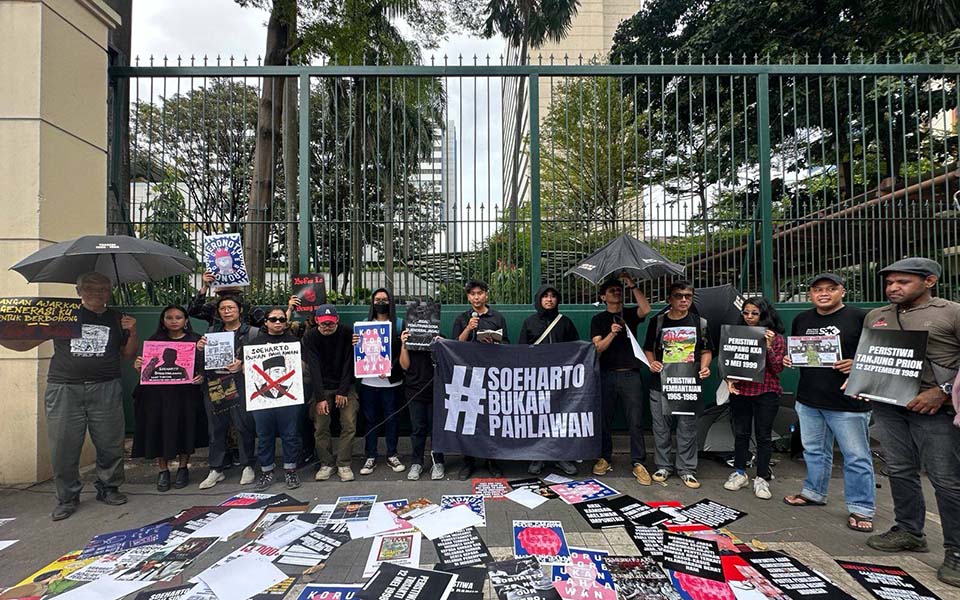
He said that the rejection of former president Suharto's designation as a national hero was met not with open dialogue but with ostracisation and stigmatisation.
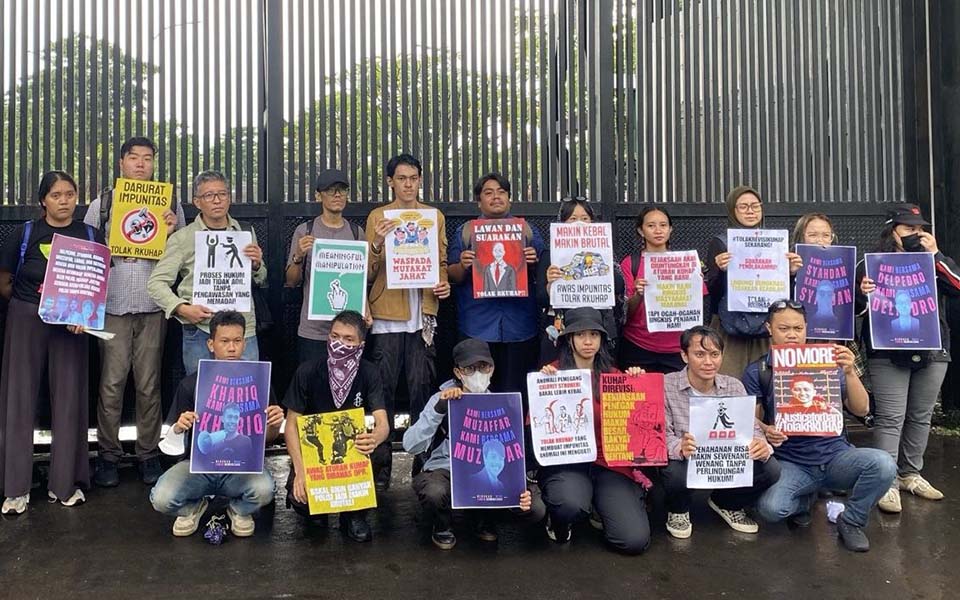
"A similar pattern was seen in the practice of red-tagging young people, activists and civil society groups who have long been advocates for social, economic and democratic issues", he said.
Arya also touched on the regression of Indonesia's human rights diplomacy on the Palestine issue, reflected in political signals that point to the blurring of the principle of non-recognition of Israel.
This began in May 2025, when President Prabowo Subianto openly declared the possibility of Indonesia recognising Israel if that entity recognised the existence of a Palestinian state.
He said this statement clearly contradicts the principle of non-recognition under international law, particularly after the International Court of Justice in July 2024 affirmed Israel's illegal occupation of Palestinian territory.
"As a result, the discourse on 'conditional recognition' in fact opened up space for the normalisation and impunity of Israeli crimes against humanity, while simultaneously eroding Indonesia's historical position as a consistent supporter of the Palestinian struggle", he said.
Conversely, Arya said that Indonesia's leadership of the UN Human Rights Council in 2026 should be a turning point.
Indonesia, he said, has an opportunity to prove that human rights leadership is not only about diplomatic prestige, but also about consistent values, the courage to speak out and the political will to prioritise human rights above narrow national interests.
"Without critical reflection and concrete action, the position of the UN Human Rights Council president will be nothing more than an empty symbol that provides no benefit to democratic life in this country", he said.
Earlier on Thursday, Indonesia officially became president of the UN Human Rights Council at a UN Human Rights Council Meeting in Geneva. This appointment coincided with the first organisational meeting of the UN Human Rights Council for 2026.
"The appointment process was the result of coordinated and ongoing diplomatic work by various parties under the coordination of the Ministry of Foreign Affairs of the Republic of Indonesia", stated the Ministry of Foreign Affairs (Kemlu) in a press release on Thursday.
The Ministry of Foreign Affairs stated that, based on the directions of the highest leadership, aside from coordinating all Indonesian representatives abroad, the Ministry of Foreign Affairs is also actively pursuing diplomatic engagement with various representatives of friendly countries in Jakarta.
Within this coordination framework, the Permanent Mission of the Republic of Indonesia in Geneva plays a primary role as Indonesia's vanguard at the UN Human Rights Council, with support from the Permanent Mission of the Republic of Indonesia in New York and contributions from other Indonesian representatives.
"All these efforts are implemented in an integrated manner through communication and diplomatic approaches which is structured, consistent and aligned with Indonesia's diplomatic practices in multilateral forums", the Ministry's statement continued.
The Ministry stated that the position of UN Human Rights Council president will be held by the Permanent Representative of the Republic of Indonesia to the UN in Geneva, Ambassador Sidharto Reza Suryodipuro.
In its capacity as president, Indonesia will lead all sessions and proceedings in the UN Human Rights Council throughout 2026 in an objective, inclusive and balanced manner, in accordance with the UN Human Rights Council's annual work program and human rights issues of common concern.
Foreign Affairs Minister Sugiono stated that Indonesia is committed to carrying out its presidency of the UN Human Rights Council impartially, objectively and transparently.
He said that Indonesia's presidency will prioritise trust-building, strengthening cross-regional dialogue and constructive engagement with all stakeholders.
This is Indonesia's first presidency of the UN Human Rights Council, as the UN Human Rights Council was only established in 2006 and the presidency follows a rotation cycle between regional groups.
"This trust is based on Indonesia's track record and consistent role in promoting and protecting human rights at the international level", stated the Foreign Affairs Ministry.
[Translated by James Balowski. The original title of the article was "KontraS Ragukan Kelayakan Indonesia Jadi Presiden Dewan HAM PBB".]