

Nawir Arsyad Akbar, Jakarta – The Indonesian Legal Aid Foundation (YLBHI) has warned that there should be no misuse of authority through the recently enacted Confiscation Law Related to Corruption and Other Crimes.
Because based on the experience of assistance provided by the YLBHI and its regional Legal Aid Foundations (LBH), criminal authority repeatedly intersects with the criminalisation of protests, the defence of indigenous communities and critical groups.
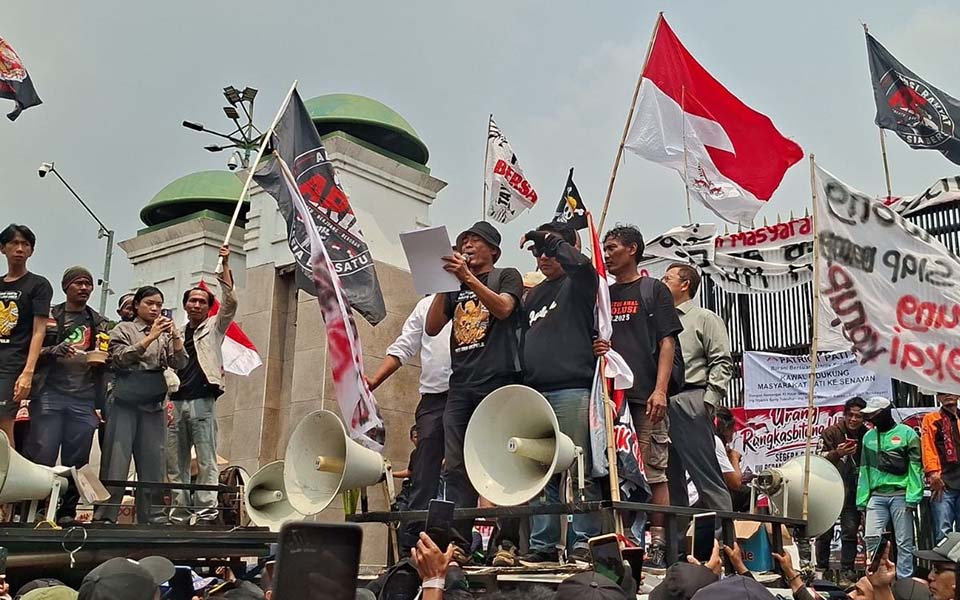
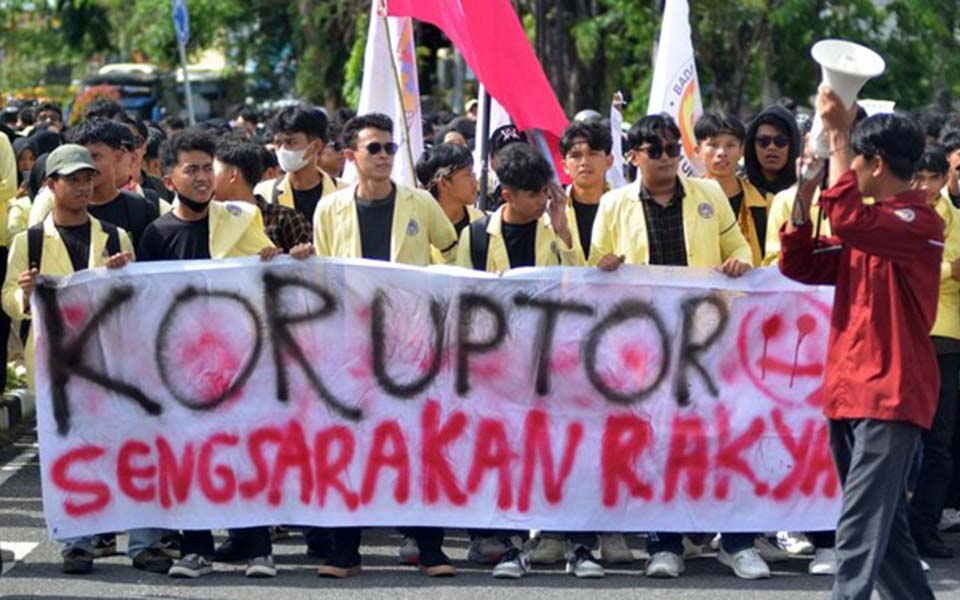
"The risk of misuse is not a hypothetical concern. The experience of LBH-YLBHI assistance shows that criminal authority has repeatedly intersected with the criminalisation of protests, agrarian conflicts, environmental struggles, defence of indigenous communities and critical groups", wrote the YLBHI in a press release on Friday November 20.
The YLBHI said that the of blocking accounts or confiscating assets could potentially constitute punishment before a court verdict if there was an abuse of authority.
For civil society organisations, trade unions, legal aid organisations, environmental defenders or victim communities, acts of blocking financial access is considered to be able to paralyse all activities.
"This risk is even more real because the definition of 'corporation' includes foundations, associations, cooperatives and unincorporated associations. The law must contain strict protections so that the asset confiscation regime does not become an instrument of retaliation, criminalisation or the silencing of human rights defenders, journalists, legal aid organisations, trade unions, indigenous peoples, environmental organisations and civil society", wrote the YLBHI.
The YLBHI emphasised that Indonesia does need a strong Asset Confiscation Law. However the strength of the law is not only measured by how quickly the state freezes accounts or how much property can be confiscated.
"The measure of the rule of law is whether the state is able to pursue wealth resulting from crime without creating new abuses. Confiscation of assets must stop perpetrators from enjoying the proceeds of crime, not become a new way to punish citizens before the basis for confiscation is declared legal", said the YLBHI.
DPR passes Asset Confiscation Law
As has been reported, the House of Representatives (DPR) officially passed the Draft Law on Confiscation of Assets Related to Corruption and Other Crimes into law on Thursday November 19.
Some of the scope regulated in the bill includes crimes from fraud to trafficking.
Apart from that, the bill also regulates the division of authority in taking action to confiscate assets, the protection for parties with good intentions, the return of assets to victims, monitoring mechanisms, prevention of abuse of authority and the application of technology.
The 10 main points regulated include:
1. Titles, principles and legal principles put forward in asset confiscation to ensure effectiveness, proportionality, accountability and protection of human rights.
2. The scope of criminal acts, types, value and criteria for confiscation of assets, including criminal acts of fraud or embezzlement that use information technology facilities and have an impact on society at large, such as fraudulent investments, trading, fraudulent shares where the number of victims is very large and are awaiting justice.
3. Confirmation that criminal threats remain in force for perpetrators of criminal acts of corruption and other criminal acts. Including the threat of the death penalty in accordance with statutory provisions.
4. Regulations regarding the clear division of authority in the procedural law for confiscation of assets without criminal charges, starting from tracing, terminating transactions, blocking, confiscation, submitting applications, examinations at court hearings, court decisions to the implementation of decisions.
5. The guarantee of protection for third parties who have good intentions while providing the burden of proof and sufficient opportunity.
6. The guarantee of optimal efforts to return assets to victims of direct crime and use them for the benefit of society at large.
7. The duties and authority for asset management related to criminal acts committed by competent bodies in order to manage assets professionally and accountably, starting from storage, security, maintenance, utilisation, sale to return or release.
8. The supervision of the implementation of asset confiscation mechanisms and asset management by an independent body.
9. The prevention of the abuse of power so that confiscation of assets is not merely used as a means to abuse authority by law enforcement officials.
10. The utilisation of technology and information systems through an asset management system that prioritises transparency and accountability.
[Translated by James Balowski. The original title of the article was "YLBHI Ingatkan Jangan Ada Penyalahgunaan Wewenang Lewat UU Perampasan Aset".]