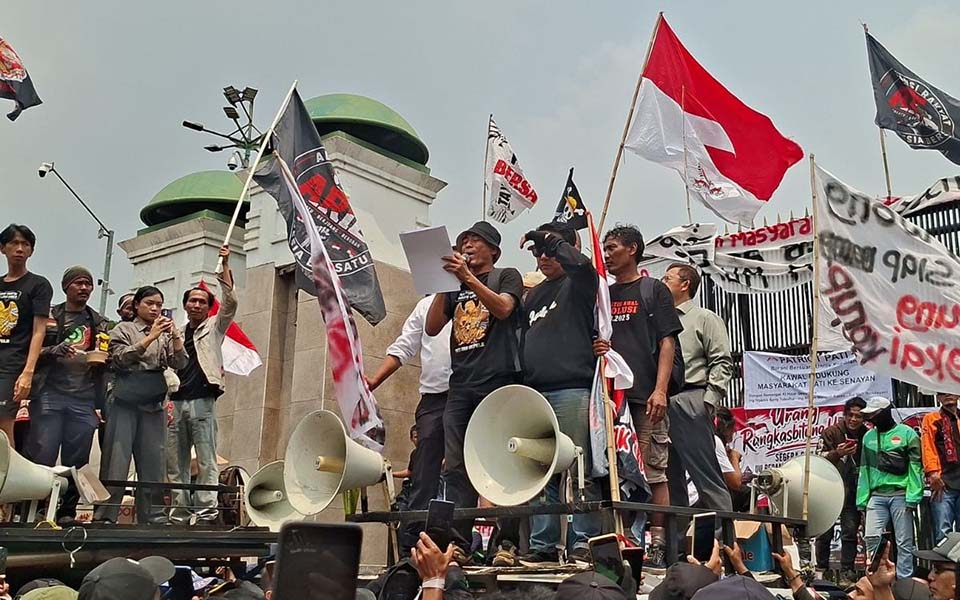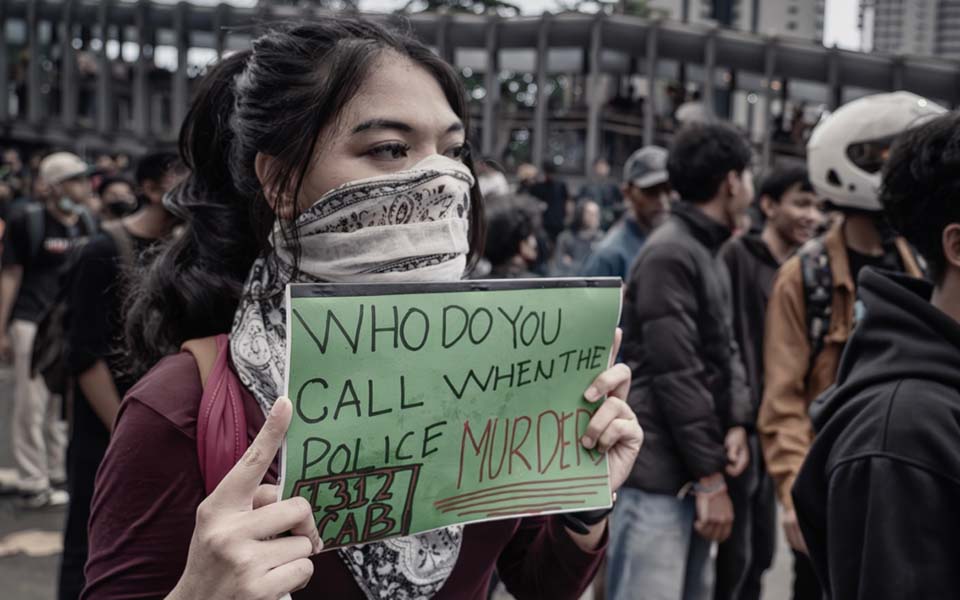


Jakarta – The Civil Society Coalition for Security Sector Reform condemns the involvement of the Indonesian Military (TNI) in securing the August 27 demonstrations in Jakarta. The coalition also wishes to highlight the police's approach that increasingly treats demonstrations as a security threat, rather than as an exercise in citizens' constitutional rights.
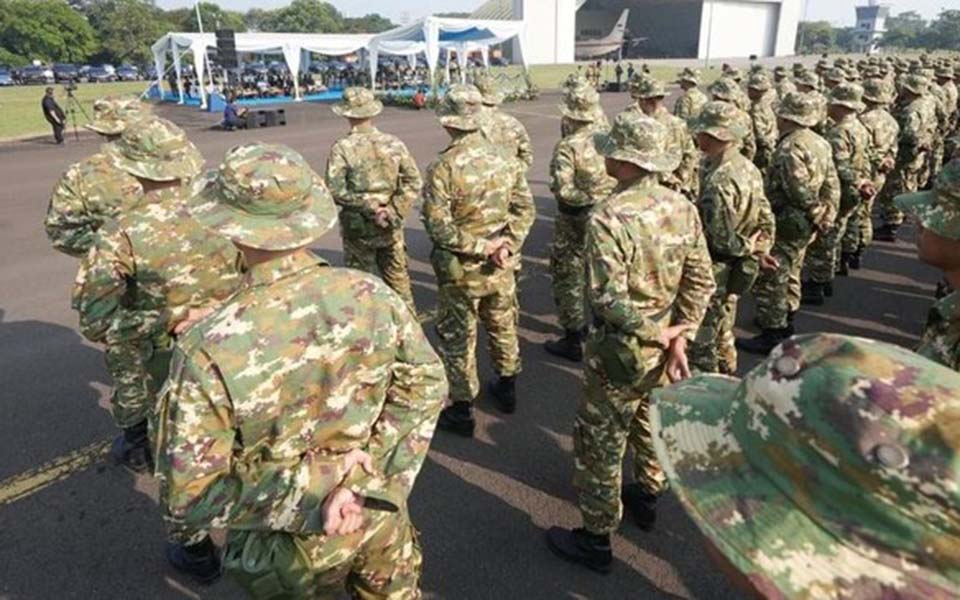
Coordinating Minister for Political, Legal and Security Affairs Djamari Chaniago stated that the Jakarta Regional Military Command (Kodam Jaya) assisted the police in securing the August 27 demonstrations. The TNI stated that this involvement was made at the request of the National Police (Polri).
The explanation that the TNI was simply "assisting the police" is insufficient. The public has the right to know who requested the deployment, the legal basis for it, how many TNI personnel were deployed, from which units, for how long they were deployed, what their duties were, under whose command they were and who was responsible for any violations. If the request came from the National Police, the police must also explain why the civil demonstration required military involvement. Are the police unable to protect the public's right to express their opinions, necessitating the involvement of the military? These questions must be clarified to the public.
The situation is increasingly worrying because before the demonstrations, the authorities had already detained dozens of people using an approach known as a "preventive strike". If there is evidence that someone is planning a crime, legal proceedings must be carried out individually based on the evidence. Suspicions against a few individuals should not be a reason to treat all demonstrators as a threat.
Not a defence threat
The 1945 Constitution clearly differentiates the functions of the TNI and Polri. The TNI is positioned as a state instrument in the defence sector, while the Polri maintains public order and security and enforces the law. This separation is an important outcome of reformasi – the political reform process that began in 1998 – after a long experience of military involvement in civilian life.
Demonstrators are not combatants. Critics are not a military threat. Roads are not battlefields. The Constitution guarantees freedom of association, assembly and expression. Law Number 9/1998 also stipulates that security for the expression of public opinion is the responsibility of the police.
The TNI Law does allow for the possibility of TNI assistance for the police, but it is not a blank cheque. Military involvement must still have a legal basis, clear boundaries of duties, a command structure and accountability. Without it, the deployment of the TNI opens the door to arbitrary actions and the evasion of accountability when violations occur.
Polri must be held accountable.
The problem isn't just the presence of the military. The way Polri manages demonstrations also deserves criticism. Security measures should focus on protecting participants, communicating, negotiating, de-escalating and minimising the use of force. However, monitoring protesters, pre-demonstration arrests, deploying large amounts of force and the term "preventive strikes" indicate the opposite trend: demonstrations are increasingly being perceived as a threat.
The police must not prevent political expression simply because they perceive it as potentially disruptive. Law enforcement must be based on concrete actions and evidence, not prejudice against those who intend to demonstrate.
If the police request TNI assistance, they must also be held accountable for that decision. Security sector reform is not simply limiting the TNI to its defence function. Reform also demands that Polri become a professional, accountable civilian institution that respects human rights and is capable of managing demonstrations without criminalisation, intimidation or excessive violence.
International standards are also clear. Indonesia has ratified the International Covenant on Civil and Political Rights (ICCPR), which guarantees the right to peaceful assembly. The United Nations Human Rights Committee, through General Comment No. 37, emphasises that the military should not be used to police demonstrations. Violence by individuals does not automatically negate the peaceful nature of the entire demonstration.
Likewise, preventive detention can only be justified in exceptional circumstances and based on concrete evidence. The term "preventive strike" should not be used to justify baseless arrests, the profiling of protesters or the criminalisation of political expression.
International embarrassment
This situation is all the more ironic because in 2026, Indonesia will hold the presidency of the UN Human Rights Council.
In Geneva, Indonesia speaks of its credibility in human rights, dialogue and the state's obligation to protect human rights. In Jakarta, demonstrating citizens are instead confronted by the military, pre-demonstration arrests and a "preventive strike" approach. This contradiction is shameful. Indonesia cannot speak to the world about protecting human rights while treating criticism of its own people as a security threat.
Don't normalise the security state
What happened on August 27 must not become the norm. If military deployment is considered appropriate because an action is deemed large or has the potential to disrupt public order, the same rationale can be used against labour demonstrations, student demonstrations, agrarian conflicts, rejection of government projects and various other forms of protest. If pre-protest arrests continue to be justified in the name of prevention, democratic space will be further narrowed.
Therefore, the Civil Society Coalition for Security Sector Reform urges:
1. The President to cease the direct involvement of the TNI in securing civil demonstrations, except in extraordinary circumstances that have a clear legal basis and meet the principles of necessity and proportionality;
2. The Coordinating Minister for Political, Legal and Security Affairs, the TNI commander, the National Police chief, the Jakarta military commander and the Jakarta Metropolitan Police chief to explain the legal basis, deployment orders, command structure, duties and regulations for the use of force in securing the August 27 demonstrations;
3. The National Police chief to evaluate the decision to request TNI involvement and stop the securitisation of demonstrations, including preventive arrests without legal basis, profiling, criminalisation and the excessive use of force;
4. The House of Representatives (DPR) to carry out its oversight function by summoning the Coordinating Minister for Political, Legal, and Security Affairs, the TNI commander and the National Police chief to explain the legality and necessity of military involvement;
5. The National Human Rights Commission (Komnas HAM) and the Indonesian Ombudsman to conduct independent monitoring and investigations into the TNI's involvement, pre-demonstration arrests, the use of force, access to legal aid and alleged violations of the rights of protesters.
Civil Society Coalition for Security Sector Reform
Indonesian Legal Aid Foundation (YLBHI), Indonesian Human Rights Watch (Imparsial), Commission for Missing Persons and Victims of Violence (Kontras), Amnesty International Indonesia (AII), the Human Rights Working Group (HRWG), the Indonesian Forum for the Environment (Walhi), the Centra Initiative, Raksha Initiatives, the Indonesia Risk Centre, Indonesian Corruption Watch (ICW), the Jakarta Legal Aid Foundation (LBH Jakarta), the Setara Institute for Peace and Democracy, the Legal Aid Foundation for the Press (LBH Pers), DeJure, the Community Legal Aid Institute (LBH Masyarakat), the Democratic Alliance for Papua (ALDP), Public Virtue, the Institute for Criminal Justice Reform (ICJR), the Institute for Public Research and Advocacy (ELSAM), the Indonesian Legal Aid and Human Rights Association (PBHI), the Jakarta Alliance of Independent Journalists (AJI Jakarta), the Women's Legal Aid Foundation for Justice (LBH APIK), the Indonesian Women's Coalition (KPI), the Medan Legal Aid Foundation (LBH Medan), the Indonesian Alliance of Independent Journalists (AJI Indonesia).
Contact persons:
- Muhammad Isnur (YLBHI)
- Ardi Manto Adiputra (Imparsial)
- Dimas Bagus Arya (Kontras)
- Usman Hamid (Amnesty International Indoneia)
- Al Araf (Centra Initiative)
[Translated by James Balowski. The original title of the article was "Hentikan Militerisasi, Demonstran Bukan Musuh Negara".]
Source: https://ylbhi.or.id/informasi/siaran-pers/hentikan-militerisasi-demonstran-bukan-musuh-negara/