

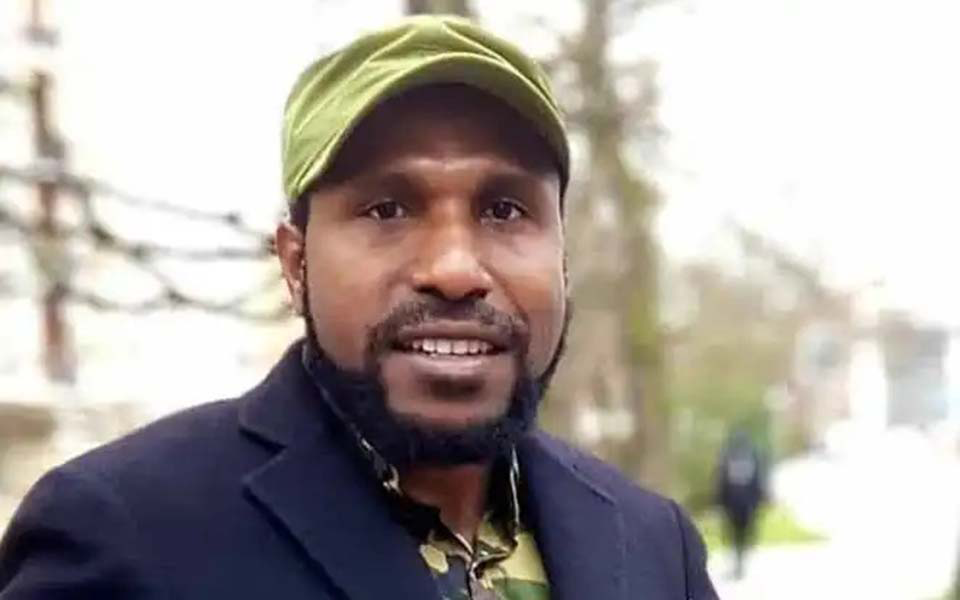
Yohanes Gobai, Jayapura – West Papua National Committee (KNPB) International Spokesperson Victor Yeimo has questioned the certainty of the planned visit by the UN High Commissioner for Human Rights to Papua following the Indonesian government's statement that the process is "on track".
Indonesia made the statement on September 4 in response to a decision by the Melanesian Spearhead Group (MSG), which once again urged Jakarta to facilitate a visit to Papua by the office of the UN High Commissioner for Human Rights (OHCHR).
In its latest decision, the MSG requested that the visit be facilitated before the conclusion of Indonesia's term as president of the UN Human Rights Council on December 31. The MSG also stated that Indonesia's status as an associate member of the MSG could be reviewed at the next MSG summit in 2027 if this step is not taken.
Yeimo said that the claim regarding the visit being "on track" fails to address the core issue that has long been raised by the Papuan people and Pacific nations.
"If Indonesia truly says that the UN High Commissioner's visit process is on track, then the question is simple: what is the date?", Yeimo said as quoted in a post on his Facebook account on Sunday September 6.
According to Yeimo, the visit to Papua by the UN Special Rapporteur on the Rights of Indigenous Peoples, Albert K. Barume, on July 4-5, 2025, cannot serve as a substitute for the visit by the UN High Commissioner for Human Rights as requested by Pacific nations.
Barume did indeed travel to Jayapura and meet directly with indigenous representatives and victims of various human rights issues. However, reports on the visit indicated that it was informal in nature.
"The difference lies in the mandate and status of the visit. Barume came as a special rapporteur on an informal and academic visit, whereas what the MSG requested was a visit by the UN High Commissioner for Human Rights", Yeimo said.
Therefore, according to Yeimo, Barume's visit actually demonstrates that direct access to Papua and meetings with the Papuan people are indeed possible.
He believes that the reasons cited by Jakarta such as geographical conditions, security concerns or technical issues should not continue to be used to delay a visit by the UN High Commissioner.
"Barume's visit actually proves that direct access to Papua and meetings with the Papuan people are possible", he said.
Yeimo said that if Indonesia has already allowed a UN official to visit and hear firsthand testimony from the Papuan people, then such access should be extended to other UN human rights mechanisms, in accordance with their respective mandates.
"Therefore, if issues of access have previously been linked to geographical conditions, security or technical limitations, the experience of that visit demonstrates that such obstacles cannot continue to serve as grounds for delaying a visit by the UN High Commissioner", he said.
Questioning Indonesia's UN Human Rights Council presidency
Yeimo also highlighted Indonesia's position as president of the UN Human Rights Council for 2026. This role is held by Ambassador Sidharto Reza Suryodipuro. The UN Human Rights Council has confirmed that Indonesia will lead the body in 2026.
According to Yeimo, this position does not automatically impose a legal obligation on Indonesia to accept every request for a visit. However, the role serves as a political and credibility test for Jakarta in demonstrating its commitment to international human rights mechanisms.
"How does Indonesia intend to lead the UN Human Rights Council if when international human rights mechanisms wish to observe the situation in Papua, Jakarta still hides behind the word 'process'?", he said.
He is asking on the Indonesian government to provide certainty regarding the date of the visit, grant access allowing the UN High Commissioner to meet directly with the community and to ensure space for the people of Papua to share their experiences without restrictions.
"If Indonesia is confident there is nothing to hide, open the door to Papua. Let the UN High Commissioner meet freely with indigenous people, victims, victims' families, churches, human rights defenders, journalists and civil society", said Yeimo.
According to Yeimo, the issue of the visit is not merely about diplomacy between Indonesia, the UN and Pacific countries, but it also concerns the right of the Papuan people to convey their situation directly to international mechanisms.
"We're not asking Jakarta to tell the world about Papua. We are asking Jakarta to let the world see Papua for itself", he said.
Yeimo emphasised that the deadline set by the MSG must be met with concrete steps, not just diplomatic statements.
Earlier, the MSG requested that an OHCHR visit to Papua be facilitated before December 31, 2026, to produce a report on human rights issues in Papua that could be considered at the 2027 MSG Summit. If this is not carried out, the MSG stated that Indonesia's status as an associate member of the MSG would be reviewed.
"The MSG has set a deadline of December 31, 2026. So the choice is clear: set the date, open access, carry out the visit", said Yeimo.
"For Papua, this is not just the issue of a single visit. It is about the right of the Papuan people to be heard and the right of the world to know the reality of Papua directly and independently", he continued.
He then asked Indonesia to prove its leadership in the UN Human Rights Council through concrete actions.
"Indonesia leads the UN Human Rights Council. Prove that leadership not through speeches, but by opening Papua to the world. Set the date. Open the door. Let the Papuan people speak", said Yeimo.
The Indonesian government's statement regarding the visit of Albert K. Barume was also challenged by senior Papuan journalist and founder of the media outlet Jubi, Victor Mambor.
Mambor considers the statement by the spokesperson for the Indonesian Embassy in New Zealand, which said that the government facilitated Barume's visit to Papua, to be inconsistent with the reality he witnessed firsthand.
"As you may already know, in July 2025, we facilitated the visit of the UN Special Rapporteur (on the Rights of Indigenous Peoples, Albert K. Barume) to Papua", Mambor said.
However, Mambor said that the claim was not in accordance with the facts based on his own experience covering Barume's visit.
Mambor revealed that he was one of the journalists who interviewed Barume regarding his visit to Papua. According to Mambor, the visit was an initiative undertaken by Barume himself in collaboration with Indonesian civil society groups, rather than a visit facilitated by the Indonesian government as claimed by the Embassy spokesperson.
"I was the one who interviewed Albert Barume about his visit to Papua", Mambor said.
According to Mambor, while in Papua, Barume did not issue any public statements regarding his reactions to or conclusions about the situation he encountered.
This was evident, Mambor noted, during the interview he conducted with Barume for the Jubi Editorial YouTube channel.
During the visit, Barume reportedly focused on listening, taking notes, observing and directly experiencing the various information and accounts conveyed to him while in Papua.
"He could only listen to and record what he heard, saw and experienced during his visit to Papua", said Mambor.
Therefore, Mambor emphasised that it would be incorrect to cite Barume's visit as evidence that the Indonesian government had facilitated a visit by a UN human rights mechanism to Papua.
"So, it is not true that Albert Barume's visit was facilitated by the Indonesian government", he asserted.
[Translated by James Balowski. The original title of the article was "Victor Yeimo Pertanyakan Kepastian Kunjungan Komisaris Tinggi PBB ke Papua".]