


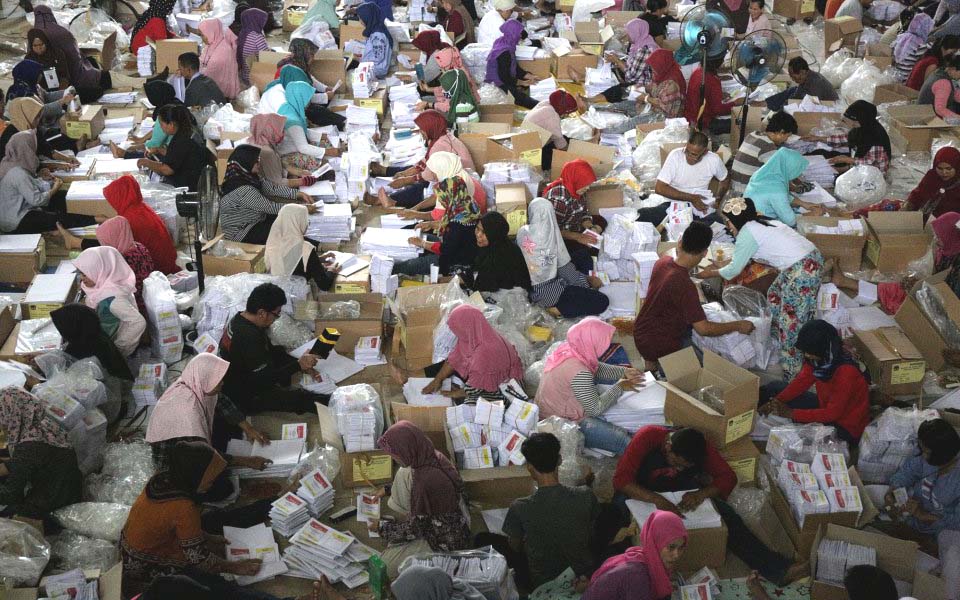
Dimas Jarot Bayu – A recent survey by Concept Indonesia (Konsepindo) shows that only four political parties will gain seats in the national parliament in the 2019 general election (pemilu).
Surveys & Opinion Polls
Displaying 81-90 of 127 Articles
March 2019
News/Indonesia
Kata Data – March 13, 2019

News/Indonesia
CNN Indonesia – March 6, 2019
Jakarta – The results of the latest LSI Denny JA survey show that support for the number 02 ticket in the 2019 presidential elections – Prabowo Subianto and running mate Sandiaga Uno – has increased among voters who want Indonesia to become like the Middle East or Saudi Arabia.
December 2018
News/Indonesia
Akurat.co – December 19, 2018
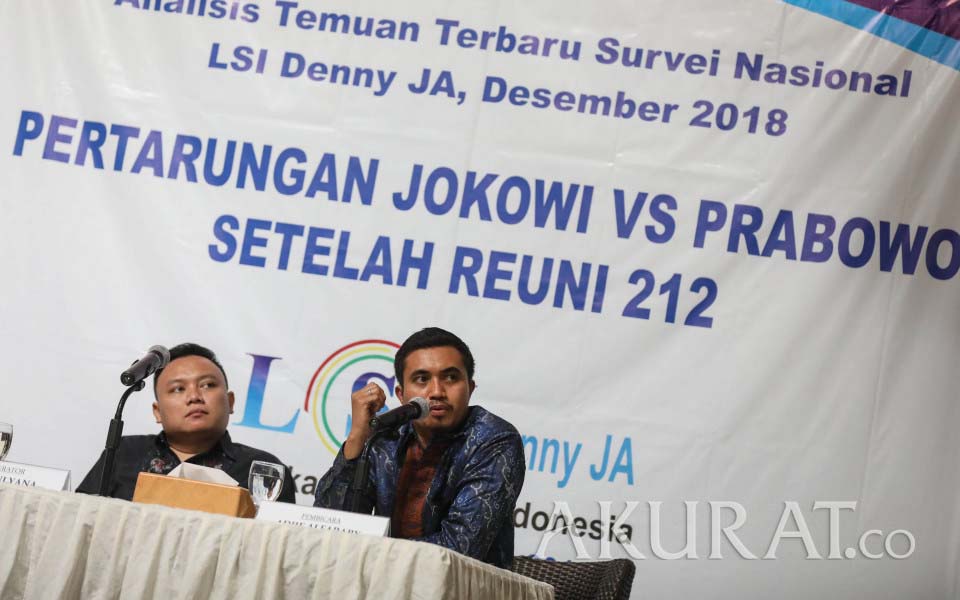
Muslimin – A survey by the Denny JA Indonesia Survey Circle (LSI) has concluded that Islamic ormas (mass organisations) are beginning to abandon the Prabowo Subianto and Sandiaga Uno presidential ticket following the 212 Reunion rally in Jakarta on December 2.
November 2018
News/Indonesia
Detik Finance – November 8, 2018
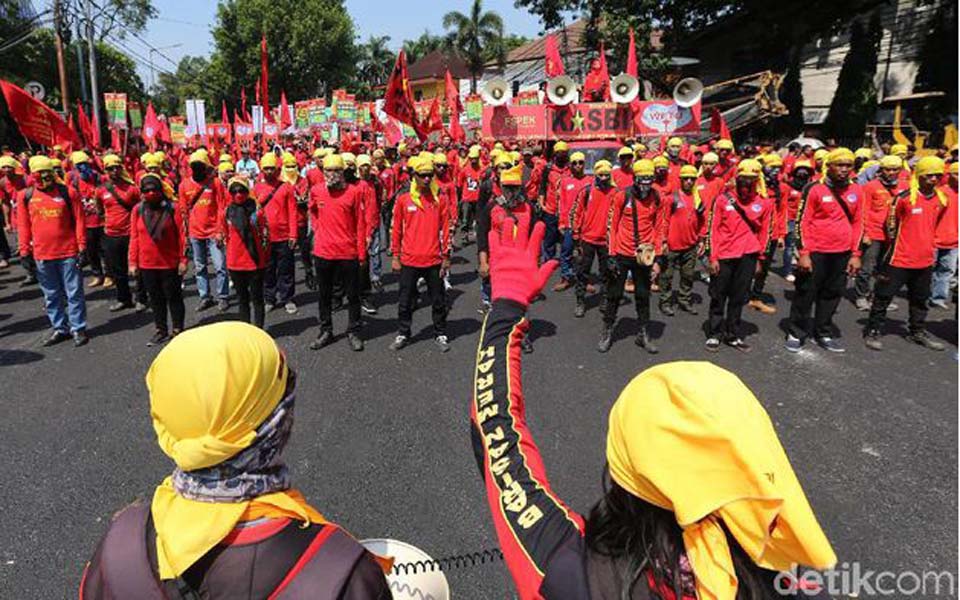
Danang Sugianto, Jakarta – Not long ago the Central Statistics Agency (BPS) released data on working conditions in Indonesia, which is particularly interesting in terms of comparing the working conditions of female and male workers.
September 2017
News/Indonesia
Kompas.com – September 29, 2017
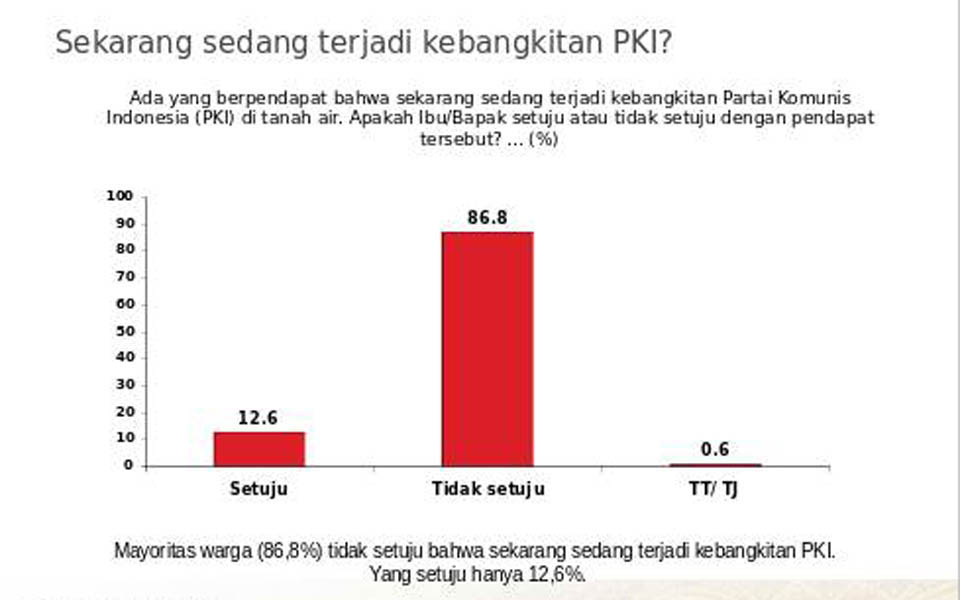
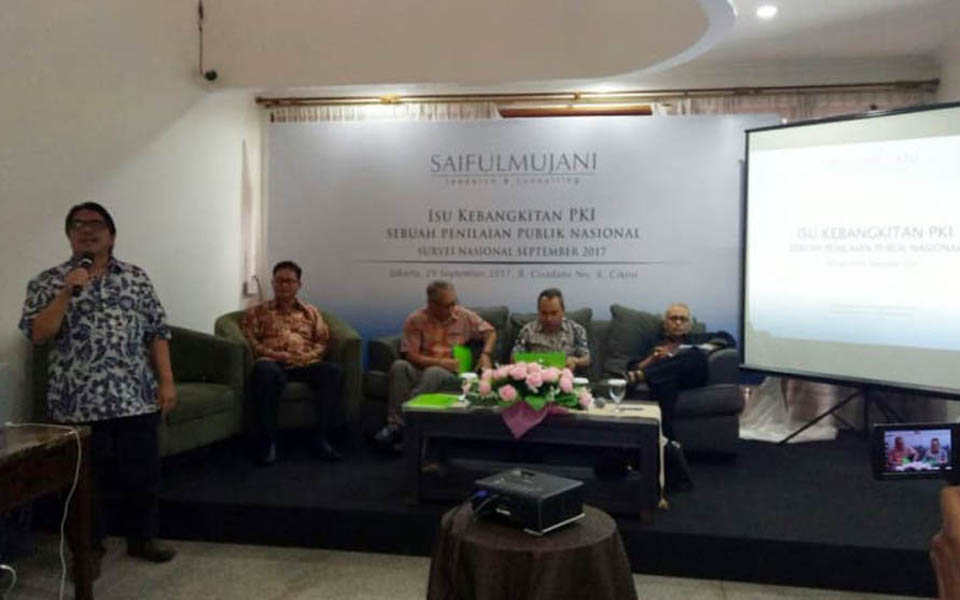
Estu Suryowati, Jakarta – A national public survey by Saiful Mujani Research and Consulting (SMRC) shows that the majority of people do not believe that there is a revival of banned Indonesian Communist Party (PKI) in Indonesia.
SMRC researcher Sirojudin Abbas said that this view is held by 86.8 of respondents in the survey.
News/Indonesia
Tribune – September 29, 2017
Warta Kota, Menteng – A survey by Saiful Mujani Research and Consulting (SMRC) shows that 86.8 percent of people do not believe that there is a revival of the banned Indonesian Communist Party (PKI).
February 2012
News/Indonesia
Kompas - February 6, 2012
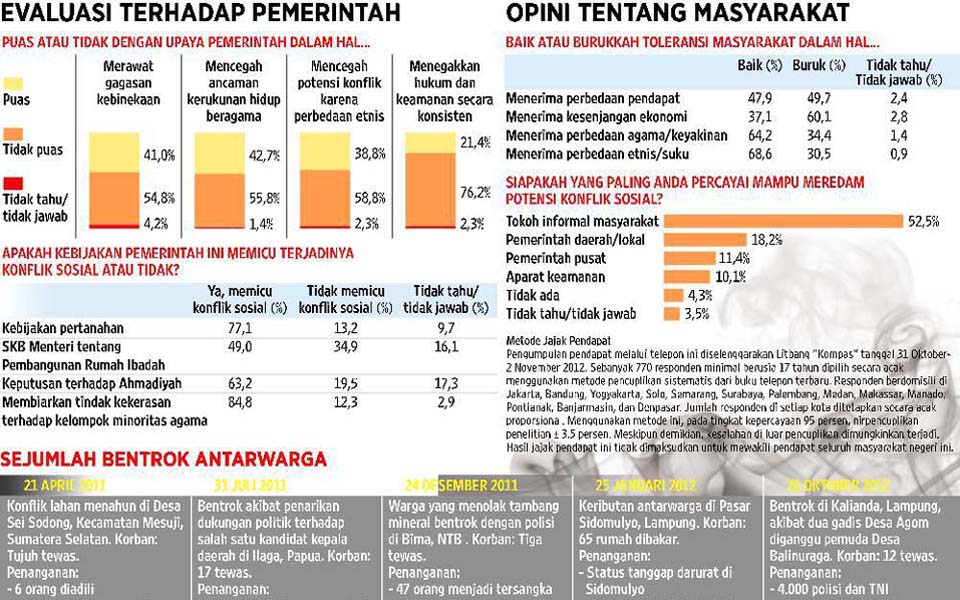
Yohan Wahyu – Most of the recent social upheavals have been triggered by a decline in public trust in the state. Public pessimism towards the government's performance has stimulated the emergence of several mass movements, from solidarity actions through to the social media and mass blockades.
December 2011
News/Indonesia
Kompas – December 12, 2011
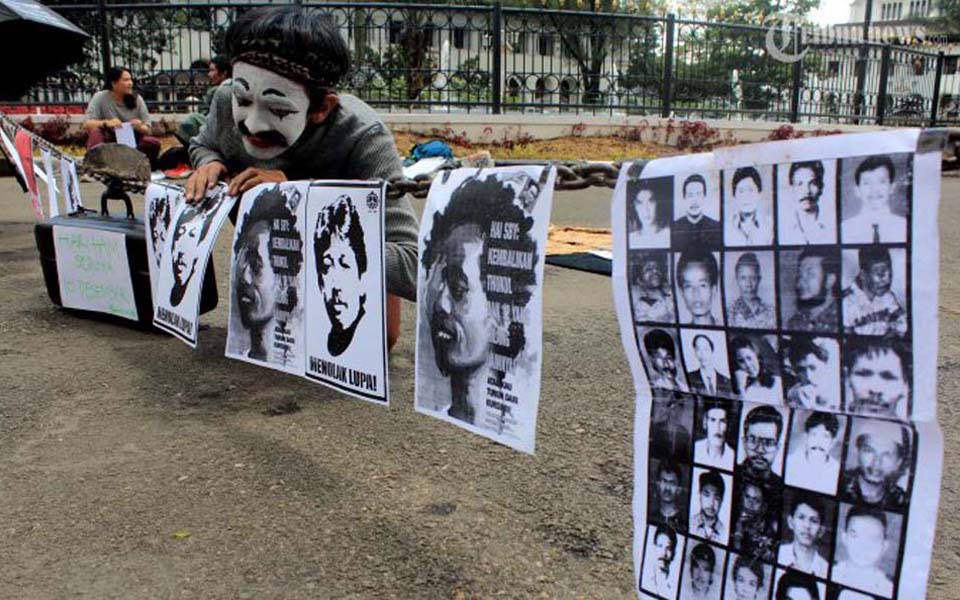
Although during his 2009 election campaign President Susilo Bambang Yudhoyono pledged to uphold human rights, the reality over the two years of his administration indicates a different reality. Human rights violations continue to occur and are disregard by the state.
October 2011
News/Indonesia
Kompas – October 10, 2011
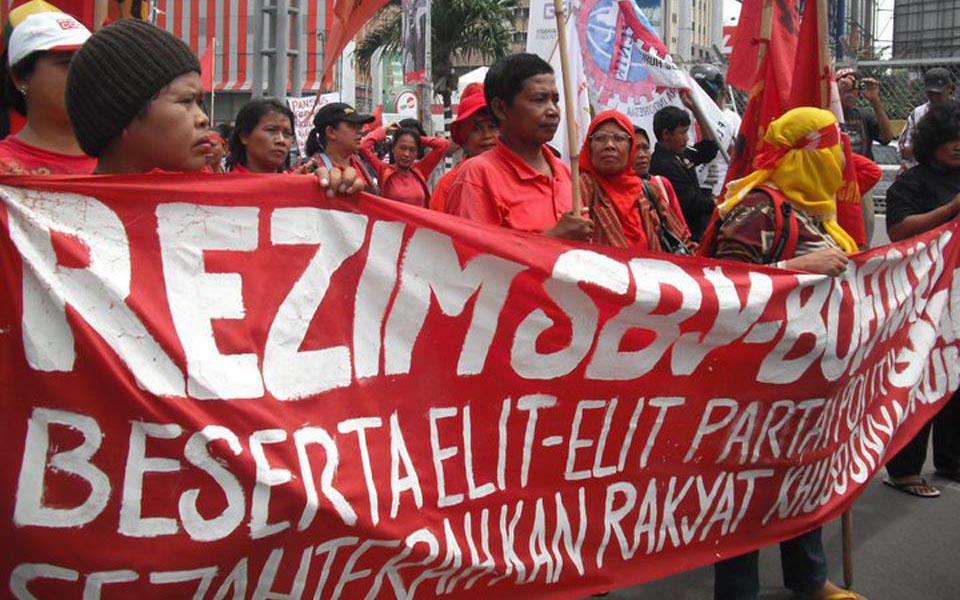
The political, economic, social and cultural situation, over which there has been great apprehension of late, has resulted in the public almost entirely loosing trust in those who run the country.
September 2011

Cartoons/Indonesia
Kompas – September 11, 2011
President Yudhoyono has received a new blow amid his own declining popularity, with the results of an Indonesian Survey Circle (LSI) survey showing a sharp drop in public approval of his cabinet, dropping from 52.3% in January 2010, and then 46.5% in September 2010, to 37.7% this month.