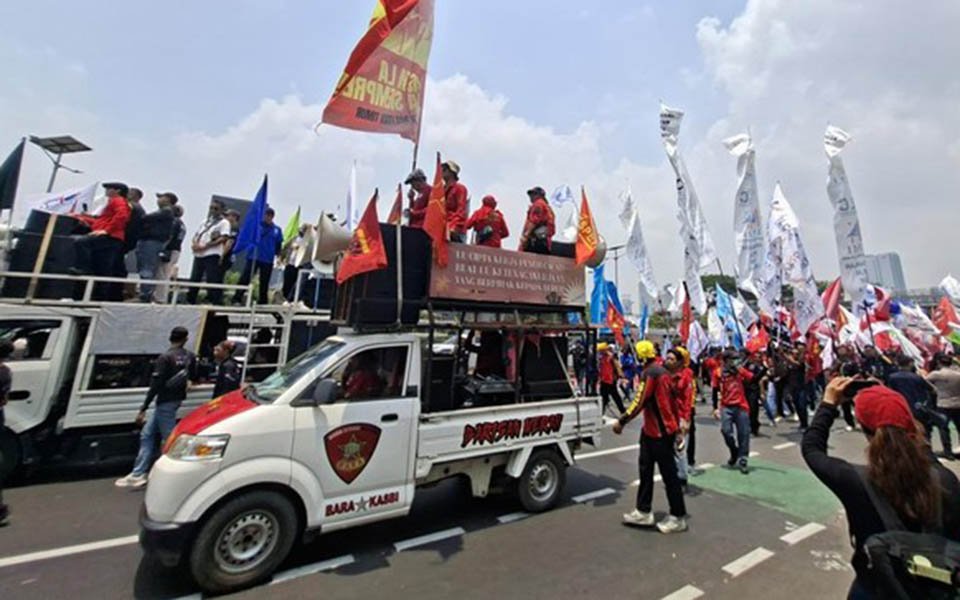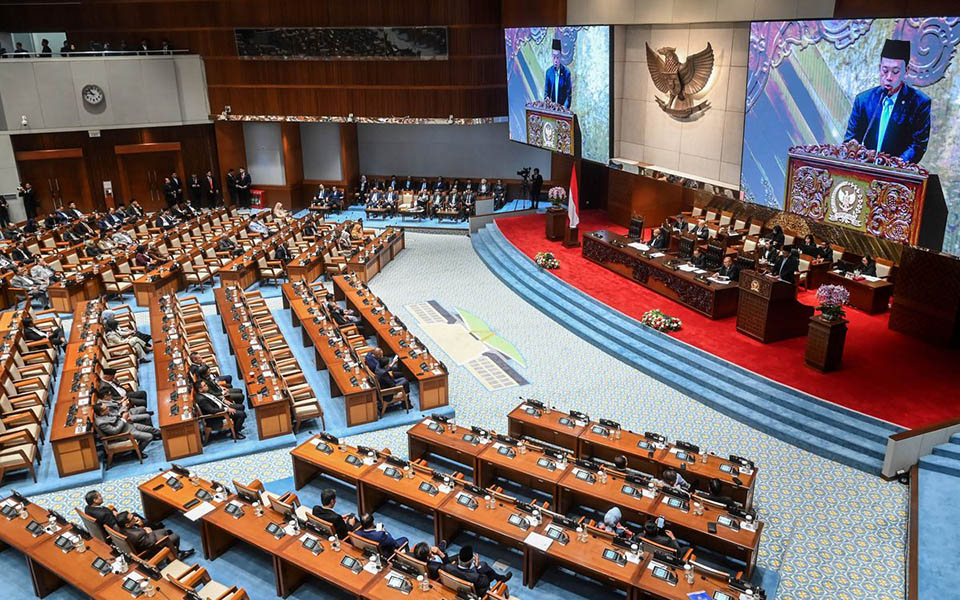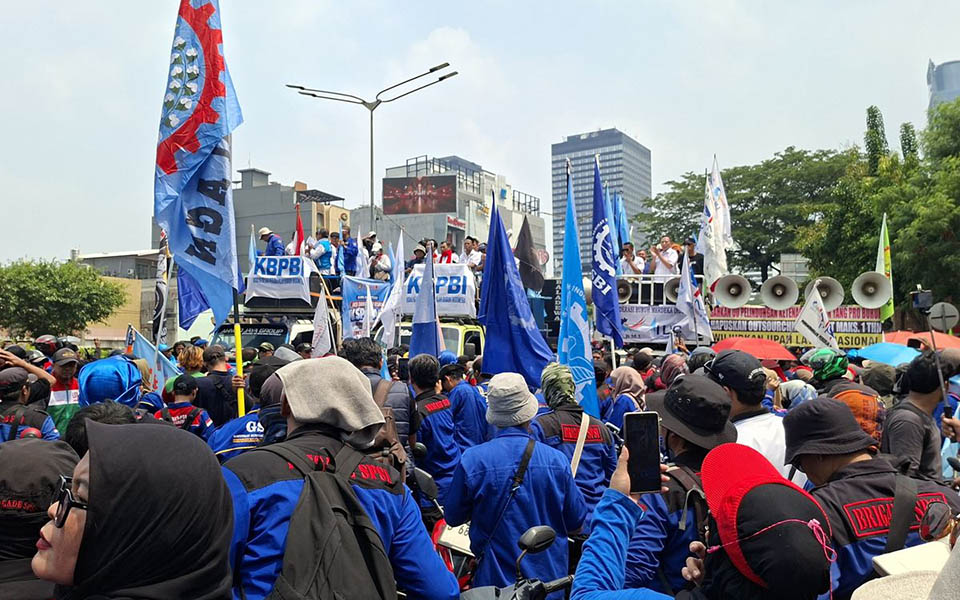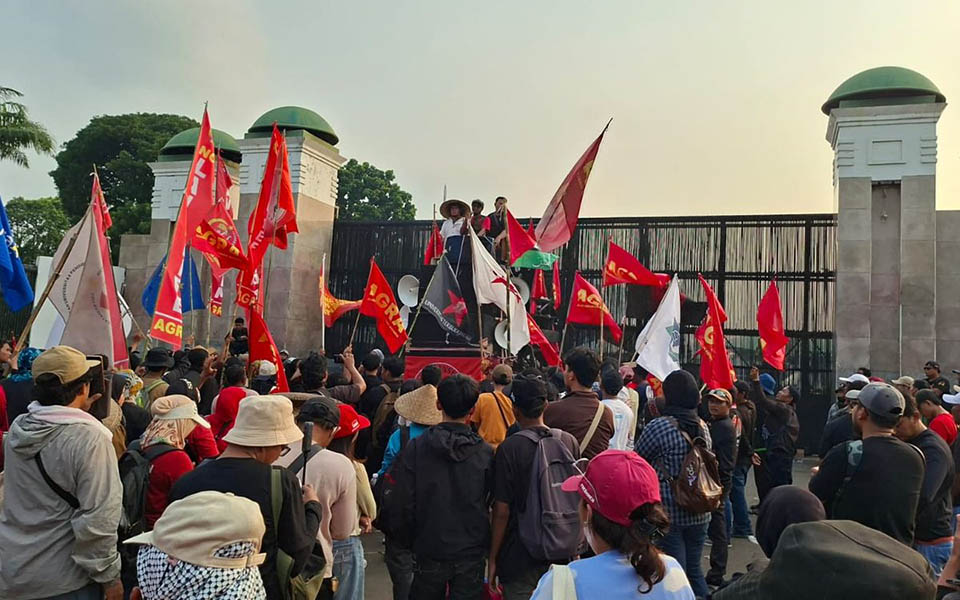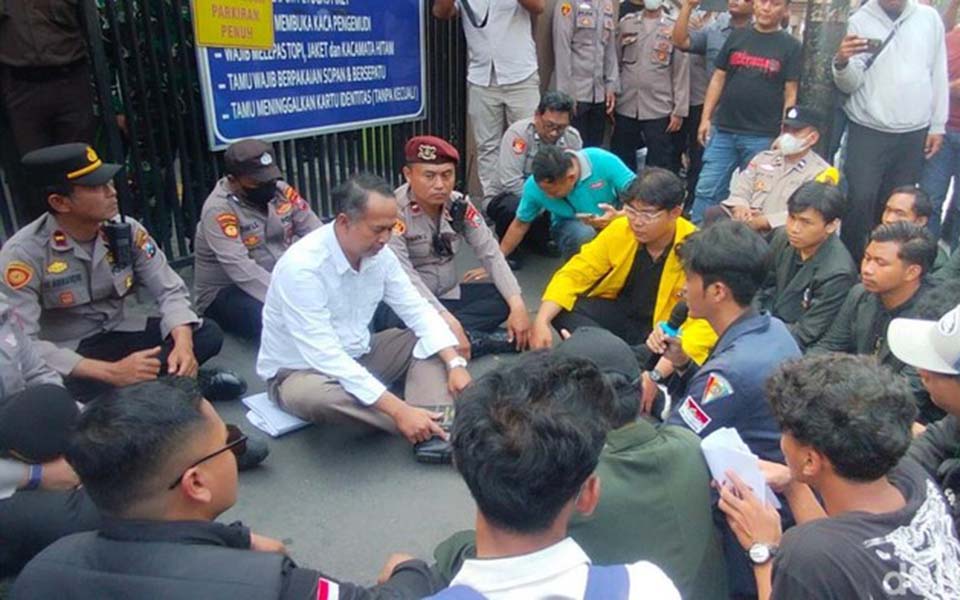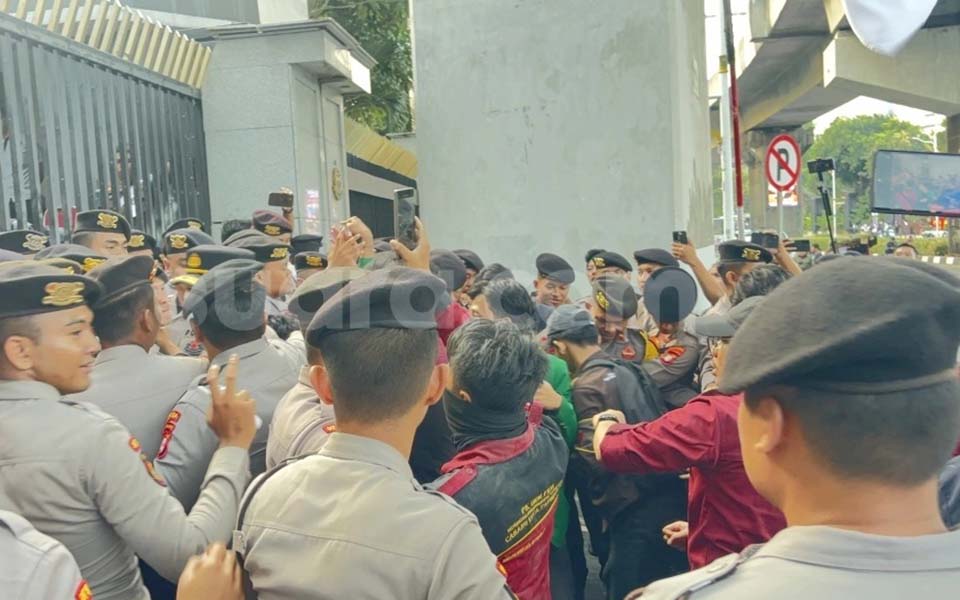


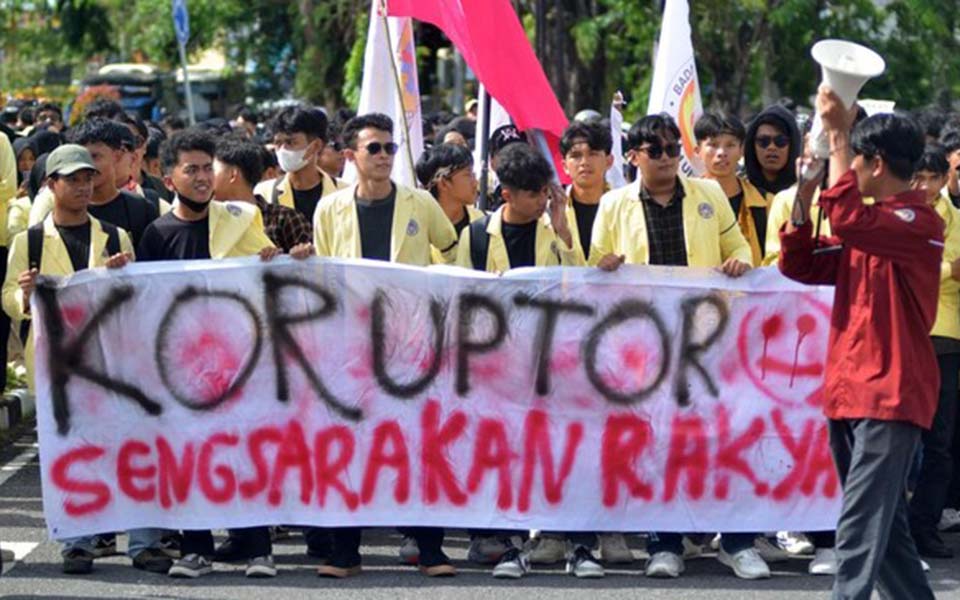
Jakarta – The Civil Society Coalition is asking the House of Representatives (DPR) and the government to reveal the contents of the draft and Problem Inventory List (DIM) of the Draft Law or Asset Confiscation Bill (RUU Perampasan Aset).
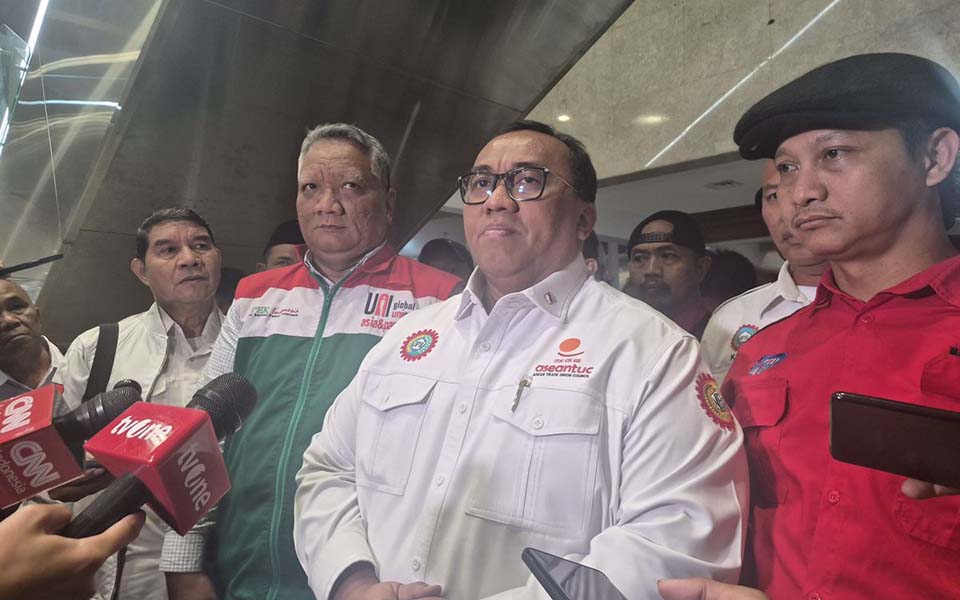
This Coalition consists of Indonesia Corruption Watch (ICW), Auriga, Kaoem Telapak, the Centre for Law and Policy Studies (PSHK), the Centre for Anti-Corruption Studies (SAKSI) at the Mulawarman University Faculty of Law and Transparency International Indonesia (TII).
"The Civil Society Coalition demands that the DPR and the government immediately open the draft and DIM of the Asset Confiscation Bill to the public through the DPR RI's official publication channels to avoid confusing information and as a first step to implement discussion of the law with meaningful public participation", said Wana Alamsyah from ICW in a press statement on Thursday August 27.
Without transparency, said Alamsyah, there is potential for there to be clauses in the bill that will actually weaken efforts to recover criminal assets and provide benefits to certain groups that will escape the attention of the wider public.
The coalition also asked the DPR to strengthen the provisions in the bill, especially related to the confiscation of illicit wealth (illicit enrichment).
This is to ensure that assets belonging to public officials that are disproportionate to their income and whose origin cannot be proven can legally be confiscated by the state.
This confiscation also has a subject, parameters and burden of proof that are strictly stated in the article, not left to the judge's interpretation.
Then, the Coalition is also asking the DPR to clarify the scope and procedural law of confiscation without punishment or Non-Conviction Based (NCB). This is to ensure that the bill can reach assets that have failed to be executed or assets that are left unclaimed, rather than just stopping at conceptual ones.
"The DPR is obliged to design an accountable asset management institution with one person in charge whose form and responsibilities are clear", said Alamsyah.
"This is to ensure that confiscated assets are not scattered among many institutions without cross-institutional supervision and without accountability to the public", he continued.
Three setbacks in draft
The coalition identified at least three substantive setbacks in the draft bill circulating in the DPR version dated July 10, 2026, compared to the government's draft.
First, the coalition suspects that the DPR has abolished norms related to illegal enrichment. Article 5 paragraph (2) of the 2023 version of the government's draft includes confiscation of assets that are disproportionate to income and whose origin cannot be legally proven.
This provision was allegedly removed from the DPR's draft version. Yet, this instrument represents the part that can target public officials' wealth which is not commensurate with their official income.
In a number of corruption cases, there are indications that suspects arrested by law enforcement have improper wealth based on the State Officials' Wealth Report (LHKPN).
Second, the Coalition suspects that the DPR has narrowed the scope of confiscation without punishment or NCB.
The DPR draft regulates the NCB in Article 3 letter b, with conditions detailed in Article 6: the perpetrator dies, runs away, is permanently ill or the case cannot be heard in court.
The problem, according to the Coalition, is that all asset objects in Article 5 are always linked to criminals. As a result, the NCB in the DPR draft can in practice only be used when it is already known but cannot be punished, and it is unclear whether it can be used to withdraw assets that have failed to be executed or assets that are unclaimed.
This is different from the government's draft version.
Article 5 paragraph (1) letter d explicitly targets goods resulting from crimes whose perpetrator or owner is unknown, with examples of illegal logging of wood and online gambling in the explanation section. Clarity over this scope is important so that the NCB does not stop at the concept, but can actually reach assets that have so far escaped the criminal process.
Third, the coalition suspects that the DPR has left the asset management institution hanging in the air without clear responsibility.
The 2023 government version of the draft designates a single person as being responsible, namely the Attorney General as asset manager in accordance with Article 50. Meanwhile, details of duties (Article 51), a transparent asset information system (Article 60) and periodic reporting (Article 61) are also included in the government version of the draft.
In the DPR draft, this lack of clarity is revealed through three problems.
First, the management institution is not concrete. Article 46 mentions asset management institutions as if these institutions already exist. In fact, the DPR version of the draft never explains what it is, who is in charge, under which institution it exists and to whom they are responsible.
This article is considered to be inconsistent when compared with Article 50 and Article 53, which give authority to the National Police Chief (Kapolri), the Attorney General and the Supreme Court (MA) to manage and submit periodic reports on assets under their control.
The lack of clarity over the asset management institution could potentially become a source of disputes over authority between the asset management institution and the Attorney General's Asset Management Agency in the future.
"Apart from this, the DPR also needs to ensure that there is a monitoring mechanism for criminal asset management institutions so that the public can monitor the accountability and transparency of the performance of these institutions", said Alamsyah.
The Asset Confiscation Bill's long journey
The Asset Confiscation Bill has come a long way since a draft was first initiated by the Financial Transaction Reports and Analysis Centre (PPATK) in 2008. The bill was even included as one of the promises in former President Joko "Jokowi" Widodo and Vice President Jusuf Kalla's Nawa Cita (nine point program) in the 2014 presidential elections.
But it was only in May 2023 that Widodo issued a Presidential Letter (Surpres) along with an academic text, an official draft, and submitted it to the DPR as a government initiative bill.
However, the DPR for the 2019-2024 period never discussed it as of its term ending in September 2024.
One year later, the DPR actually took over this bill to become a DPR initiative, so that the draft and academic paper which had been available since 2023 had to be re-drafted from scratch.
According to the Coalition, this takeover did not speed up the process, but actually slowed it down while providing an opportunity to change the substance of the 2023 version of the draft.
The 2023 draft version from the government was also not perfect because it has undergone compromising content changes compared to the initial draft prepared by PPATK.
In August 2026, the chairperson of the DPR's Commission III, Habiburokhman, said that the DPR wanted to immediately finalise the Asset Confiscation Bill and ensure that it would be ratified no later than December 2026 during a plenary session.
The DPR claimed that the discussion of this regulation has gone through the absorption of aspirations at 35 public hearings (RDPU) and three working visits.
Even though the DPR claimed to have held meetings to discuss the bill, to date the draft in question has never been revealed to the public.
According to the Coalition, the DPR's steps in discussing the bill from the start are also questionable, considering that the government has already prepared and submitted the complete academic paper and the bill itself to the DPR in October 2024.
"It is reasonable to suspect that this move was an attempt to stall the discussion and ratification, as well as to isolate the discussion from the public and the government itself as the parties who should be the DPR's partner in drafting and discussing the draft bill", explained Alamsyah.
"So the Asset Confiscation Bill that is being drafted by the DPR has the potential to eliminate crucial articles that target certain groups", he continued. (ryn/gil)
[Translated by James Balowski. The original title of the article was "Catatan Kritis soal RUU Perampasan Aset dari Koalisi Masyarakat Sipil".]