


Man (right): No Sir, not food imports... what’s important is our candidates are local
Arm bands read ‘Success Team (election campaign team)’, list reads ‘Presidential election candidate formulation’.
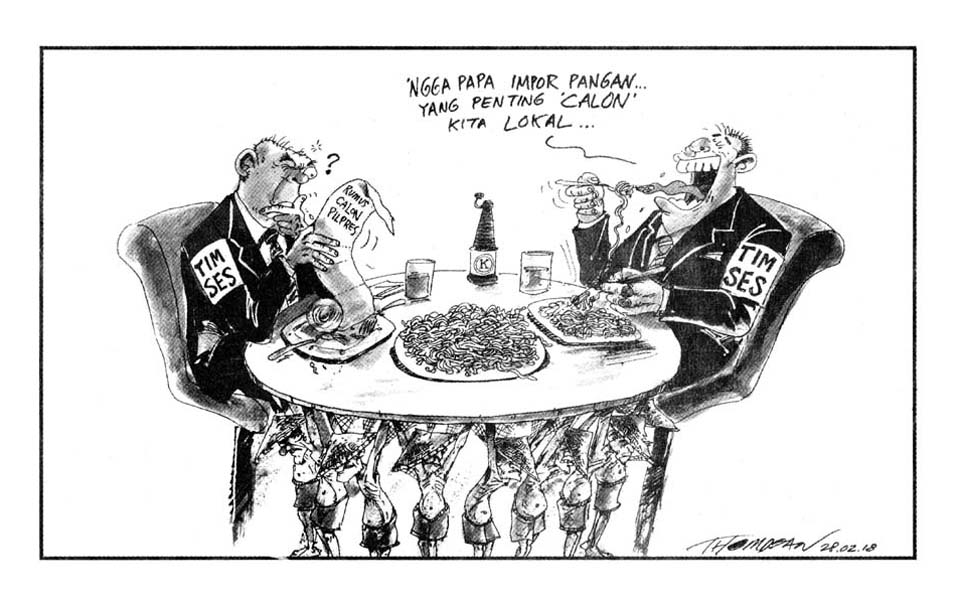
Man (right): No Sir, not food imports... what’s important is our candidates are local
Arm bands read ‘Success Team (election campaign team)’, list reads ‘Presidential election candidate formulation’.
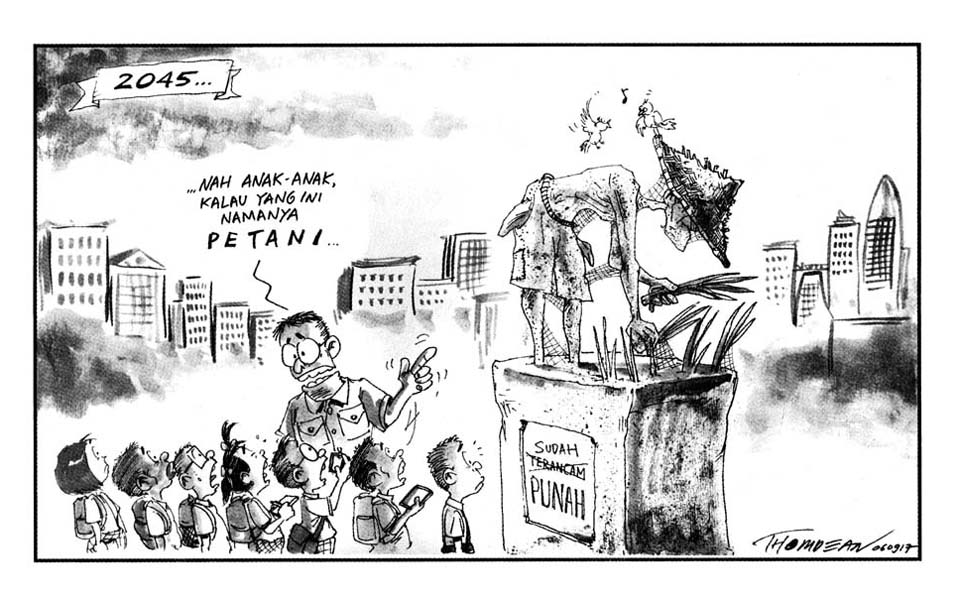
Teacher: Now children, this is what used to be called a farmer (plaque reads: already threatened with extinct)
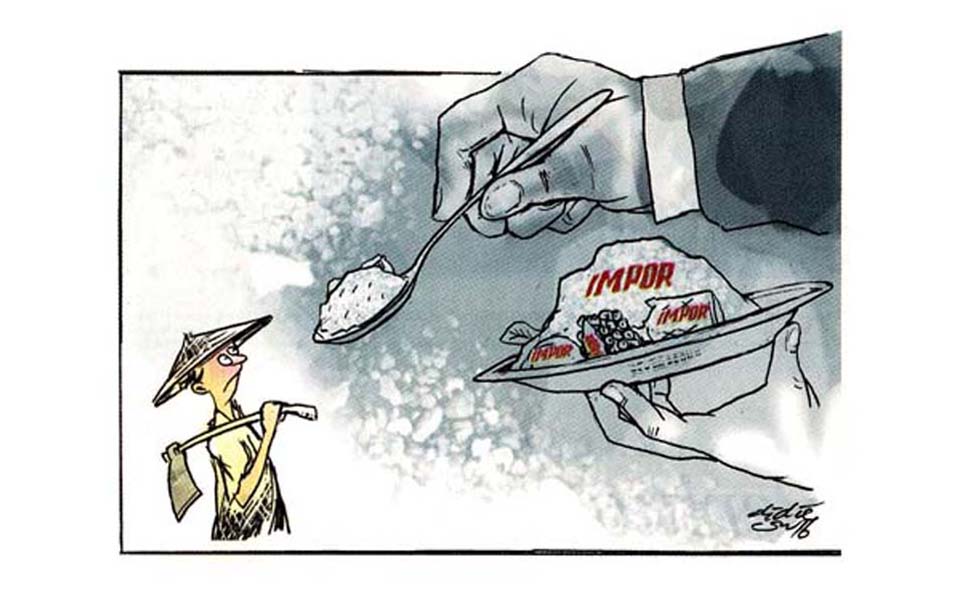
With only around 10% of government spending being allocated to maintain and repair the country's dilapidated irrigation systems and improve farmers' capacity by providing farm equipment, seed and fertilizers, President Widodo's much touted goal of making Indonesia self-sufficient in food production and end its dependency on imports (Impor) is fa
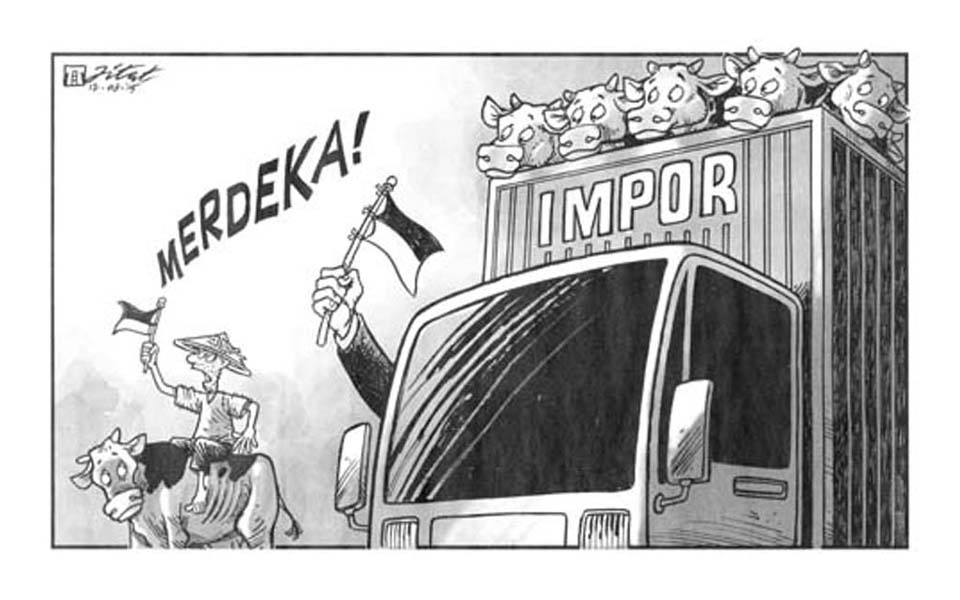
Man on cow: Independence! Truck reads ‘Imports’
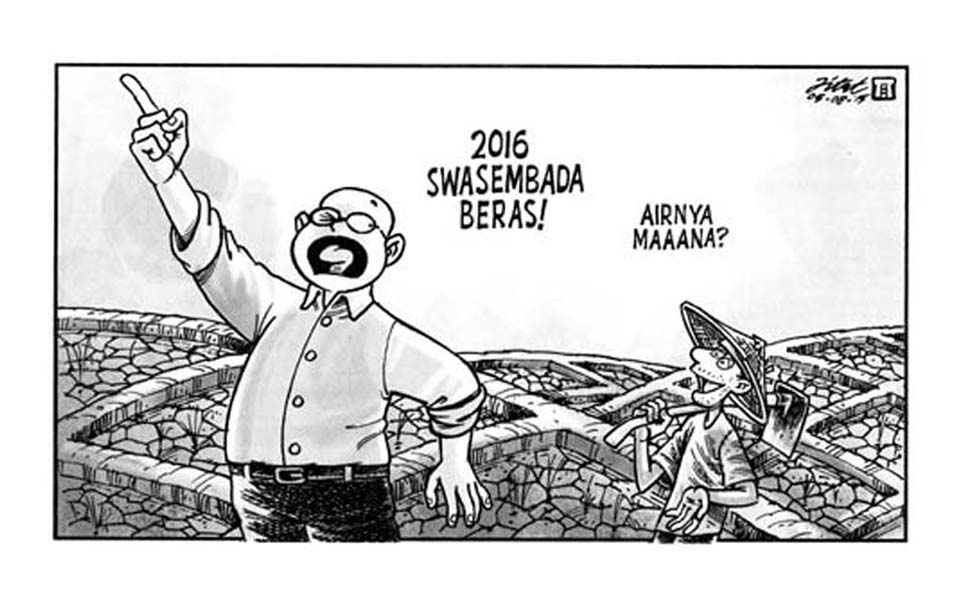
Politician: 2016 self-sufficiency in rice!
Farmer: So where’s the water?

Rochimawati, Arie Dwi Budiawati – Although the nominal wage of agricultural and urban informal workers increased in 2015, their real wages declined.
The nominal wage of agricultural workers nationally increased by 1.15 percent from 46,386 rupiah a day in May to 46,458 a day in June 2015.
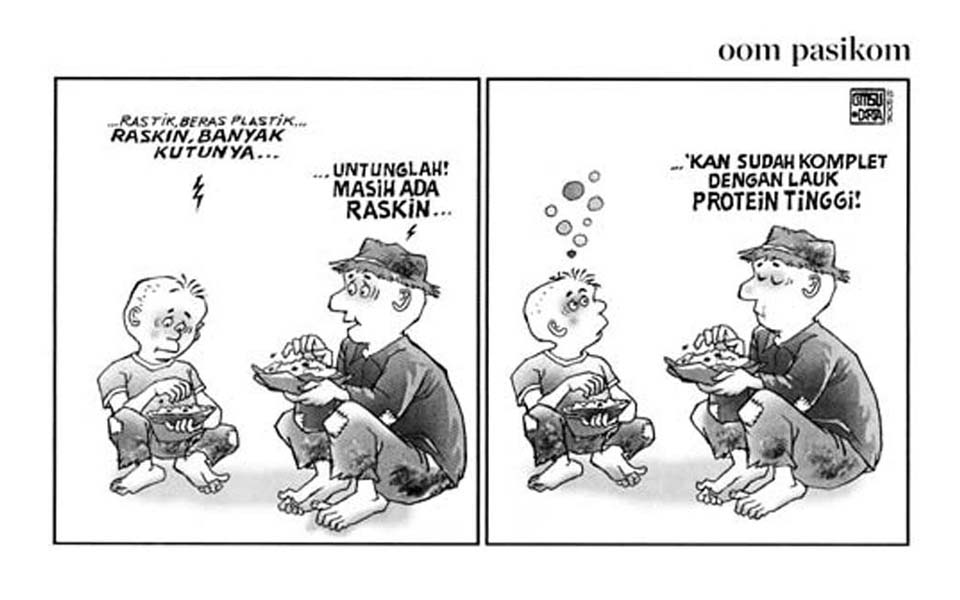
Kid: Rastik, plastic rice.... Raskin, lots of rice weevils...
Man: Fortunately there’s still Raskin... which is complete with a high protean side dish right!
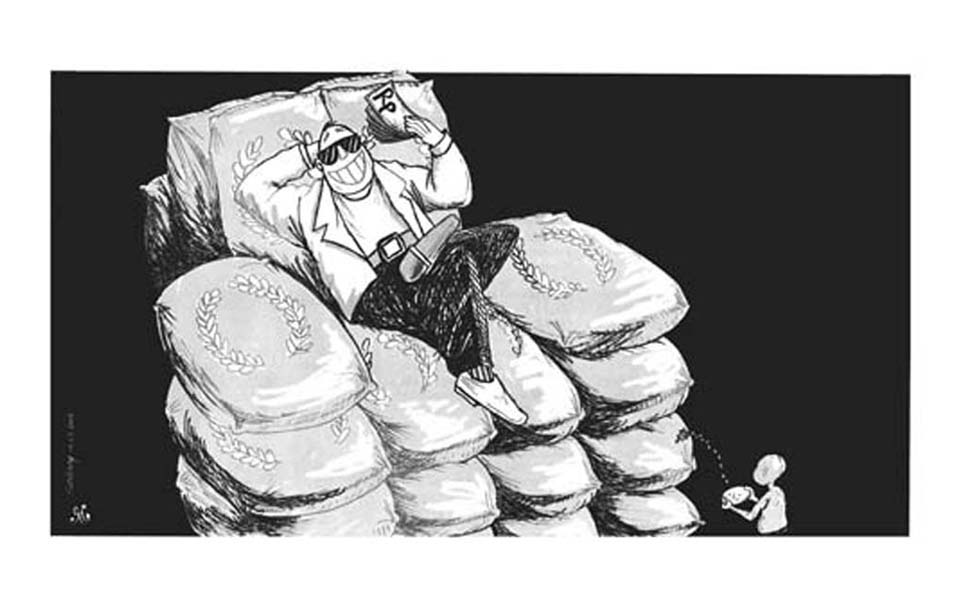
Despite the souring cost of rice on the market, the price of unhusked rice (gabah) produced by local farmers has fallen to around 0.37 US cents per kilogram.
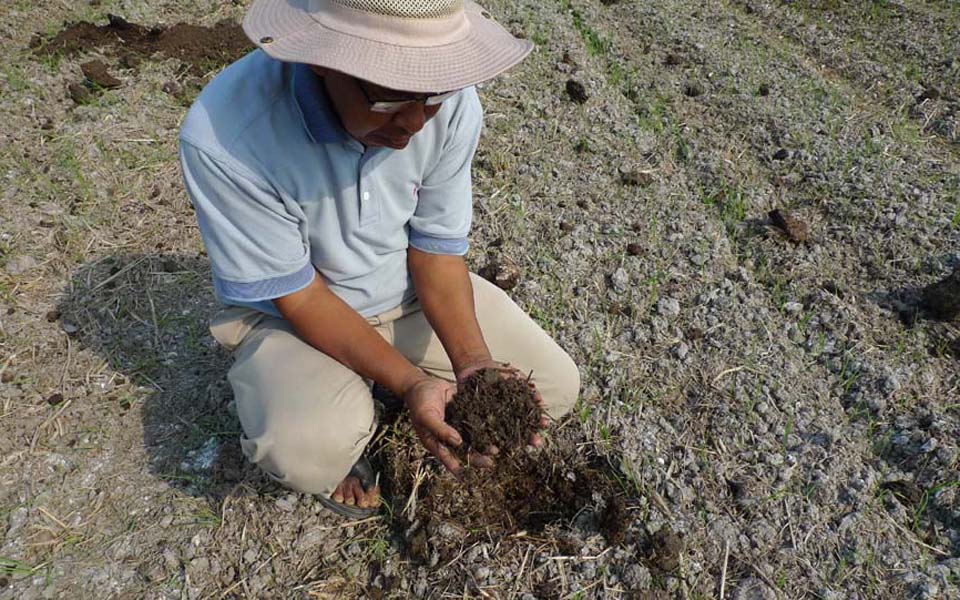
Palmerah – The number of farming households over the last 10 years has declined by 5.04 million. Over the same period, the number of agribusinesses has grown by 1,475 companies. Meaning a formalisation (formalisasi) has taken place. What is alarming however is that the number of marginal farmers is increasing.
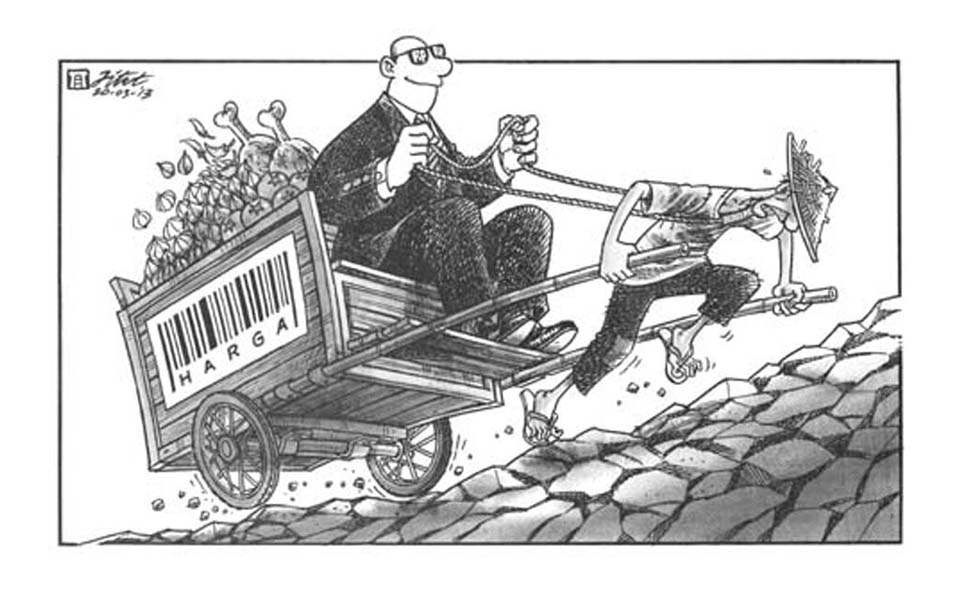
Cart reads Prices.
Critics warn that Indonesia’s food supplies are currently under the control of a politically connected “food mafia”, who are taking advantage of market liberalisation to throttle supplies and jack up prices, and have little concern about empowering farmers or contributing to food security.