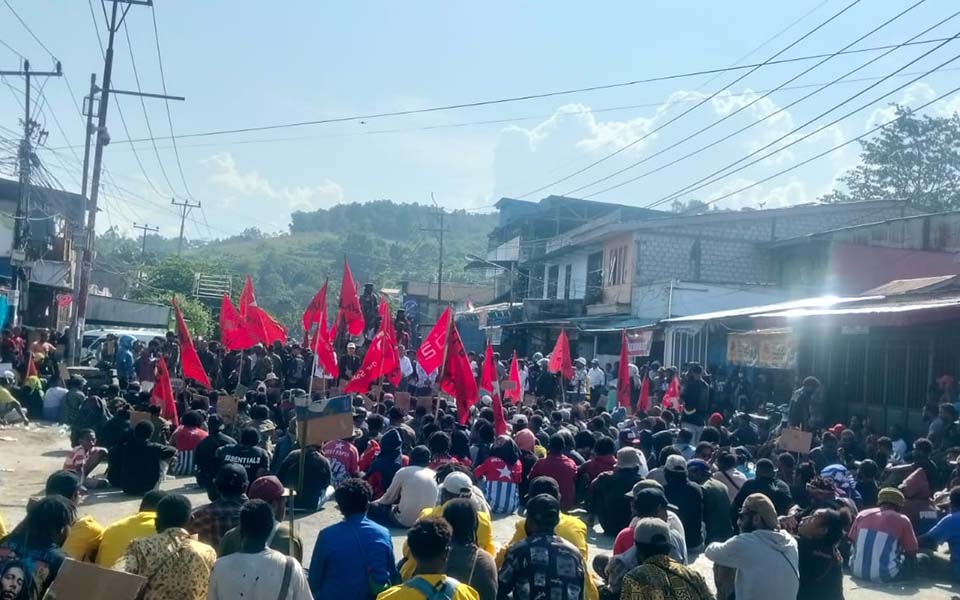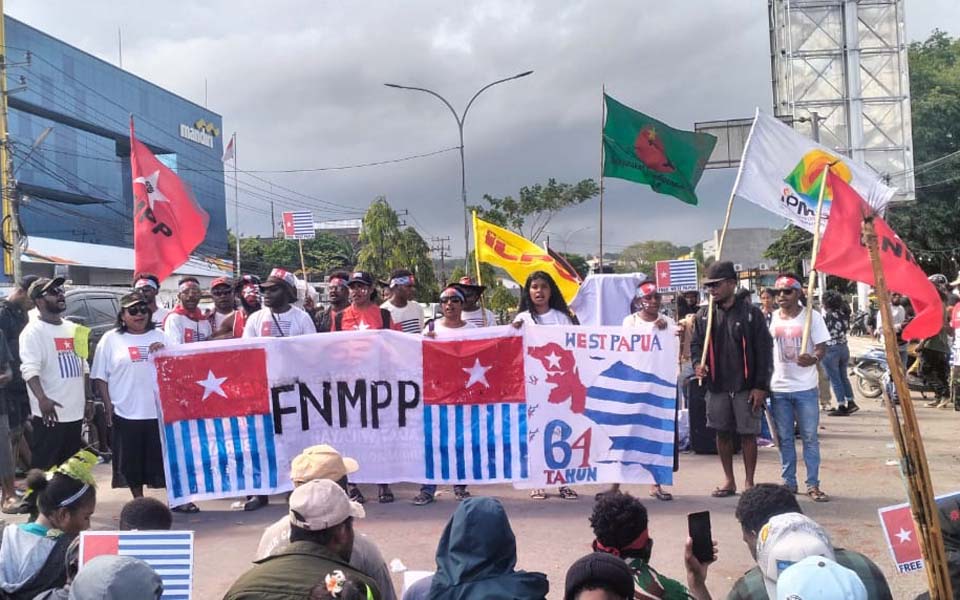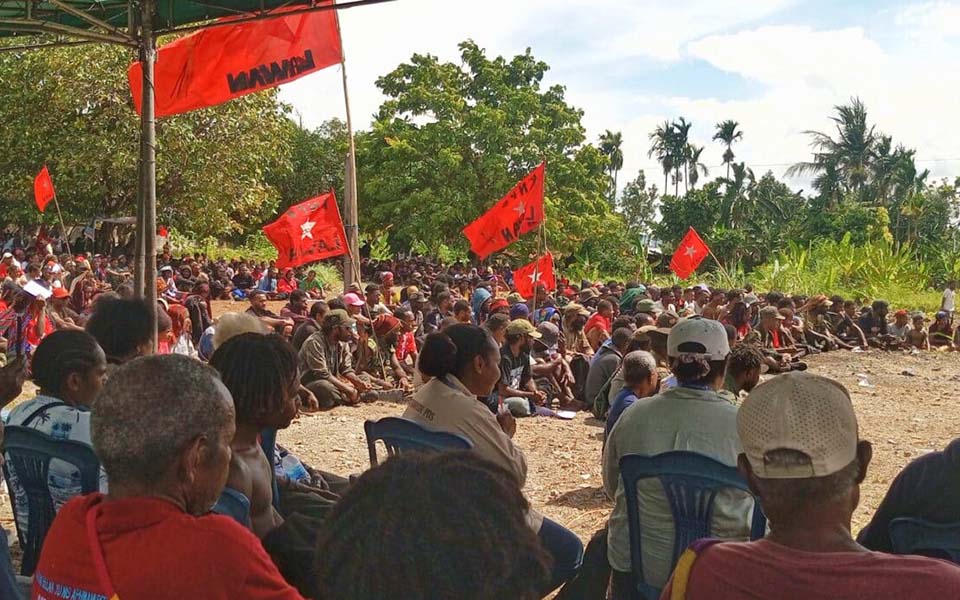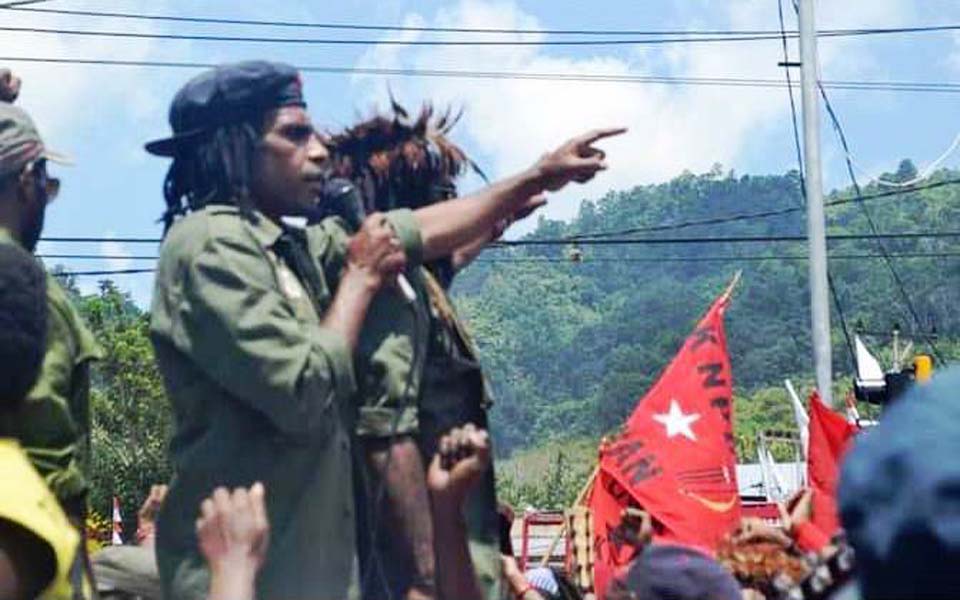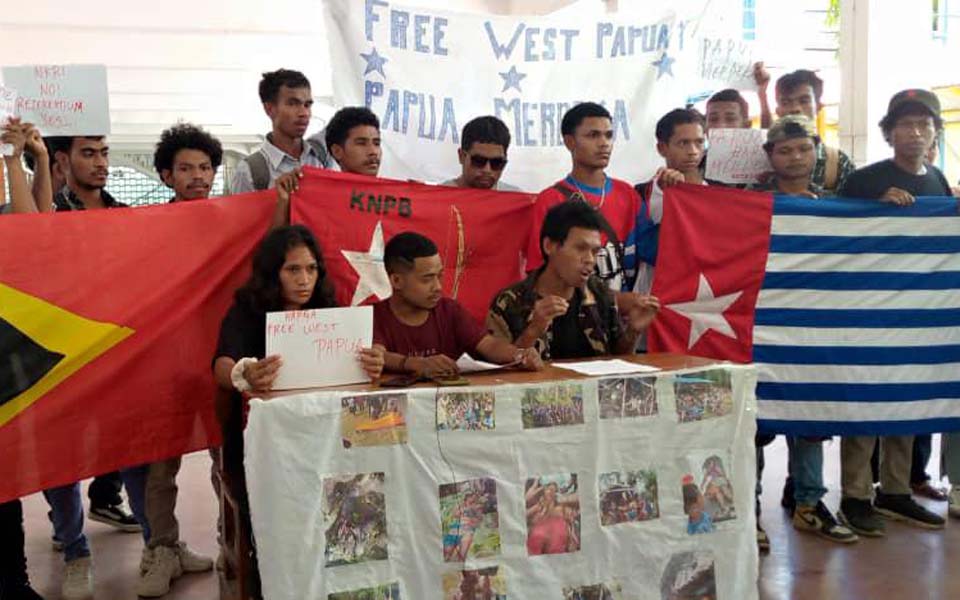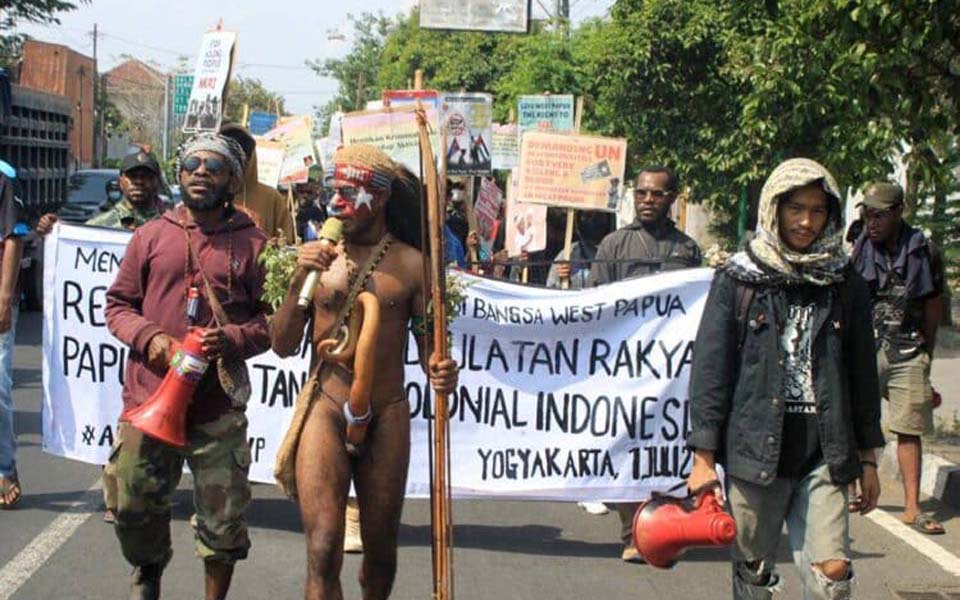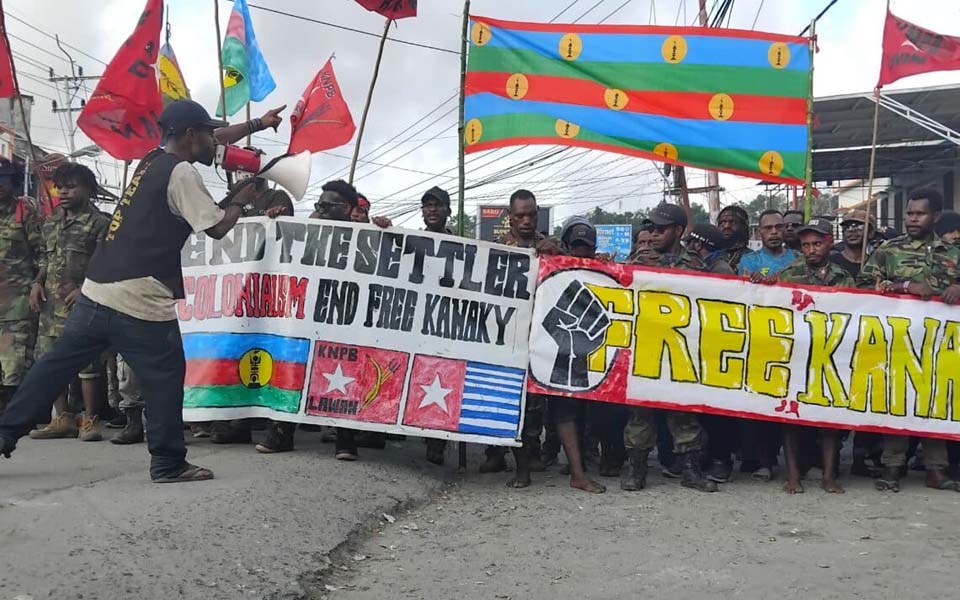


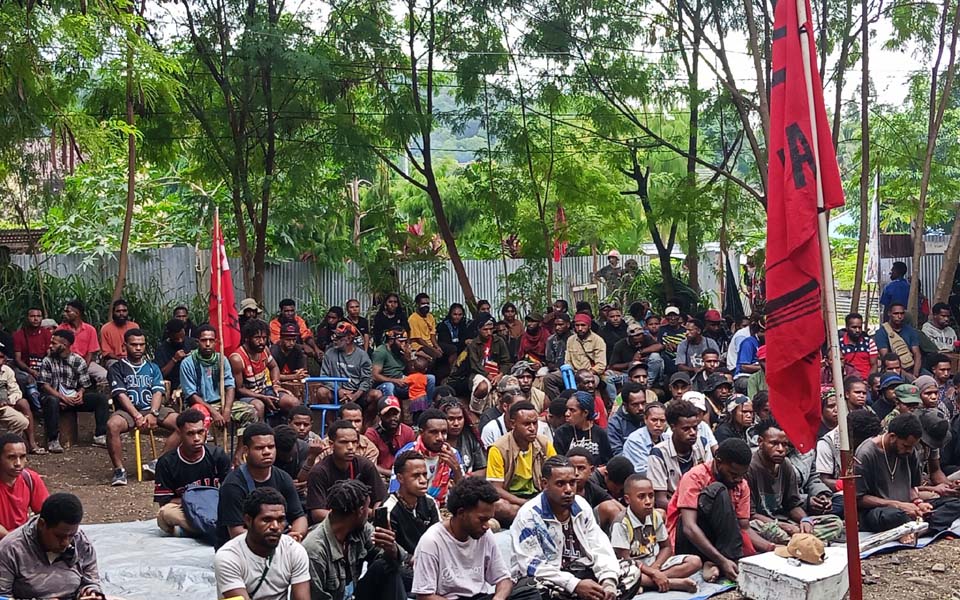
Aida Ulim, Jayapura, Jubi – The West Papua National Committee (KNPB) commemorated the 64th anniversary of the West Papuan independence Political Manifesto on December 1, by reflecting on what the KNPB has done and what it will do in the future.
KNPB spokesperson Ogram Wanimbo stated that in commemorating the manifesto, the KNPB is holding a series of events including exhibitions, music performances, discussions and talk shows on the history and future of the Papuan nation, beginning with a prayer service.
"We are here to reflect on what we have done, and what we will do tomorrow, that's what we are reflecting on", said Wanimbo on Monday December 1.
He said that in the struggle, no one is superior, and no one is inferior, everyone is fighting together. "All fighters bear the burden of the Papuan people's lives. Happy commemoration of the Papuan Political Manifesto Day", he said.
In a leaflet, the KNPB explained that the 64th anniversary of the Papuan Political Manifesto for independence began on December 1, 1961, when the West Papuan people first raised the Morning Star Flag and declared themselves a nation with the right to self-determination.
The Manifesto stated that from 1944 to 1961, West Papua had already established its own governmental structures, education and public institutions.
In the KNPB's reflection it was stated that the West Papua decolonisation process was never legally resolved by the United Nations. However, from 1963 to 1969 Indonesia was considered to have carried out an invasion and military operations, which, according to the text, contradicted human rights principles and UN resolutions on decolonisation.
Since then, Papuans have lived in a colonial situation characterised by violence, restrictions on democratic space, the plundering of natural resources and threats to their culture and language.
In the document it calls for a return to international law, namely recognising West Papua as a non-self-governing territory whose decolonisation process has not yet been completed.
Therefore, the struggle is directed towards reactivating the UN decolonisation mechanism through the Committee of 24 and the UN General Assembly. The document also emphasised the importance of internal Papuan unity through grassroots movements, youth, churches, traditional customs and people's diplomacy.
Finally, December 1 is depicted not simply as a commemoration, but as a promise of unredeemed independence and the commitment of the Papuan generation to continue the struggle until victory, with the determination of "Not to run, not to retreat, persevere, and fight until victory".
KNPB Central Chairperson Agus Kossay stated that December 1, 1961, marked the Dutch colonial era's recognition of the indigenous Papuan people as a nation, standing equal to other nations in the world. The Papuan people were given the space to prepare themselves for independence.
"Now, to this day Papuans feel that their right to independence was taken away by the Indonesian colonialists through an illegal occupation", said Kossay.
According to Kossay, Papuans are now being sacrificed for the economic and political interests of the world, including the United States, the UN, the Netherlands and Indonesia. Therefore, every December 1 is commemorated as the proclamation of the Independence Day of the Republic of West Papua.
"We reflect on this through activities like this, including painting, dance, poetry readings. So today, there are no longer leaders speaking for themselves, but the people themselves expressing what they have seen and felt during their 64 years with Indonesia in Papua", he said.
He also conveyed a message to the Papuan people to continue fighting for self-determination. They must fight against injustice, as the impact of economic and political interests continues to sacrifice the Papuan people.
"The next message to the Netherlands is that they must take moral and political responsibility for the fate of the Papuan people today. They created the problems so they must also be responsible for the struggle of this nation" he said.
Meanwhile, KNPB Central Executive Board Chairperson I Warpo Sampari Wetipo said that the KNPB as a media for the Papuan people continues to mediate the noble desire of the Papuan people to reclaim their independence.
He said that Papua must emerge and be free from oppression, from global colonialism and imperialism, because it is an obligation that must be carried out.
"I convey to all of us, to the Papuan people everywhere that we are not running away, we are here to reclaim the right to the political sovereignty of the Papuan nation", said Wetipo.
He also invited all Papuans, including farmers, traders, fishers and teachers to maintain a collective consciousness in fighting for the identity and dignity of the Papuan nation. Together, we must fight and unite to build the emotional foundations to reclaim that right to independence.
"Standing on our own foundations and on our own ground, seeing the reality of oppression, seeing ourselves together, seeing the environment around us and then united we fight", he said.
Notes
Although it is widely held that West Papua declared independence from Indonesia on December 1, 1961, this actually marks the date when the Morning Star flag was first raised alongside the Dutch flag in an officially sanctioned ceremony in Jayapura, then called Hollandia. The Political Manifesto itself was declared on October 19, 1961 in Jayapura following a meeting initiated by Papua's leading politicians and members of the New Guinea Council, which elected 17 people to form the Papua National Committee that then issued a political manifesto expressing the desire for independence through mediation with the New Guinea Council and the Netherlands.
[Translated by James Balowski. The original title of the article was "KNPB Peringati Manifesto Politik Kemerdekaan Papua Dengan Berbagai Kegiatan".]