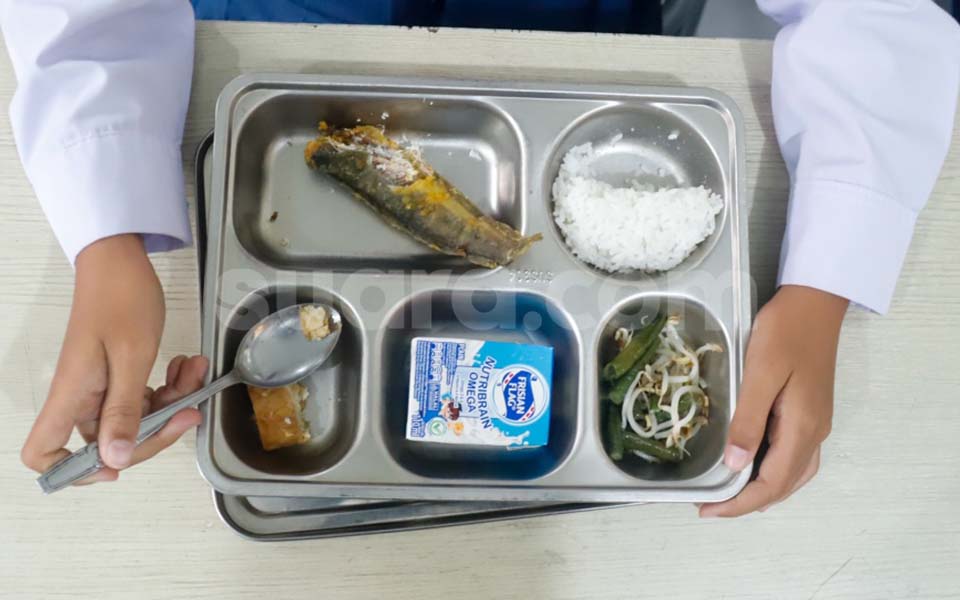


Suci Amaliyah, Jakarta – One year since its launch, the Free Nutritious Meals (MBG) program still faces serious problems. In addition to being seen as rife with conflicts of interest, the flagship government program is also considered to be eroding the education budget and potentially reducing the quality of national education.
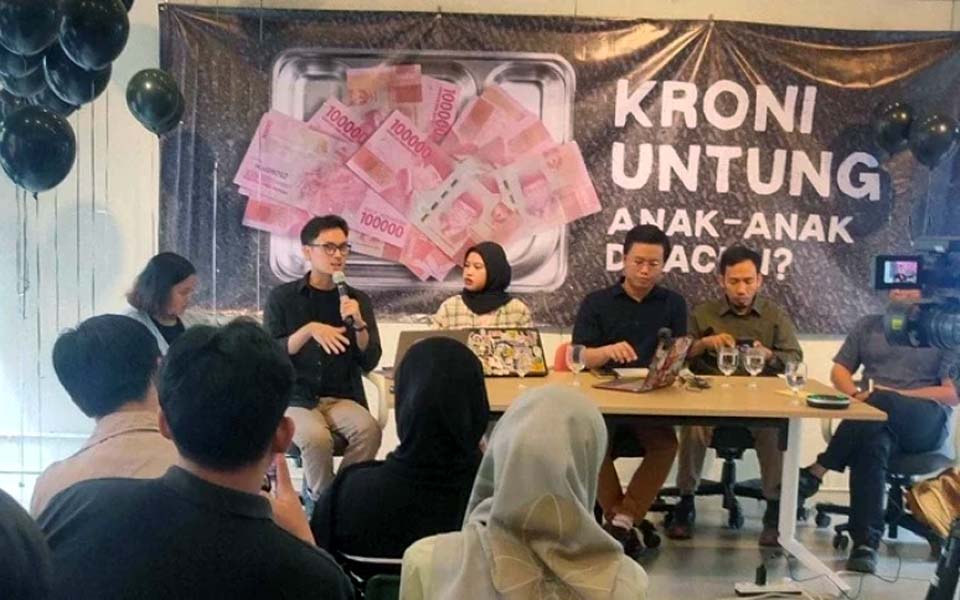
This was revealed during a public discussion titled "Marking 1 year of MBG: Cronies Profit, Children Poisoned" that was held in Kalibata, South Jakarta, on Thursday January 8.
Indonesia Corruption Watch (ICW) researcher Yassar Aulia presented the results of ICW's random monitoring of MBG's implementing partners between October and November 2025. From this monitoring, ICW found at least 102 MBG partner foundations affiliated with various political and power interests.
"A total of 27 foundations are affiliated with political parties, 18 with business or private individuals, 12 with the government bureaucracy, and nine with volunteer groups or organisations supporting the presidential election campaign", said Aulia.
In addition to this, ICW also found seven foundations affiliated with close associates of officials, six with the military, four with former state officials, three with administrators or founders previously implicated in corruption cases and two foundations affiliated with the police and prosecutors' office.
According to Aulia, these findings strengthen the suspicion that the MBG is rife with practices of political patronage and structural conflicts of interest.
"Many individuals behind these foundations ultimately manage Nutrition Fulfillment Service Units (SPPG) which are connected to political parties, election campaign teams, the military, and even members of the legislature", he explained.
He emphasised that the MBG program is not solely run for the public interest but rather has the potential to also become a tool for elite political consolidation.
"This program is suspected of being a means of distributing benefits to parties who can strengthen certain political positions", asserted Aulia.
ICW obtained the data on MBG program partner foundations from the official website of the National Nutrition Agency (BGN) as of March 2025, as well as data on foundation deeds of establishment from the Directorate General of General Legal Administration at the Ministry of Law.
"From the names listed in the deeds of establishment, we identified links to public officials and political actors", he said.
Meanwhile the political parties identified as affiliated with MBG program foundations include the National Democrats (NasDem), the People's Conscience Party (Hanura), the Working Party (Berkarya), the Indonesian Solidarity Party (PSI), the Crescent Star Party (PBB), the National Awakening Party (PKB), the United Development Party (PPP), the Indonesian Democratic Party of Struggle (PDI-P), the National Mandate Party (PAN), the Justice and Prosperity Party (PKS), the Greater Indonesia Movement Party (Gerindra) and the Voice of the Indonesian People's Party (Parsindo).
Of the 28 foundations affiliated with political parties, at least 44 were found to involve politicians.
Another ICW researcher, Eva Nurcahyani, added that ICW's field monitoring in Greater Jakarta, Yogyakarta, North Sumatra, East Nusa Tenggara and Bali also uncovered problematic practices.
These include ownership of SPPG kitchens by families of regional officials, foundations managed by former members of the Regional Representative Councils (DPRD) and recruitment of volunteers through family and political connections.
In addition to conflicts of interest, ICW also noted poor food quality and serious health risks for children. It even found intimidation of parents, teachers and volunteers who wanted to express criticism, as well as secretive and manipulated food procurement.
"Many food suppliers are part of the foundations themselves, and the purchase invoices do not reflect market prices", Nurcahyani said.
Based on these findings, ICW is urging the government to temporarily halt the implementation of the MBG and conduct a comprehensive evaluation of the program.
Meanwhile, Indonesian Education Monitoring Network (JPPI) Coordinator Ubaid Matraji believes that the allocation of the education budget for the MBG has actually had a negative impact on the education sector.
According to Matraji, in the 2026 state budget approximately 69 percent of the MBG budget comes from education funds. However, data from the Ministry of Education from 2024 recorded that more than 60,000 elementary schools are damaged and have not undergone significant repairs.
"Damaged schools are being neglected, there are no funds for repairs. But instead the education budget is being diverted to food", asserted Matraji.
He believes that a minimum allocation of 20 percent of the education budget should be prioritised for improving school facilities, improving teacher quality and providing teacher certification.
"That should be the priority. If schools are adequate and teachers are qualified, only then we can consider other programs", he concluded.
[Translated by James Balowski. The original title of the article was "ICW Ungkap Ratusan Yayasan MBG Terafiliasi Elite Politik, Anggaran Pendidikan Makin Terkikis".]