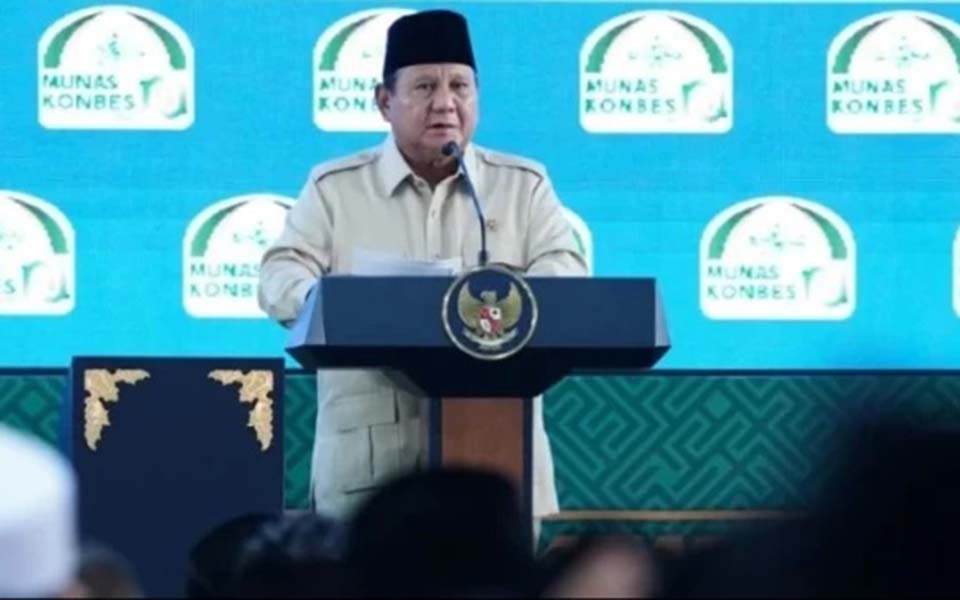


Jakarta – The Indonesian Forum for the Environment (Walhi) and the Indonesian Centre for Environmental Law (ICEL) believe that the government's narrative regarding climate justice and energy transition presented at the 2026 London Climate Action Week (LCAW) is not in line with domestic conditions.
While Indonesia talks about the protection of nature and a just energy transition in international forums, in reality the government still maintains dependence on coal, expands captive coal-fired power plants (PLTU) for downstream industries and continues to encourage projects that sacrifice forests and people's living space.
As of 2024, around 85 percent of Indonesia's electricity generating capacity still comes from fossil energy, while the contribution of renewable energy has only reached around 15 percent. On the other hand, the construction of captive power plants in nickel industrial areas such as Morowali and Weda Bay continues to increase, showing that the downstream agenda still rests on coal.
"The government cannot continue to talk about climate justice in international forums, while at home it still maintains a development model that relies on coal, expands extractive industries, and sacrifices people's living space. The credibility of Indonesia's climate leadership is determined by policy consistency, not by speeches on the global stage", said Puspa Dewy, head of Walhi's Knowledge Resources Development and Management Department.
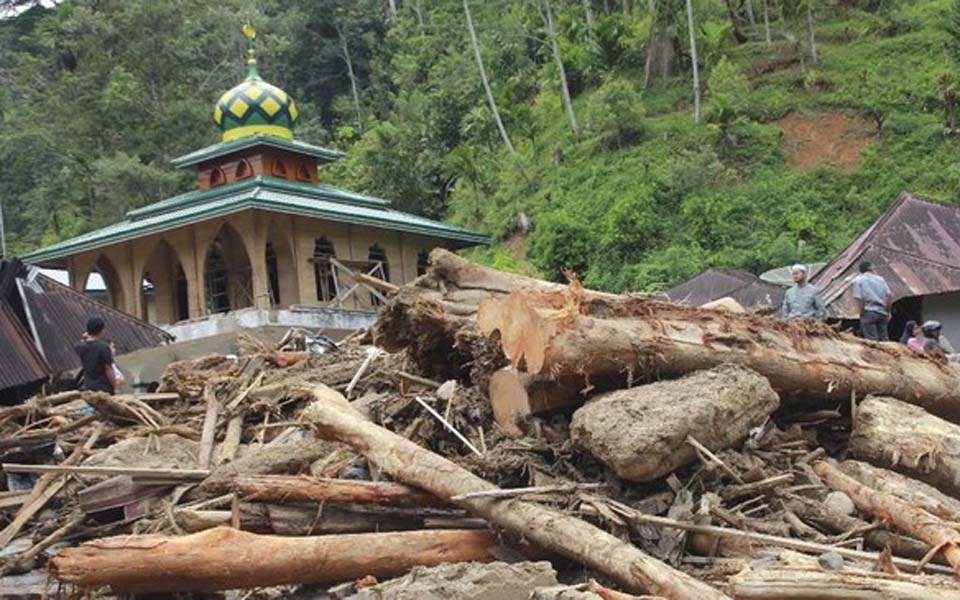
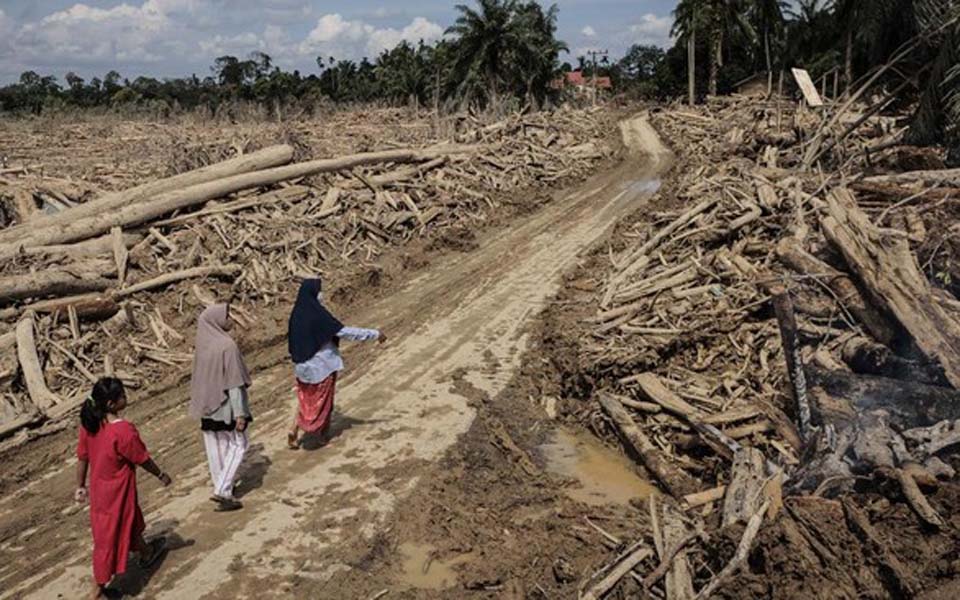
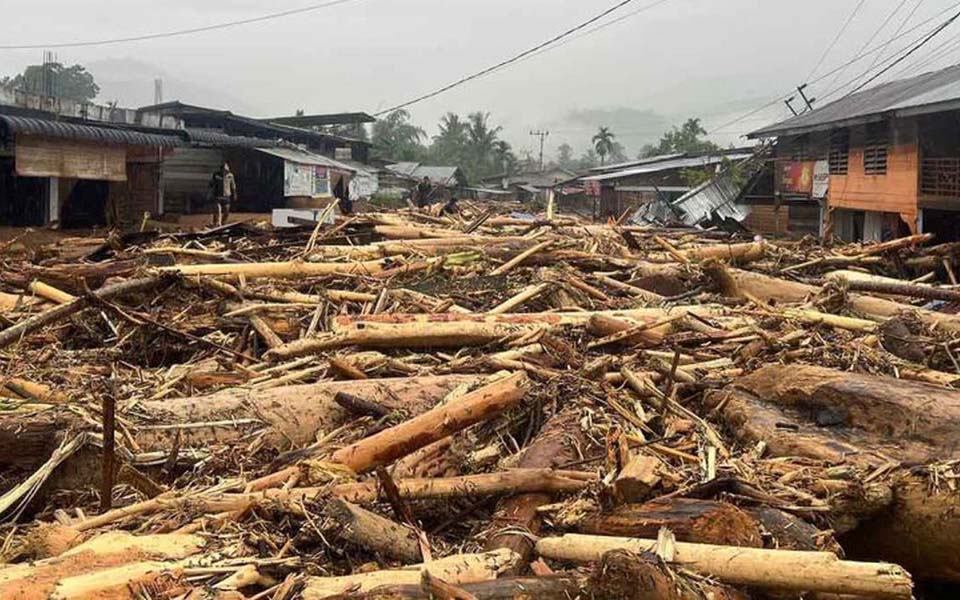
Aside from this, Walhi and ICEL also highlighted the still high rate of deforestation due to the expansion of mining, industrial areas and national strategic projects. While the government is promoting forest protection as part of handling the climate crisis, forest destruction and conflicts over living space continue to occur. The implementation of the Just Energy Transition Partnership (JETP) is also seen as being unable to respond to the problem of increasing emissions from captive PLTUs or ensure a just transition for affected communities.
Structural dependence on fossil fuels has an impact on vulnerability to market price fluctuations and increases the burden of energy subsidies which continue to drain the country's fiscal space. Preparing a nationally determined Transition Away from Fossil Fuel (TAFF) road map is important. This approach ensures that countries are not forced to comply with uniform, top-down global deadlines that could risk threatening domestic economic stability and national energy sovereignty. Instead, TAFF should be a strategic foundation for countries to break away from dependence on fossil energy, build independence through a decentralised energy system, and ensure that the direction, governance and benefits of the transition are fully determined by national interests.
"As long as the government still opens space for coal expansion, Indonesia's climate commitment to net zero emission targets will be difficult to achieve. Legal certainty and policies that are in line with the goals of the Paris Agreement are needed so that the energy transition can truly proceed fairly", said ICEL researcher Sylvi Sabrina.
Aside from emissions issues, both organisations also highlighted the social justice dimension of the energy transition. Until now, indigenous peoples, local communities, fishers, coastal women and workers in the fossil energy sector have not received adequate transition protection or guarantees. On the other hand, the economic benefits from downstream mineral and extractive industries are still enjoyed more by large corporate groups.
Walhi and ICEL emphasised that the momentum of the LCAW should be an evaluation point for the government to align international diplomacy with national policy. A commitment to a just energy transition will only have meaning if it is followed up by stopping the expansion of fossil energy, protecting forests and areas managed by the people, along with fulfilling the rights of communities who have borne the greatest burden of the climate crisis.
For more information:
Indonesian Forum for the Environment
Jalan Tegal Parang Utara Number 14, Mampang Prapatan, South Jakarta
Email: information@walhi.or.id, Instagram: @walhi.national, X: @walhi.national, TikTok: @walhi.nasional
Mobile: +6281 1550 1980
Indonesian Centre for Environmental Law
Jalan Dempo II No.21 9, RT.10/RW.3, Gunung, Kec. Kby. Baru, South Jakarta City
Email: info@icel.or.id, Instagram: @icel_indo, X: @ICEL_indo
Mobile: +62 881 5924 700
[Translated by James Balowski. The original title of the article was "Hentikan Diplomasi Iklim yang Kontradiktif di Panggung Global, Narasi Pemerintah Harus Sejalan dengan Kebijakan dalam Negeri".]