

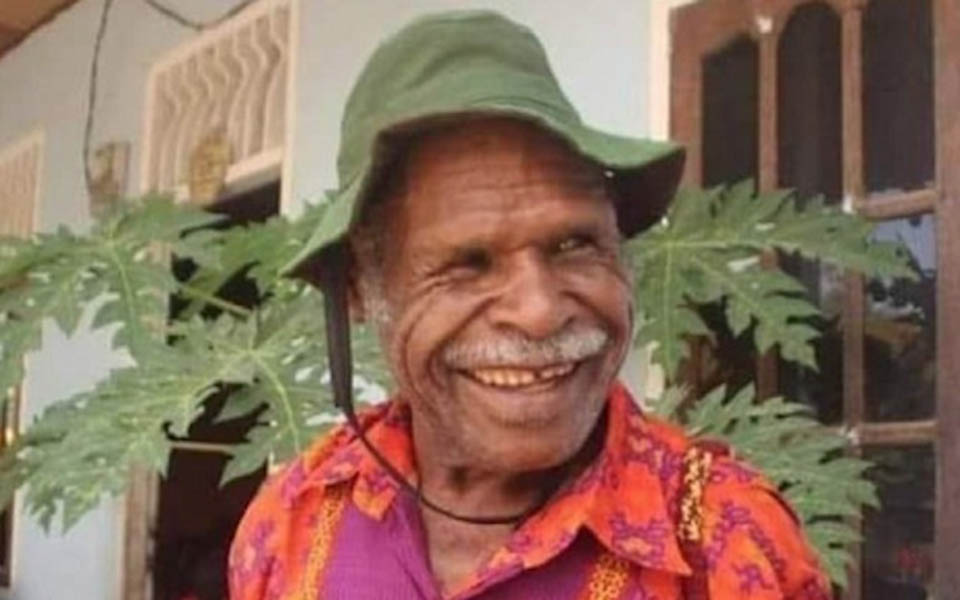
Six years have passed since the incident that claimed the life of Pastor Yeremia Zanambani in Intan Jaya Regency, Central Papua. Yet to this day, the shadow of injustice still envelopes the land of Papua.
Throughout this time, the government has consistently demonstrated incompetence and arbitrary conduct in handling the conflict in Papua, resulting in a failure to fulfill and protect human rights.
This has been proven by the total lack of resolutions to the series of crimes against humanity in the region. The killing of this religious figure and humanitarian activist by members of the Indonesian Military (TNI) is just one of many incidents involving violations of the law and human rights in Papua. Even though a military court imposed sentences on the three soldiers involved, the penalties handed down were far from just and instead deeply offended the family's sense of justice.
This grim event took place on September 19, 2020, when Zanambani and his wife, Mama Miriam Zoani, went to their garden in the Bomba area to feed their pigs.
At around 1 pm local time they heard the sound of gunfire echoing, which was suspected to originate from the direction of the Hitadipa Sub-District Military Command (Koramil) Headquarters. At around 3 pm Zanambani asked his wife to return home first, while he chose to stay behind to wait for their pigs to enter the pen.
As Zoani walked home, she passed by several fully armed TNI soldiers. Her anxiety receded when she found the group was led by Alpius Hasim Madi, the Koramil deputy commander (Wadanramil), a person she knew personally.
During a brief conversation, Madi asked about civilian movement along the path and Zoani replied that only she and her husband had passed by. Shortly after, local residents witnessed Madi and his troops moving toward the location of Zanambani's pig pen.
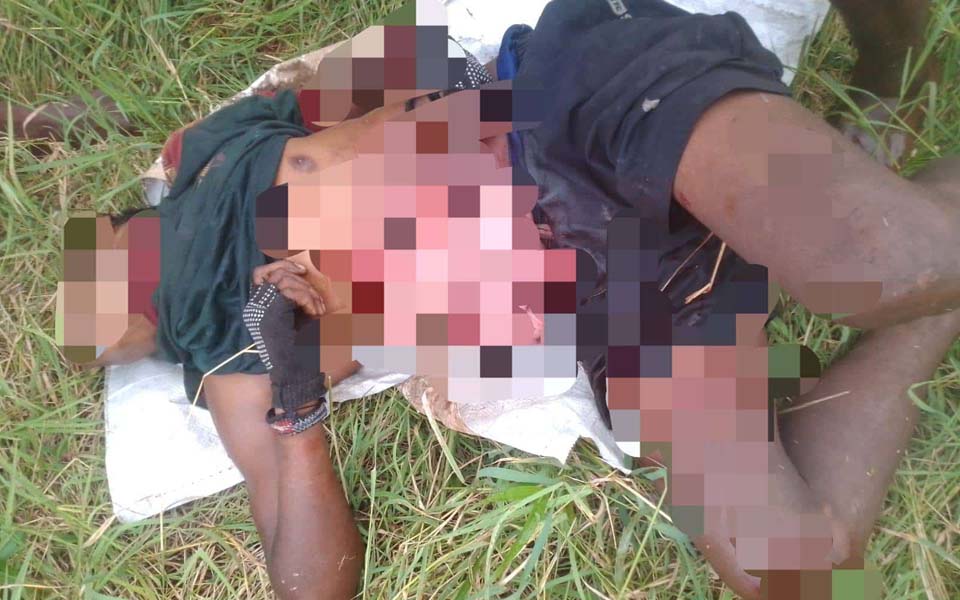
Later, as night fell and Zanambani had still not returned home, Zoani decided to go back to the garden. Upon arriving, she found Zanambani lying helpless suffering from a stab wound to his back as well as a gunshot wound to his left arm and severe bleeding from his hands and head.
Before taking his last breath last around midnight, Zanambani managed to give a final account stating that the assault and shooting had been carried out by troops led by Madi.
Legal proceedings into the murder resulted in three TNI members, Moh. Andi Hasan Basri, Alex Ading and Saiful Anwar being declared suspects, who were subsequently brought before Military Court III-19 Jayapura. All three were legally and convincingly proven to have jointly committed the crime of murder.
Regrettably, the panel of judges, through Verdict Number 186-K/PM.III-19/AD/VI/2022, handed down a very lenient sentence of only one year in prison for each defendant. An appeal filed by the military prosecutor failed after the Military High Court panel of judges in Verdict Number 57-K/PMT.III/BDG/AD/IV/2023 dated May 25, 2023, upheld the original verdict in its entirety. This ruling underscores the injustice endured by the family.
This case lays bare the deeply flawed nature of the military justice system which fails to meet any standards of independence, transparency or impartiality when adjudicating human rights violations. Trial mechanisms tend to be closed to the public and victims, as asserted by Pastor Zanambani's family who claimed to have never been involved in the legal process.
This demonstrates that the military justice system is not an appropriate forum for trying criminal offenses committed by military personnel against civilians. Allowing this disproportionate legal system to persist will only perpetuate the cycle of impunity and victimise the people of Papua.
Furthermore, the incidents occurring in Papua cannot be characterised as isolated, singular or random attacks. Evidence and witness testimonies gathered by the Humanitarian Team for Cases of Violence Against Religious Figures in Intan Jaya Regency found that the incidents that have occurred in Papua, particularly in the killing of Pastor Zanambani, show a pattern of systematic and collective attacks.
This pattern of systematic and collective attacks stems in part from the government's security-focused approach in Papua. The deployment of excessive TNI and Polri (Indonesian Police) forces on the pretext of maintaining stability, has in instead triggered an escalation in armed conflicts and created opportunities for the abuse of authority, ranging from arbitrary arrests to inequitable legal proceedings.
Based on monitoring data collected by Commission for Missing Persons and Victims of Violence (Kontras) between January and July 2026, it was found that that at least 1,597 TNI/Polri personnel were deployed to Papua. The scale of this deployment correlates directly with the incidence of violence against civilians. During this same monitoring period there were at least 38 violent incidents resulting in 58 injuries and 48 deaths.
And it was not just the issue of violence against civilians. Kontras also found extrajudicial killings occurring throughout 2026. Kontras monitoring data recorded at least seven incidents of extrajudicial killings resulting in 26 fatalities.
Based on this data, at the very least it can be concluded that the application of a security approach policy by the government in responding to the situation in Papua has proven to be misguided and counterproductive. Instead of creating stability, this approach has in fact placed civilian society in a position that is highly vulnerable to arbitrary actions that culminate violations of the law and human rights.
To date, this policy has been one of the main factors in triggering an escalation of conflicts and widening confrontation with the West Papua National Liberation Army-Free Papua Movement (TPNPB-OPM) across various regions of Papua, which ultimately deepen social problems and damages public trust in the government.
In light of these issues, the government must conduct a comprehensive evaluation of all policies and paradigms on conflict resolution in Papua. A fundamental review is urgently needed to shift away from the old paradigm and toward an approach that is humane, inclusive and prioritises dialogue in the interest of upholding human rights.
On this basis, we urge the following:
First, the Government of the Republic of Indonesia must immediately conduct a total evaluation of the deployment of military personnel and must immediately end the security-based approach in Papua. The state must have a full commitment to upholding the three core human rights obligations, namely respecting, protecting and fulfilling the rights of the Papuan people;
Second, the President of the Republic of Indonesia and the House of Representatives (DPR) must immediately revise Law Number 31/1997 on Military Courts. This regulation is considered to have fundamental weaknesses and is no longer relevant, so a total revision is crucial for the sake of presenting a judicial mechanism that is transparent, accountable and just for victims of crimes committed by security personnel;
Third, law enforcement agencies must thoroughly investigate the killing of Pastor Yeremia Zanambani by disclosing all facts regarding the sequence of events. The investigation must cover the potential involvement of other parties, including uncovering the structure and chain of command associated with the killing;
Fourth, the National Human Rights Commission (Komnas HAM) must conduct comprehensive monitoring and in-depth analysis of the killing of Zanambani and ensure that the disclosure of facts, including the potential involvement by other parties and the chain of command, as an integral part of the case resolution process as well as ensuring respect for the rights of the victim and their family and advocating for effective legal accountability for all parties proven to be involved.
Jakarta, September 21, 2026
Kontras Working Body,
Dimas Bagus Arya
Coordinator
Long live the victims! Do not stay silent! Resist!
[Translated by James Balowski. The original title of the article was "Enam Tahun Pembunuhan Pendeta Yeremia Zanambani: Bongkar Rantai Komando dan Hentikan Militerisme sebagai Akar Kekerasan di Tanah Papua".]