

Jakarta – The Indonesian Forum for the Environment (Walhi) has launched a study titled "Who's Behind the Fires?" to uncover the actors behind the companies with indications of the highest number of hot spots in plantation and forestry concessions.
This study found four main problems: the involvement of foreign capital behind high-risk concessions; the relationship between five figures who are close to President Prabowo Subianto; the concentration of hot spots in the Food and Energy National Strategic Project (PSN) in Merauke involving corporations and areas managed by the government; as well as forest and land fire (karhutla) patterns that need to be traced down to the corporate group level, not just individual permit holding companies.
These findings show that the risk of forest and land fires is closely related to land tenure structures, corporate networks and natural resource governance.
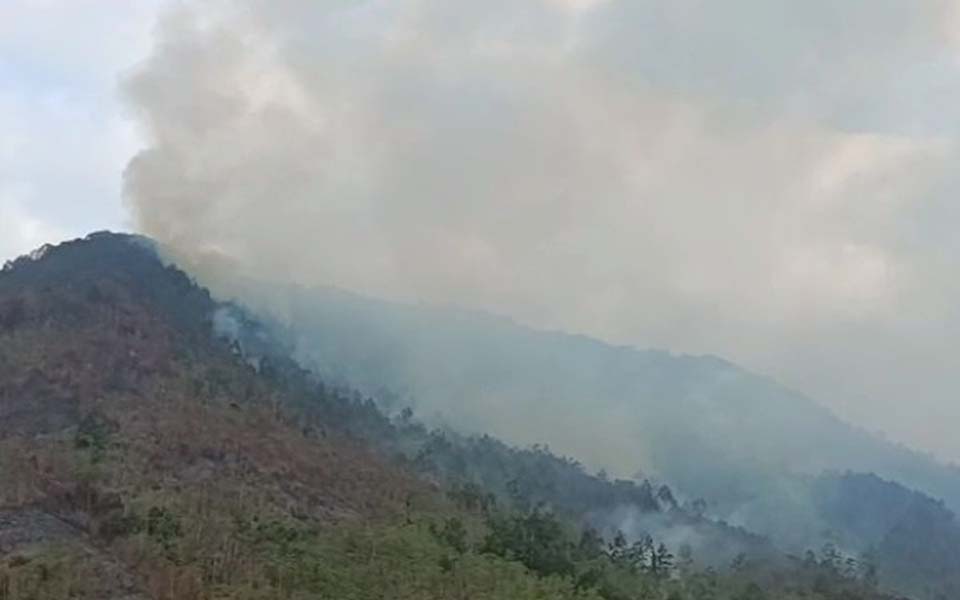
The study starts from Walhi's analysis of 30 companies with the highest concentration of hot spots in January-August 2026, consisting of 15 oil palm plantation companies and 15 holders of Forest Utilisation Business Permits (PBPH). Walhi combined spatial analysis using satellite data with tracking of the company's ownership structure, management, shareholders and ultimate beneficial owners. The hot spots used are the results of satellite detection with a high level of confidence, above 80 percent. Apart from that, Walhi also included companies that were found to have been directly found to have fires on their concessions based on direct monitoring results, such as PT Monrad Intan Barakat and PT Blossom Golden Sumatra. Here are the four main findings of the study.
First, foreign capital and the lack of transparency in corporate ownership. WALHI identified nine corporations with a high number of hotspots that have ownership links to entities in Singapore, Malaysia, Hong Kong and jurisdictions with limited information disclosure, such as the British Virgin Islands (BVI) and Samoa. One case that is of concern is PT Mayawana Persada, whose ultimate beneficial owner cannot yet be identified because its ownership structure boils down to these two jurisdictions. Walhi also traced 93 companies with indications of forest and land fires that are affiliated with business groups from Singapore and Malaysia, including Sinar Mas, Wilmar, Musim Mas and First Resources. This cross-border and multi-layered ownership structure risks hampering the tracing of those who gain economic benefits as well as those who must be held responsible for environmental damage.
Second, the relationship between five figures who are close to President Prabowo Subianto. The study found a connection between Iwan Bomba or Setiawan Ichlas, Special Presidential Envoy for Economics and Banking, with PT Golden Blossom Sumatra; Aburizal Bakrie with PT Monrad Intan Barakat; as well as Edhy Prabowo, Widjono Hardjanto and Benny Pangbin with PT Kiani Lestari, along with a network of related companies. These companies are included in Walhi's search for concessions with indications of a high number of hot spots and/or fire incidents. These findings raise questions regarding transparency, conflicts of interest and the integrity of natural resource governance. Walhi believes that the connection between business and politics needs to be the basis for strengthening supervision, testing the propriety of company management and ensuring that no actor escapes scrutiny because of their closeness to power.
Third, the concentration of hot spots in the Merauke Food and Energy PSN area in South Papua. Walhi's spatial analysis found 807 hot spots in the Food and Energy Development Area in Merauke between January 1 and August 31, 2026. A total of 133 hot spots were identified in six PSN Energy Estate entities affiliated with First Resources and Wilmar International. Meanwhile, 674 other hot spots are in four Food Estate clusters which are institutionally managed by the Coordinating Ministry for Food and the Ministry of Agriculture.
These findings show that the forest and land fire problem in Merauke cannot be separated from the management of large-scale development projects. Responsibility needs to be traced not only to the company, but also to the government agencies that plan, coordinate and oversee the program. The study also noted the presence of the Jhonlin Group in the implementation of food estate land clearing in several areas, but the direct relationship between the company's activities and certain hot spots still requires further field verification.
Fourth, repeated patterns in large business groups indicate the need for accountability up to the level of corporate controllers. Walhi's research found the same business group affiliation in several entities with different concessions, including First Resources, Wilmar International and Sinar Mas. These repeated fires show the importance of examining operational policies, land management patterns and factual controls at the business group level, rather than simply assessing each subsidiary as a stand-alone entity. However, the connection between ownership and the existence of hot spots is not in itself proof that a company or individual is setting fires. These findings must be the basis for investigations, field inspections and accountability testing in accordance with applicable law.
Walhi Campaign Coordinator Uli Arta Siagian is urging the government to open up transparency on ownership and ultimate beneficial owners of companies, including companies with cross-border ownership structures; conduct thorough investigations of concessions that experience repeated fires; as well as tracing responsibility to the parent company, controlling business group and decision makers who are proven to have played a role.
"The government must also evaluate permits and revoke the permits of companies that are proven to be problematic, apply administrative, civil and criminal sanctions according to the results of inspections, and ensure the restoration of the ecosystem and the rights of affected communities. Specifically in Papua, apart from ensuring community protection and access to health services there, the government must also stop land and forest clearing operations which have an impact on destroying the Papuan ecosystem, and clarify the form of accountability between the government and private partners such as the Jhonlin Group. There must be no room for national strategic projects to obscure responsibility for environmental risks and damage", said Siagian.
Siagian also said that there should be no impunity even for companies affiliated with people close to the president or giant groups in the palm oil and forestry business. "The President must carry out his commitment which states that he will take firm action against any company involved in forest and land fires. Don't end up just talking", he said.
"Stopping karhutla is not enough to extinguish the fire when the fire spreads or just imposing sanctions on a company holding the permit. Just check the company, if it is proven immediately carry out law enforcement and sanctions. There are many regulations that can be used, for example the Environmental Management and Protection Law articles 76 and 77 and the Forestry Law article 72", added Walhi National Executive Director Boy Jerry Even Sembiring.
The state must uncover land tenure structures and networks of power that allow the risk of fires to continue to recur, ensure that those who receive economic benefits are also held accountable according to their roles, and restore the environment and the rights of affected communities. "As long as accountability stops with operational entities, actors who control and enjoy the benefits of land tenure risk remaining exempt from law enforcement", concluded Sembiring.
Indonesian Forum for the Environment (Walhi)
Jln Tegal Parang Utara Number 14, Mampang Prapatan, South Jakarta
Email: information@walhi.or.id, Instagram: @walhi.nasional, X: @walhi.national, TikTok: @walhi.nasional
Mobile: (+628115501980)
[Translated by James Balowski. The original title of the article was "Peluncuran Kajian "Siapa di Balik Api?", WALHI Tuntut Pertanggungjawaban Aktor Paling Diuntungkan dari Karhutla".]