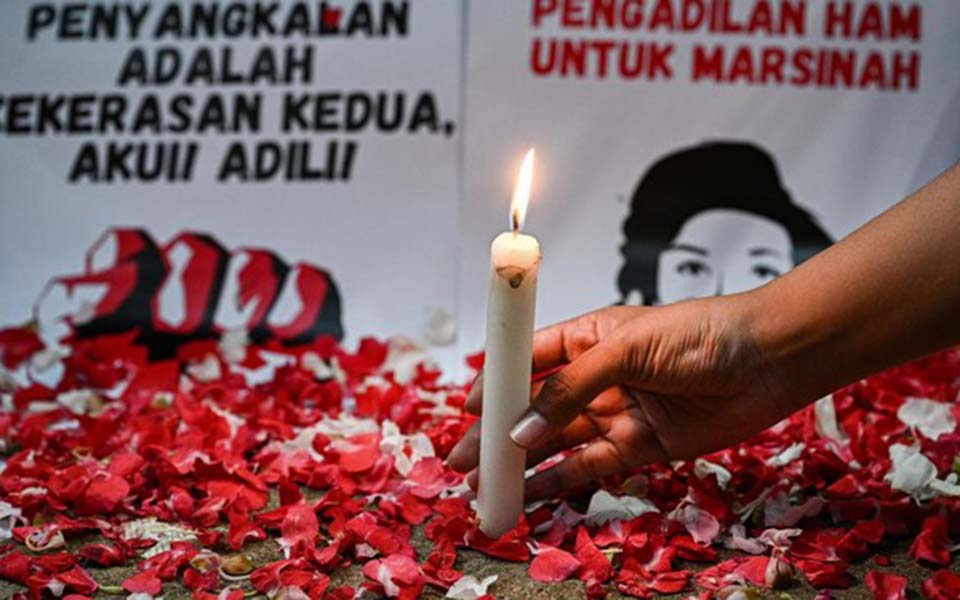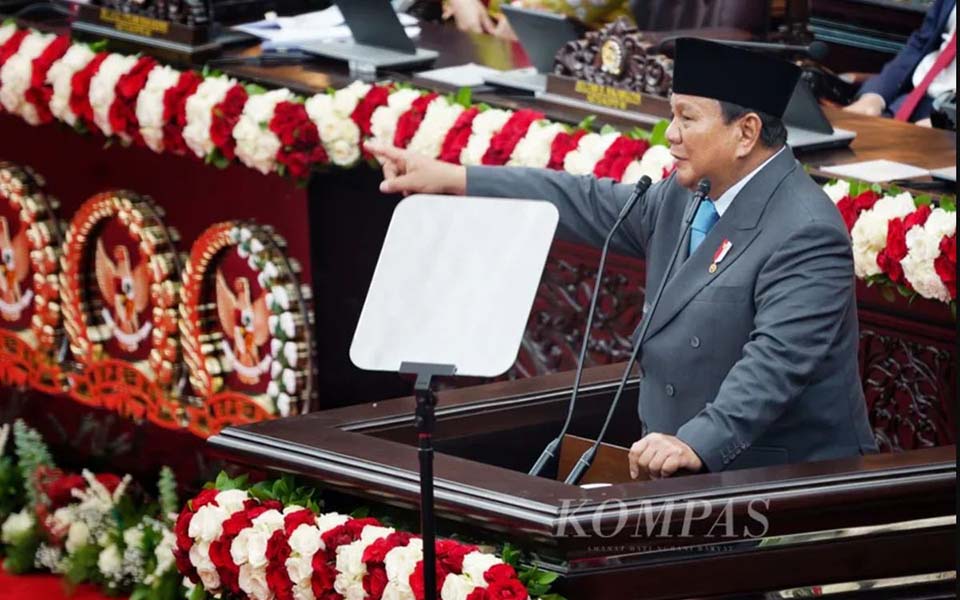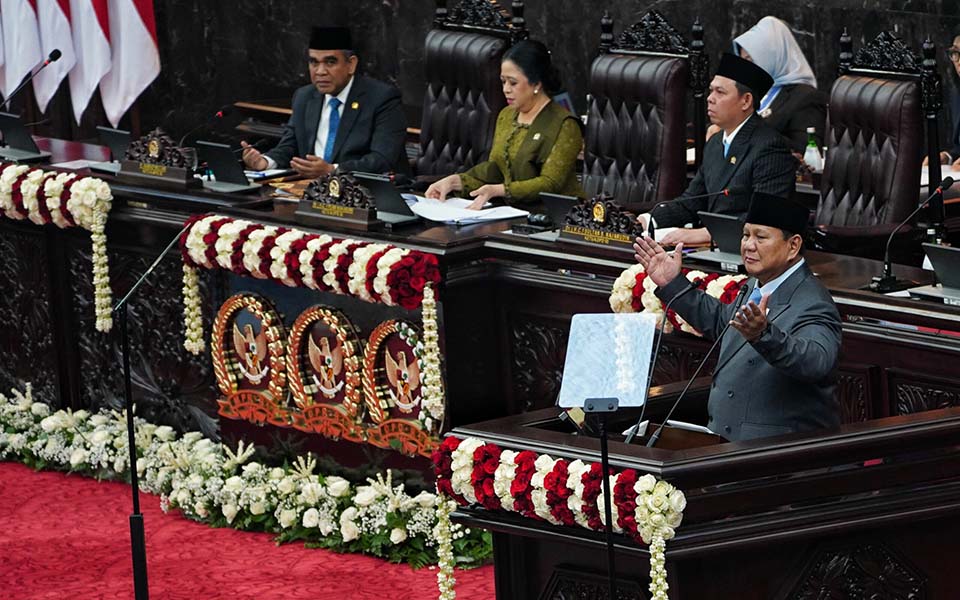


During the first two years of President Prabowo Subianto and Vice President Gibran Rakabuming Raka's administration, the government posted a red report card in promoting and protecting human rights.
Amnesty International Indonesia noted a stagnation in resolving past gross human rights violations, deteriorating protection of civil space, increasing involvement of security forces in civil affairs, as well as various policies that have a negative impact on people's rights.
This assessment is based on monitoring by Amnesty International Indonesia in the period October 20, 2024, to October 19, 2026, and is complemented by verification of findings from state institutions including the National Human Rights Commission (Komnas HAM), the National Commission on Violence Against Women (Komnas Perempuan) and a number of other civil society organisations, which are supported by three factors: 1) making strategic policies and legislation without public participation and human rights priorities; 2) expansion of civil positions and projects for the Indonesian Military/National Police (TNI/Polri) which weakens the State Civil Servant (ASN) career system and human rights; 3) the delegitimisation and use of negative narratives towards criticism by public officials which contributes to the narrowing civic space and increasing risks for human rights defenders.
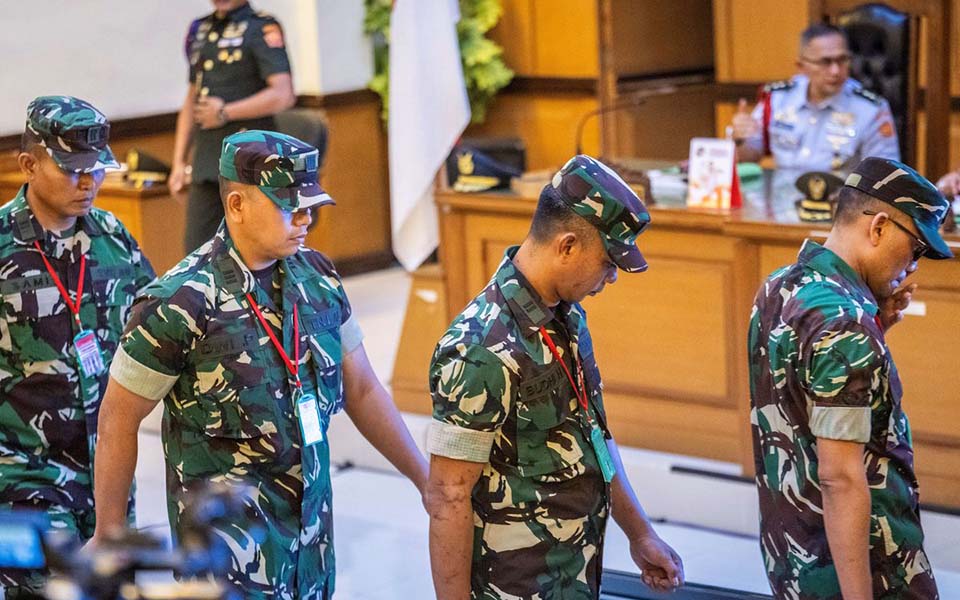
Amnesty also highlighted two main indicators in evaluating the two years of Prabowo-Gibran's leadership, namely political indicators and economic indicators. These political indicators include the rewriting of history and former president Suharto's national hero status which erased the history of past gross human rights violations; the establishment of hundreds of Development Territorial Battalions (BTP) and new Regional Military Commands (Kodam), including in East Nusa Tenggara (NTT); military involvement in centralised cooperative projects to the revision of the TNI Law; to the revision of the Criminal Procedure Code (KUHUP), the Criminal Code (KUHP) and the 2026 National Police Law, which without meaningful public participation paved the way for the strengthening of authoritarian practices in Indonesia.
Regarding economic indicators, Amnesty highlighted the increasing influence of political-economic interests which have an impact on the protection of people's rights; recentralisation of government through cuts in transfers to regions; State Strategic Projects (PSN) which take people's land; as well as the Free Nutritious Meals (MBG) and Red and White Village Cooperative (KDMP) programs which raise questions regarding transparency, accountability and their impact on fulfilling people's rights, while basic services such as the supply of kerosene and fuel in various areas continue to be problematic.
Erosion of civil liberties
The erosion of civic space has been exacerbated by systematic stigmatisation from the pinnacle of power. The president has repeatedly used labels such as "foreign stooges", "londo ireng" (Black Dutchman), "ndasmu" (a Javanese insult literally meaning "your head"), "treason" and even "terrorist" against critics and civil society movements. This narrative was amplified by other officials who called activists with similar labels, including "separatists". Government-affiliated accounts also spread the "foreign stooge" narrative.
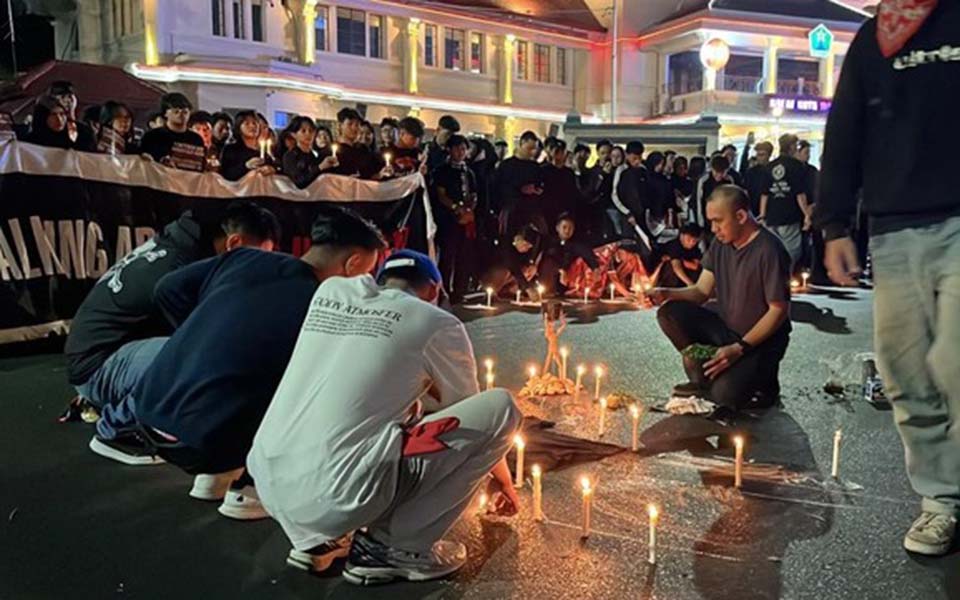
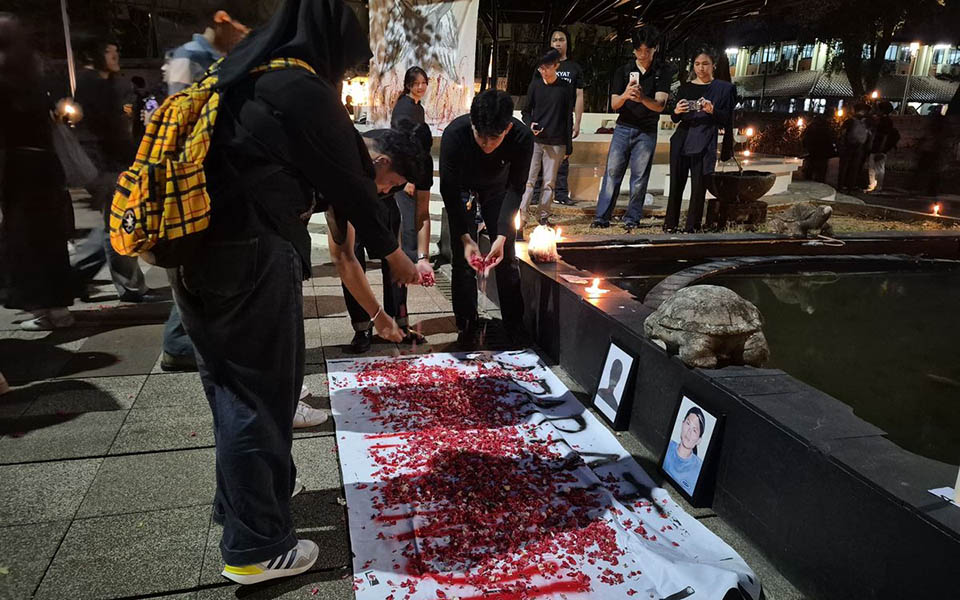
From October 20, 2024 to October 19, 2026, Amnesty recorded that at least 406 human rights defenders experienced attacks. The forms of attack included police reporting, criminalisation, physical attacks and office attacks. In the 2025-2026 protests, at least 6,003 people were arrested and subjected to physical violence; 4,210 of them were released without charge. Since October 20, 2024, at least 51 people have been charged under the Information and Electronic Transaction (ITE) Law. Criminalisation of the August 2025 demonstrations continues with prison sentences. The court sentenced student activist Khariq Anhar to five months in prison for uploading memes related to the August 2025 demonstrations. Anhar became the 460th person to be found guilty in connection with the August 2025 demonstrations.
The erosion of civil liberties has extended to the silencing of voices in the digital sphere. Recently, the Ministry of Communication and Digital Affairs (Komdigi) removed 486 pieces of social media content related to protests and the violence that followed demonstrations in Jakarta on August 27, 2026. This included video footage capturing an act of violence by a mob in Pejompongan that claimed the life of a mirror vendor Bambang Setiawan. The government's removal of this content represents an arbitrary suppression of the right to information and digital freedom by the state, especially so given this fatal act of violence has yet to be fully investigated, and the removed footage could have served as evidence.
Militarisation and dispossession: From Nabire to Merauke
The expansion of the military's role in the civilian sphere is a hallmark of intensifying authoritarian practices. The pattern is consistent: corporations secure concessions under the PSN framework, often involving security forces in their operations. This results in local communities being stripped of their fundamental rights, including access to their land and livelihoods.
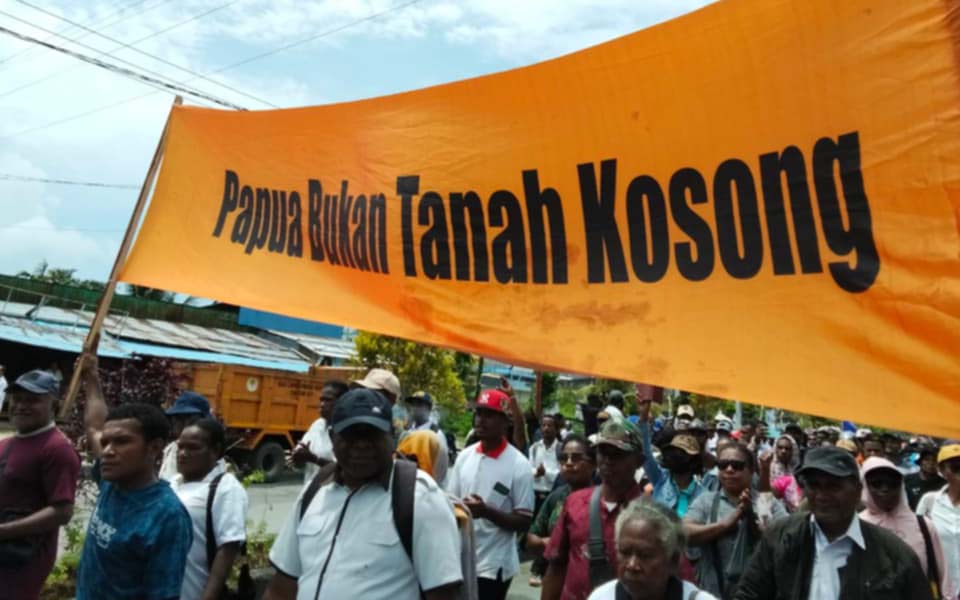
The basic rights of local communities frequently fall victim to the extractive industry. First, gold. In Nabire, Central Papua, gold mining operations have encroached upon the customary lands of the Wate and Yerisiam Gua tribes, destroying sago forests and polluting rivers. Indigenous people who oppose these activities have faced criminalisation. A similar situation has unfolded in Mimika, where land conflicts between the Amungme and Kamoro indigenous groups and a mining company have led to river pollution and the militarisation of the region.
Second, nickel. In Morowali and Halmahera, the "downstreaming" (industrial processing) of nickel has resulted in various human rights violations. The clearing of customary forests for nickel processing has also triggered floods and landslides. Residents who speak out against the destruction of their living environments are instead labelled as foreign agents.
Third, coal. In Kalimantan, companies have left behind hundreds of abandoned coal mine pits that have claimed the lives of children. Furthermore, local water sources have been contaminated, and public protests have been met with repression. Instead of conducting an evaluation, company concessions are being automatically extended, as stipulated by the Mineral and Coal Mining Law.
Fourth, palm oil. In Merauke, South Papua, thousands of hectares of customary land belonging to the Malind people have been taken over for palm oil and sugarcane industries without obtaining free, prior and informed consent (FPIC) from the affected communities. In Kalimantan and Sumatra, companies have criminalised farmers. When residents have set up customary blockades, military and police personnel have been deployed.
In NTT, a new Kodam has been established, Babinsa (village-level military personnel) are overseeing the KDMP program and security forces are cultivating vegetable gardens for the MBG program. The military's primary mandate and national defence has been expanded to include the supervision of development projects.
Problematic programs harm economic, social, and cultural rights (Ekosob)
The implementation of the MBG program continues to give rise to various human rights issues that necessitate a comprehensive government evaluation. Data from the Ministry of Health, as of September 2, 2026, records that 50,059 schoolchildren have suffering from symptoms of food poisoning across 560 separate incidents in 245 regencies/cities since January 2025.
Komnas HAM has identified failures in the governance of the MBG program. Indonesia Corruption Watch (ICW) estimates that nearly one-third of the foundations partnering with the MBG program are affiliated with security personnel or the families of elites within the circles of power. Then the reallocation of funds from cuts to the Regional Education Fund (TKD) has reduced resources for education. The Indonesian Legal Aid Foundation (YLBHI) believes that the development of the KDMPs has facilitated the seizure of land from local residents in violation of the principle of free, prior and informed consent.
Government hampers disaster recovery
In recovering from flash floods and landslides in Sumatra at the end of 2025, the government not only failed in but hampered post-disaster recovery. Fuel was scarce so diesel for heavy equipment became the responsibility of the residents and was full of extortion. Cement was scarce, hampering reconstruction. This all happened in the midst of the construction of the Nutrition Fulfilment Service Units (SPPG) and KDMP which contrasted with the suffering of the residents.
A similar pattern occurred in post-earthquake NTT and post-forest and land fires (karhutla) in Kalimantan. Forest and land fires in Sumatra, Kalimantan and Papua reportedly affected 14.5 million people. It is very unfortunate that the president on October 12 claimed that the area of forest and land fires had decreased drastically after the government intervened on a large scale. This is a reckless claim when many residents in the affected areas are still suffering from the haze from forest and land fires.
Likewise, the government did not want to continue the assistance of the Japanese fire team in Kalimantan, which ended on September 29, even though the fire hotspots were reported to have not been completely extinguished. As of mid-October, residents in forest and land fire locations in Sumatra and Kalimantan recorded reddish skies due to smoke haze.
Moreover, forest and land fires have claimed lives. As of last September, the Ministry of Health recorded that at least four people had died due to forest and land fires, including three people in Central Kalimantan and one person in West Kalimantan. This does not include the deaths of a six-year-old child in North Kayong, West Kalimantan, due to a respiratory infection on October 14 and a one-year-old toddler in Samarinda, East Kalimantan, on October 15 after suffering from shortness of breath. These two children died when smoke haze enveloped the area where they lived.
In NTT, at least 108 earthquake survivors died in refugee camps. This adds to the sad news, after 119 Indonesian Migrant Workers (PMI) from NTT were earlier recorded to have died in Malaysia throughout 2024. They are direct victims of deprivation of living space. When land is confiscated and job opportunities are non-existent, residents are forced to work abroad, although many have illegal or non-procedural status. The state is busy building Kodam and MBG, but has done little to protect citizens' rights.
Discrimination against minority groups
The Minister of Religion's claim of highest social and religious harmony on August 17 contradicts the data. The Setara Institute for Peace and Democracy recorded 221 incidents with 331 acts of violations of freedom of religion/belief (KBB) in 2025, after 260 incidents with 402 acts in 2024. Komnas Perempuan recorded an increasing trend in KBB over the last five years. A few days before the Minister of Religion's claim, there was a rejection of the construction of a church in Citraland, Surabaya, and the sealing of the GKPI Church in Rajeg, Tangerang, after its congregation was disbanded by an intolerant group.
Groups with diverse sexual orientations and gender identities also experience systemic discrimination. In February and June 2025 police arrested more than 100 people in arbitrary raids in Jakarta and Megamendung, accompanied by taking and distributing photos without permission, forced HIV testing and the confiscation of goods. In Bogor, trans women are victims of violence without law enforcement. The categorisation of LGBTQI+ as a non-military threat under Presidential Decree 111/2025 strengthens the stigma which is contrary to the principle of non-discrimination in the Constitution.
Corruption and human rights violations
In the last two years, corruption in Indonesia has cost lives: from mega-scandals to the theft of disaster funds. Indonesia plummeted in its Corruption Perception Index (CPI) Score, and the Corruption Eradication Commission (KPK) recorded 270 new cases. A number of large corruption cases, including the PT Timah case of 300 trillion rupiah (2024), the Pertamina case of 285 trillion rupiah (2025), the BJB Bank case of 223.6 billion rupiah and the extortion case of 26.2 billion rupiah by 43 police officers, were reported by ICW and the Commission for Missing Persons and Victims of Violence (Kontras). The most recent case on October 16 was corruption of National Disaster Management Agency (BNPB) Ready-to-Use Funds (DSP) worth 148 billion rupiah – consisting of 45.76 billion rupiah in 2024, 52.27 billion rupiah in 2025 and 50 billion rupiah in 2026. Reserve funds for handling forest and land fire disasters in Kalimantan and Papua, the earthquake in NTT and the Sumatra floods were instead used by BNPB officials who were arrested by the KPK to buy 150.4 million shares worth 30.98 billion rupiah.
This is where corruption becomes the cause of human rights violations. When forest and land fire funds are corrupted, the right to a healthy living environment and the right to clean air are deliberately ignored. The haze of forest and land fires, which today has made international mass media headlines, is difficult to extinguish, and could be the result of corruption in disaster funds. When flood and earthquake funds are corrupted, the right to clean water, the right to adequate housing and the right to life are taken away. When 49.5 billion rupiah in child nutrition funds at the National Nutrition Agency (BGN) were corrupted, children's rights to food and health were taken away. Corruption is no longer just a financial crime, but a systematic violation of basic rights.
Women and Papua: A double emergency
For women, there are also layers of vulnerability. In Aceh, female conflict survivors need recovery in the form of recognition, reparations, health and psychosocial services. Women human rights defenders face gender-based violence. In disasters, women, children and people with disabilities require special needs, namely security, reproductive health, privacy and sanitation. Unfortunately, government policies are still not gender responsive.
In Aceh, the expansion of the TNI's role must be viewed with historical sensitivity. The 2005 Helsinki Memorandum of Understanding (MoU), which ended the armed conflict between the Free Aceh Movement (GAM) and the government, specified non-organic military reductions. Military expansion has the potential to bring trauma. When development is defined as barracks and gardens for officials, women are the first victims. They lost their traditional lands and reproductive health services.
In relation humanitarian issues in Papua, data from the Population and Civil Registration Service (Disdukcapil) throughout the Land of Papua reveals that as of 2026 the number of Indigenous Papuans (OAP) is 2,283,703 people or 39.4 percent of the total population of 5,797,499 people, with non-OAP at 60.6 percent. OAP are a minority in their own land.
Meanwhile, there are 15,980 non-organic Army (TNI AD) personnel in Papua, according to media reports, consisting of: The East Sector 11,480, South 1,800, North 1,800 and West 900, not including organic Navy, Air Force, Polri, State Intelligence Agency (BIN) and Strategic Intelligence Agency (BAIS) personnel. This means, one OAP person versus five personnel. This means that Papua has returned to being a military operations area (DOM).
Closing remarks
With the above notes in mind, Amnesty International Indonesia urges:
1. The establishment of an ad hoc Human Rights Court for past serious human rights violations.
2. Revoking Suharto's national hero title status, as well as the denial of the facts of past gross human rights violations and the May 1998 mass rapes.
3. An end to the criminalisation of human rights defenders for peaceful criticism using the ITE Law and their labelling as foreign agents.
4. An end to expanding the placement of active TNI/Polri members in civil positions and affairs, an evaluation of to the TNI Law and Polri Law and an end to the construction of new Kodams.
5. An independent audit the MBG and KDMP programs, enforcing legal accountability for poisoning victims and an end to reallocating education funds for the MBG program.
6. A full investigation into the obstacles to disaster recovery in Sumatra, the deaths of earthquake survivors in refugee camps in NTT and human trafficking including the deaths of 119 Indonesian migrant workers (PMI) in Malaysia.
7. The end to and an evaluation of mining operations and all PSNs that destroy nature and harm the people.
8. The repeal the discriminatory provisions under Presidential Decree 111/2025 and ensuring that recovery policies are gender responsive.
9. Opening humanitarian dialogue in Papua, respecting the Helsinki MoU in Aceh and ending the militaristic approach to the living space of citizens, especially farmers.
- Watch the Amnesty International Indonesia Press Conference: Prabowo-Gibran Two Year Human Rights Report here: https://www.youtube.com/watch?v=DVXjDKVu3LU
[Translated by James Balowski. The original title of the article was "Rapor Merah HAM Dua Tahun Pemerintahan Prabowo-Gibran".]