

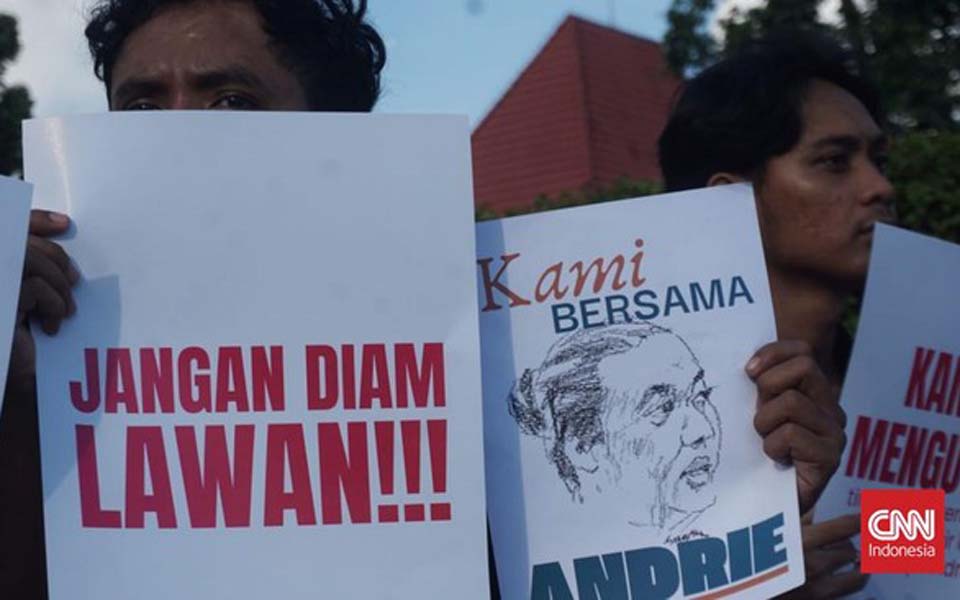
Jakarta – The civil society organisation Indonesian Human Rights Watch (Imparsial) says the resignation of Lieutenant General Yudi Abrimantyo as the head of the Indonesian Military's (TNI) Strategic Intelligence Agency (BAIS) is a manoeuvre to protect the intellectual actor behind the pre-mediated murder attempt on Andrie Yunus.
Imparsial Director Ardi Manto Adiputra suspects the TNI is washing its hands of the of the matter in order to quell public outcry over the acid attack on the Commission for Missing Persons and Victims of Violence (Kontras) activist, which allegedly involved BAIS members.
"We are also concerned that this move is a manoeuvre to protect the intellectual actor in the case", Adiputra said when contacted via text message on Thursday March 26.
By replacing the head of BAIS quickly without any clarity on their legal status, Adiputra said, it appears as if the TNI has taken decisive action. Adiputra said this pattern appears to be a strategy to break the chain of accountability at higher levels.
"The legal process will just stop with the field operators (the executors), while the command structure above them is 'secured' through a transfer of positions, so it is clear that the intellectual actor behind the attack on Andrie Yunus will never be touched by the law", he said.
Adiputra warned that the transfer of the BAIS chief's (Kabais) position without a transparent official explanation has the potential to fuel wild speculation among the public.
"Was this removal a proactive step in the criminal investigation because there were indications of the direct involvement in the case of the person concerned? Or is it simply an administrative transfer due to the negligence of the person concerned in their supervisory function (command responsibility) over their subordinates?", he asked.
"Without public accountability, this move appears ambiguous and actually obscures the substance of the real problem", Adiputra added.
Adiputra believes that this situation further reinforces the perception that the military remains a "zone of legal impunity" for elite officials within the institution. Furthermore, this situation will also give rise to public scepticism about the TNI's internal commitment to improving the morale and discipline of its soldiers.
"The practice of impunity for the intellectual operators of the attack on Andrie will have a negative impact on the broader democratic climate in Indonesia because it involves intelligence elements in a direct attack against a human rights and democracy activist", he said.
"If this case isn't resolved transparently, it will send the message that violence against critics is something that can be tolerated and this will in turn create fear among civil society members about participating in monitoring the government. Or is this indeed the scenario that is being playing out by the state?", he said.
Reform, not revitalisation
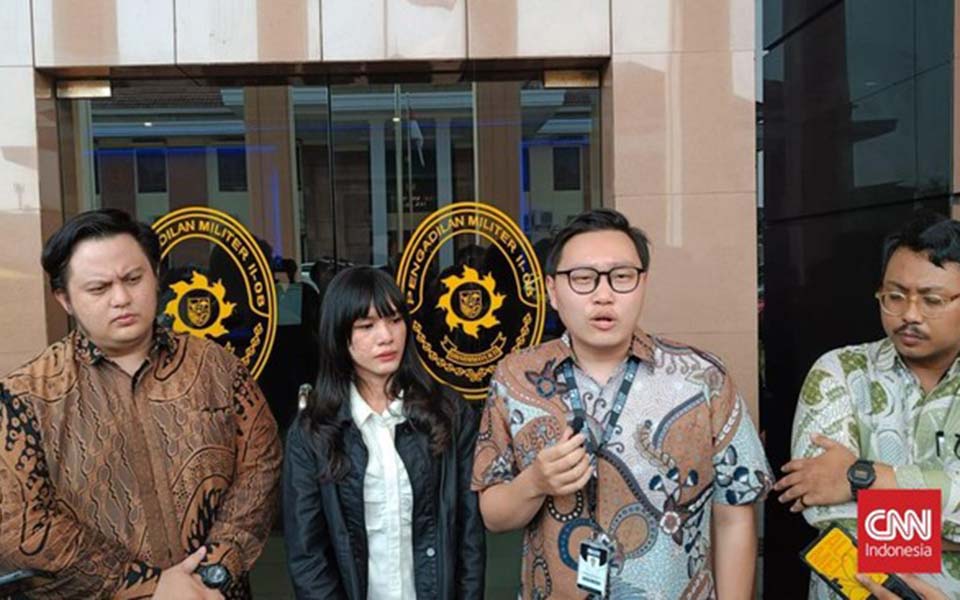
The Civil Society Coalition for Security Sector Reform meanwhile has criticised the TNI's revitalisation plan as announced by the TNI Information Centre head Major General Aulia Dwi Nasurlah at a press conference on Wednesday evening March 25.
The revitalisation agenda reportedly includes firm action against TNI members who violate the law, imposing strict legal sanctions and punishment through military justice mechanisms, among other things.
The Coalition believes the revitalisation agenda lacks clarity in its intent and purpose. According to the Coalition, punishing military members involved in general crimes through military justice is not an answer for victims, but rather a form of impunity that continues to be maintained by the state.
"This revitalisation agenda is the total opposite of the TNI's reform agenda outlined in the TNI Law, which mandates the importance of a military justice reform process so that military members involved in general crimes can be tried in general courts", said Coalition representative Muhammad Isnur in a written statement on Thursday March 26.
Isnur said that in a state governed by the rule of law, all citizens must be treated equally before the law, as stipulated in the Constitution. The punishment process for every citizen who commits a crime must be treated equally, based on the nature of the crime, not the perpetrator. The president, ministers, members of the House of Representatives (DPR), the police, military personnel and other civilians are required to submit to general courts if they commit a crime.
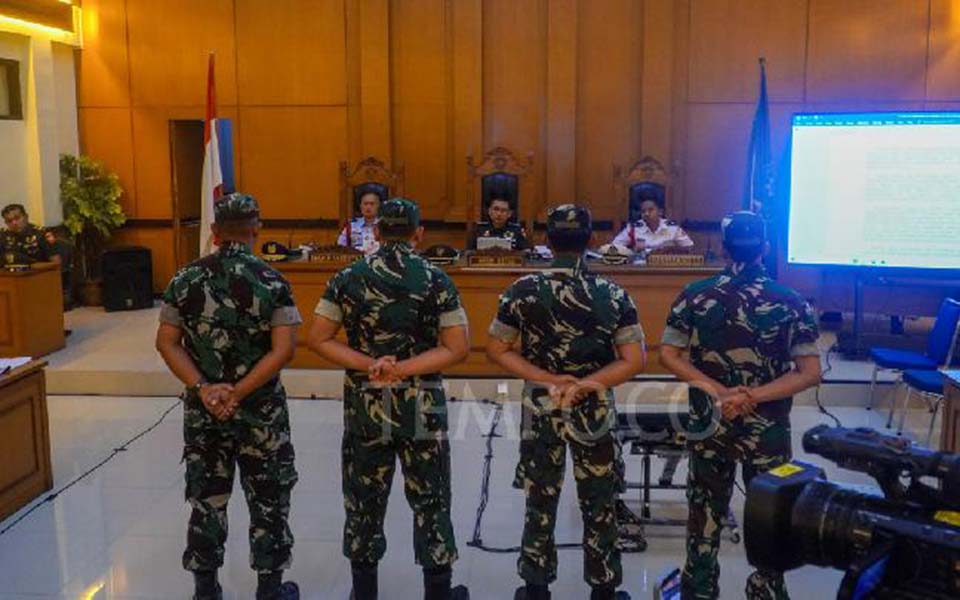
In this context, Isnur explained, the disclosure of the Andrie Yunus case must be carried out through a general court, not a military or special court.
"In a state governed by the rule of law, no citizen or group should receive preferential treatment over other citizens. Everyone must submit to general courts if they are involved in general crimes. MPR [People's Consultative Assembly] Decree Number VI and VII of 2000 and Article 65 of the TNI Law clearly state that military personnel involved in general crimes must be tried in general courts", Isnur asserted.
The Coalition believes that the revitalisation agenda, which involves removing the head of BAIS, is inadequate and not the answer to achieving justice for victims. It does not demonstrate that the TNI is accountable and transparent. The coalition believes that the accountability of TNI soldiers can only be seen if resolving the crime in the Yunus case is done through public justice.
"Moreover, we are urging that the agenda for change within the TNI (TNI reform) should be directed toward strategic intelligence reform", he said.
Isnur said that BAIS has often abused its authority, such as its alleged involvement in the August 2025 riots and the Yunus case. BAIS's involvement in the Yunus case cannot be justified under any pretext or reason.
"In a democratic country, criticism, input, and differences are essential to democratic life and should not constitute a national security threat that needs to be monitored or terrorised by BAIS", said Isnur.
"Therefore, reform of BAIS is urgent, namely the task of strategic intelligence is only to confront strategic issues outside the country that threaten national sovereignty, such as the potential threat of war with another country. BAIS must not and cannot operate domestically by monitoring and overseeing civilians, let alone committing violence like in the Andrie case, because that is a form of black intelligence that is prohibited in a democratic system and a state governed by the rule of law", he asserted. (fra/ryn/fra)
[Translated by James Balowski. The original title of the article was "Koalisi: Pengunduran Diri Kabais Manuver Selamatkan Dalang Air Keras".]