

Aida Ulim, Jayapura – The West Papua National Committee (KNPB) and the West Papua National Liberation Army (TPNPB) have declared their political stance against the New York Agreement signed by the Indonesian and Dutch governments 64 years ago, on August 15, 1962.
The agreement, signed at the United Nations (UN) headquarters in New York, stipulated the transfer of West Irian (as Papua was then called) from the Dutch to the Indonesian government, without involving the Papuan people.
At that time, the parties agreed to transfer West Irian from the Dutch government to the United Nations Temporary Executive Authority (UNTEA) before handing it over to the Indonesian government.
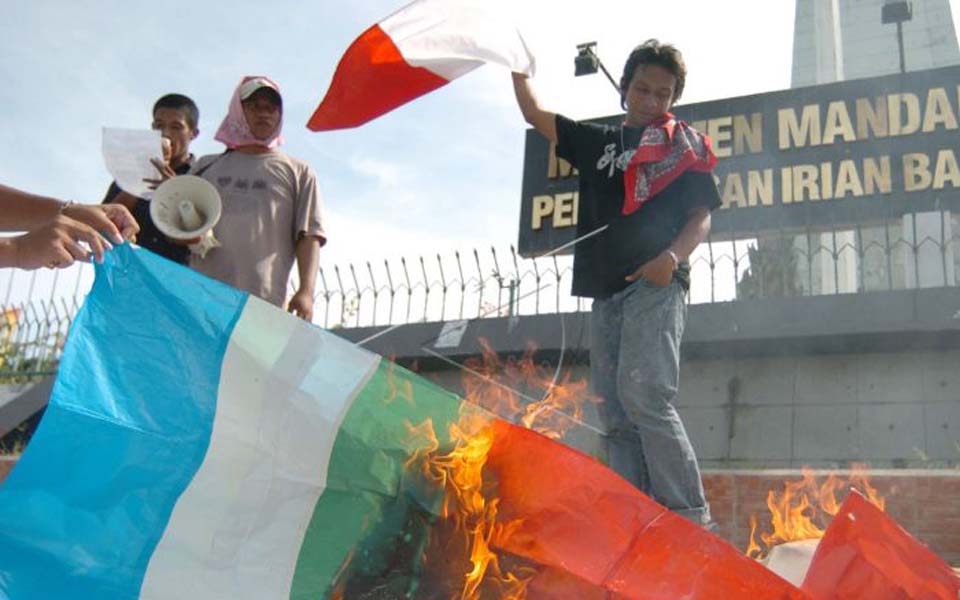
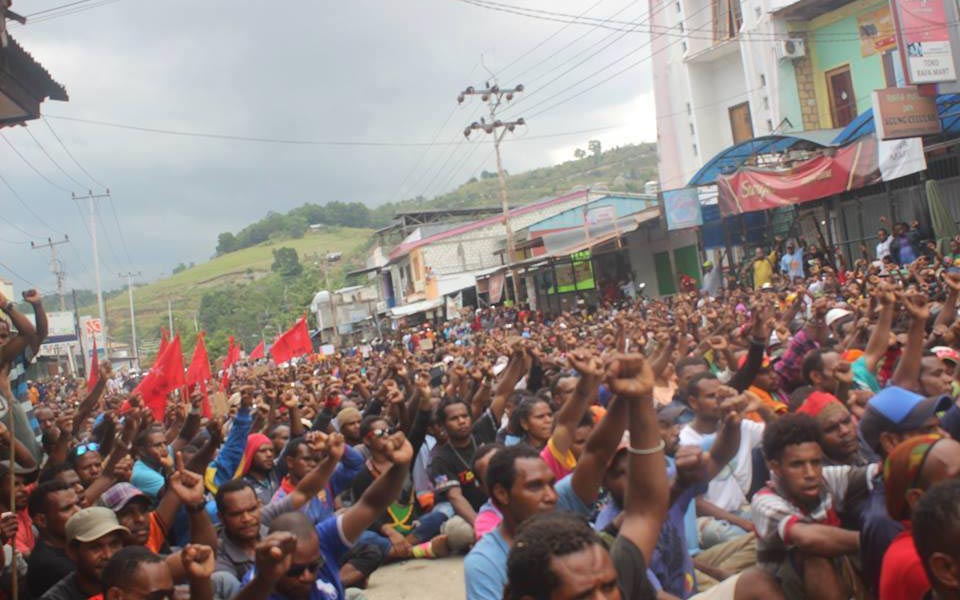
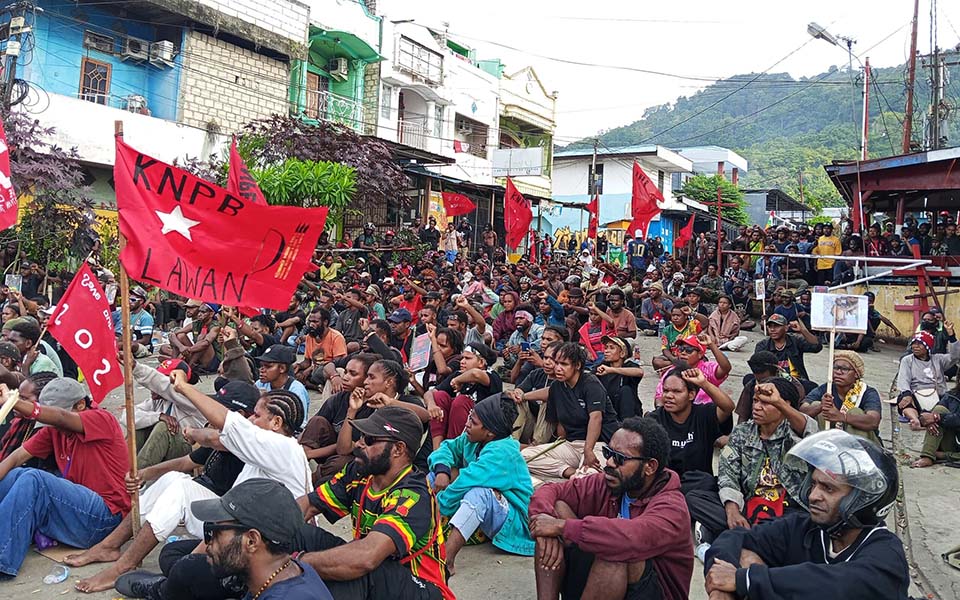
The KNPB stated that the national action titled "Papua as a Military and Humanitarian Emergency Zone", which is being held simultaneously in Papua and several regions outside Papua today, is a form of protest against the New York Agreement.
KNPB Central Chairperson I Warpo Wetipo stated that Papua's political problems are rooted in the process of Papua's integration into Indonesia, which did not place Papuans as the primary subjects.
The KNPB stated that the New York Agreement marked the process of transferring the administration of Papua to Indonesia and the implementation of the Act of Free Choice (Pepera), which began on July 14 and ended on August 2, 1969.
"The New York Agreement was an agreement between Indonesia and the Netherlands witnessed by the UN, while the Papuan people were not involved as parties to the agreement", said Wetipo during a demonstration at Abepura traffic circle in Jayapura city, Papua province, on Saturday August 15.
He said that the 1969 Pepera mechanism, which only involved 1,025 people through deliberation, did not reflect the principle of one person one vote. Therefore, the UN is being asked to review the decisions related to the results of the Pepera.
The KNPB stated that the people of West Papua reject the results of the deliberation process under military pressure in West Papua.
The KNPB also highlighted military operations and internal displacement in Papua. Military operations are said to have taken place in Papua from 1960 until 2026.
"There have been 21 military operations in Papua, including Operations Trikora, Jayawijaya, Wisnumurty, Sadar, Wibawa, Pepera, Tumpas, Pamungkas, Koteka, Senyum, Gagak, Kasuari, Rajawali, Sadar Matoa and Damai Cartenz."
According to the KNPB, the impact of these military operations has resulted in approximately 20,000 Papuan deaths, and approximately 85,416 Indonesian Military (TNI) and Indonesian Police (Polri) personnel are now spread across various regions of Papua.
In addition to this they said, approximately 1,300 indigenous Papuans are undergoing legal proceedings as political prisoners and 125,931 people have been internally displaced due to armed conflicts between security forces and the TPNPB in several areas, including Yahukimo, Nduga, Maybrat, the Bintang Highlands, Intan Jaya and Puncak.
This armed conflict is also said to have impacted not only indigenous Papuan civilians but also non-Papuans.
Therefore the KNPB is calling on the Indonesian government, the TNI, the Polri and the TPNPB to seek a resolution to the conflict by prioritising humanitarian values and peace, in order to achieve a peaceful, dignified and democratic solution within international mechanisms.
In its political statement, the KNPB also stated its rejection of Law Number 21/2001 on Special Autonomy for Papua (Otsus) because they consider it to have failed to address the root causes of Papua's problems.
The KNPB is asking on the central government to revoke the Special Autonomy policy and grant the right to self-determination or a referendum for the West Papua nation.
The KNPB also demanded that the government overturn the death sentence handed down against indigenous rights defender Karel Fatem, who should be recognised as a prisoner of war and treated according to international humanitarian law.
Meanwhile, TPNPB Spokesperson Sebby Sambom stated that they reject the New York Agreement for several reasons.
First, the New York Agreement was concluded by the Dutch and Indonesian governments under the supervision of the United States government without involving indigenous Papuans.
Second, the exclusion of indigenous Papuans from the agreement violates the fundamental rights of indigenous Papuans as the owners of the land of paradise Papua.
Third, the New York Agreement marked the beginning of a disaster for the Papuan nation, as it regulated the annexation of the territory of the Government of West Netherlands New Guinea into the Unitary State of the Republic of Indonesia (NKRI).
Fourth, based on this agreement, the right to political self-determination for indigenous Papuans was sacrificed.
Fifth, the TPNPB demands that the Dutch, Indonesian and US governments and the UN be held accountable for the suffering of indigenous Papuans for over 64 years under the illegal occupation by the Republic of Indonesia. This suffering is the result of the mistakes made by of the Dutch and US governments and the UN.
Sixth, the UN, the US, Dutch and Indonesian governments must review the annexation of Papua into Indonesia and recognise the Papuan people's right to political independence on December 1, 1961.
[Translated by James Balowski. The original title of the article was "KNPB Dan TPNPB Nyatakan Sikap Politik Menolak Perjanjian New York".]
Source: https://jubi.id/rilis-pers/2026/knpb-dan-tpnpb-nyatakan-sikap-politik-menolak-perjanjian-new-york/