

Tria Sutrisna, Ardito Ramadhan, Jakarta – The Grand Coalition of Indonesian Workers' Struggle is disappointed with the draft Employment Protection Law (RUU) prepared by the House of Representatives (DPR).
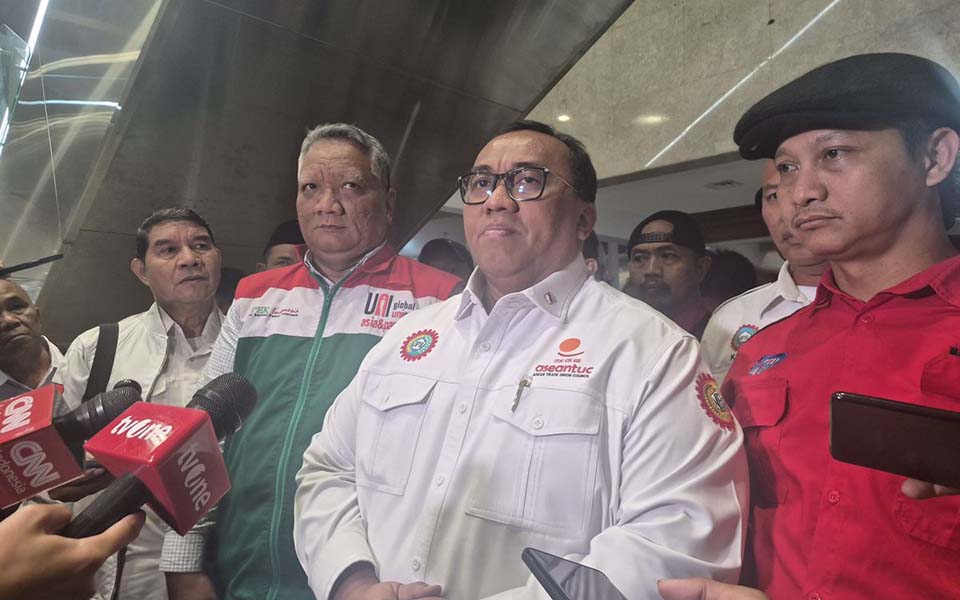
Confederation of All Indonesian Trade Unions (KSPSI) President Andi Gani Nena Wea said that the draft received by the labour coalition was very far from the proposal they had previously submitted to the DPR.
"We have tried the diplomatic route for perhaps around four months to form a joint team with Apindo [the Indonesian Employers Association] because we want this Employment Protection Bill to become a labour law that is fair to all stakeholders", said Andi Gani after a public hearing (RDPU) on the bill at the DPR's Commission IX on Wednesday September 16.
"But with the draft that we got from the DPR, it's really disappointed workers", he added.
Andi Gani said that workers were still giving the DPR and the government until September 22 to respond to their aspirations.
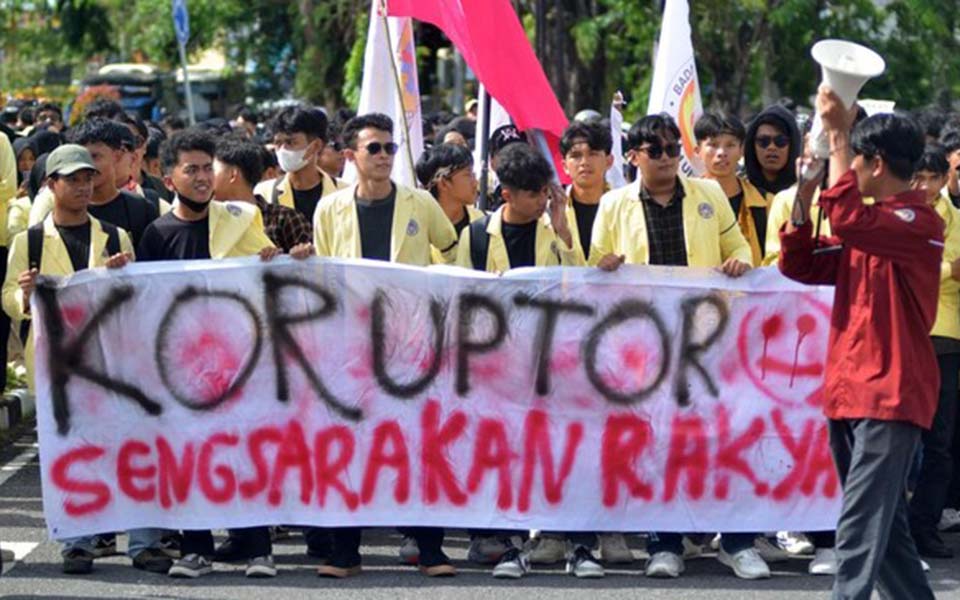
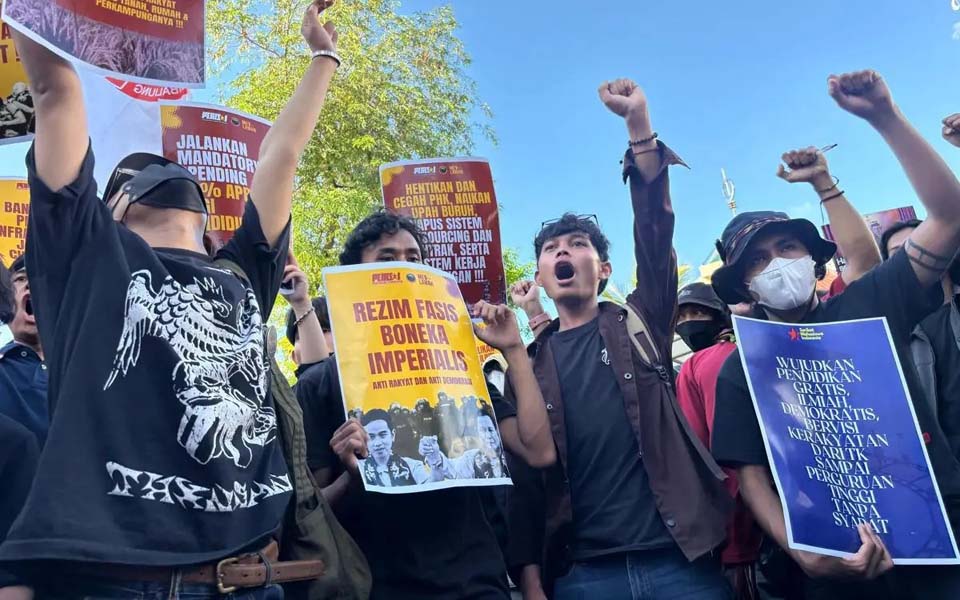
If there are no improvements to the draft bill, the Grand Coalition of Indonesian Workers' Struggle is considering holding a large-scale action in Jakarta.
According to Andi Gani, this action has the potential to involve tens of thousands of workers.
"Because of that, if we predict how many protesters will enter Jakarta, it could reach 70,000 workers, even up to 100,000", he said.
Meanwhile, Confederation of Indonesian Trade Union Alliances (KASBI) Chairperson Sunarno said that the labour coalition had repeatedly discussed and dialogued with the DPR over the last few months.
According to Sunarno, workers have conveyed their aspirations to a number of factions, DPR leaders and political party leaders.
However, he believes that a number of crucial issues that workers are fighting for have not been included in the draft Employment Protection Bill.
"So we looked at the draft, the Employment Protection Bill, so the crucial issues that are in it, in substance, it turns out that indeed it doesn't accommodate what we have voiced so far", said Sunarno.
One of the issues highlighted by workers is the rules regarding contract workers. Sunarno said that workers wanted a maximum work period for contract workers of one year. After that, it is hoped that contract workers can be promoted to permanent workers.
"We want a maximum of only one year. Contract workers. After that, they are promoted to be permanent workers", said Sunarno.
He said that this proposal was different from the wishes of Apindo which still want a five-year term for contract workers.
Meanwhile, according to Sunarno, the DPR draft regulates that the work period for contract workers is to be four years. "So this is quite a big difference", he said.
Apart from contract workers, workers are also questioning the outsourcing system. Sunarno said that workers reject the labour supply system or the distribution of labour through other companies.
"For us, labour supply, or labour, that for us, isn't allowed. We prohibit the outsourcing of labour", said Sunarno.
Despite this, workers still tolerate work that is contracted or subcontracted under strict conditions.
Apart from this, workers also asked that the existence of platform workers be specifically regulated in the Employment Protection Bill.
Sunarno said that platform workers should be recognised as platform workers, not categorised as micro, small and medium enterprises (MSMEs) or partnership workers.
"We want these platform workers [to be recognised as such], that is, yes, not MSMEs or partnerships", he explained.
Sunarno added that workers are still waiting until September 22 for the results of discussions between the government and the DPR before determining their next move.
If the results of the discussions are still not in accordance with workers' aspirations, large demonstrations will be held at the end of September and early October.
"So, what we have been conveying for perhaps years and years, yes, we have conveyed it, perhaps even in the Pak [Mr] President's speech [last May Day], there is actually a lot of what was actually conveyed, yes, for example, outsourcing will be abolished, the wage system, and so on. Well, we will call in this pledge", he said.
Constitutional Court ruling Number 168/PUU-XXI/2023 asked legislators to immediately draft a new employment law and to separate or exclude it from Law Number 6/2023 on the Omnibus Law on Job Creation.
The Court also gave legislators a two-year deadline to separate the employment cluster into a separate law in the reading out of the decision on October 31, 2024.
This means that the employment cluster in the Job Creation Law must be issued and become a separate law before October 31, 2026.
[Translated by James Balowski. The original title of the article was "Buruh Kecewa Berat dengan Draf RUU Ketenagakerjaan, Ancam Demo Besar-besaran".]