

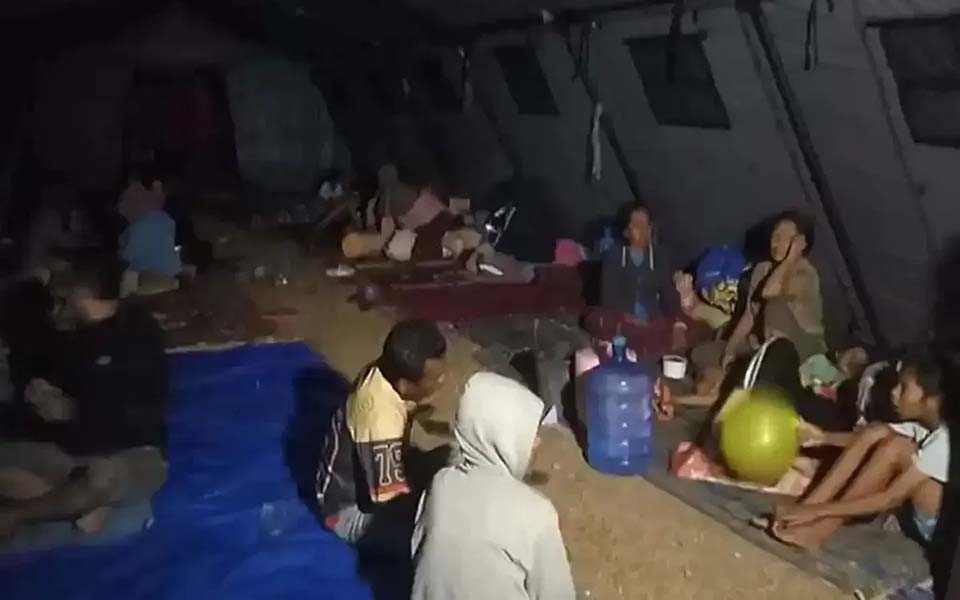
Singgih Wiryono, Jakarta – Amnesty International Indonesia (AII) Media Manager Haeril Halim has highlighted the 94 people who have died in refugee camps following the earthquake in East Nusa Tenggara (NTT).
According to Halim, these deaths were due to chronic diseases in refugee camps and could have been avoided if the right to more adequate health services were available in the camps.
"Earthquake refugees have the right to receive adequate health services, especially for those who are vulnerable, such as the elderly who have congenital diseases and children", said Halim in a statement on Thursday September 17.
He said that the number of people who have died in the refugee camps was twice as many as those who died directly as a result of the earthquake.
"This fact raises a big question mark regarding the condition and suitability of the refugee camps provided by the government", he said.
Halim emphasised that refugee camps should be places that guarantee safety and security in the disaster recovery process.
The high number of deaths in the refugee camps is seen as an indication that there is no adequate guarantee for vulnerable groups in the disaster management process.
For this reason, Amnesty is pushing for an immediate, independent, impartial and thorough investigation into the high death rate in the refugee camps.
Such an independent investigation is very important to answer whether there was negligence by the state in guaranteeing the rights of earthquake victims in NTT.
"We also call on the government to improve the quality of refugee camps so that they become real havens for victims", he asserted.
Death due to chronic disease
The acting head of the National Disaster Management Agency's (BNPB) Disaster Data, Information and Communication Centre, Berton SP Panjaitan, explained that the 94 residents died due to chronic diseases suffered prior to the earthquake.
"Data from the medical team shows that most of these residents were elderly people who died due to complications from chronic diseases they had suffered, such as strokes and diabetes mellitus". said Panjaitan in a video statement on Thursday.
In an earlier statement, the BNPB said that the 94 people did not die as a direct result of the earthquake.
Panjaitan explained that what this meant was that the 94 people did not die as a result of direct physical trauma caused by falling building debris during the earthquake.
"Based on the results of integrated verification and validation between the BNPB and the Ministry of Health in the seven affected districts, we confirmed that the 94 residents did not die as a result of direct physical trauma or building collapse due to the earthquake", he said.
Panjaitan confirmed that most of the 94 people who died were elderly (lansia) due to the illnesses they suffered.
He also gave assurances that the medical team had carried out maximum treatment through various health facilities and integrated health posts.
"Since the first day, the BNPB has activated logistics support posts in Labuan Bajo and Maumere. Medical assistance, medicines, including other necessary equipment continue to reach refugees, both centrally and independently", he said.
[Translated by James Balowski. The original title of the article was "Amnesty International Soroti Kematian 94 Warga di Pengungsian Gempa NTT".]