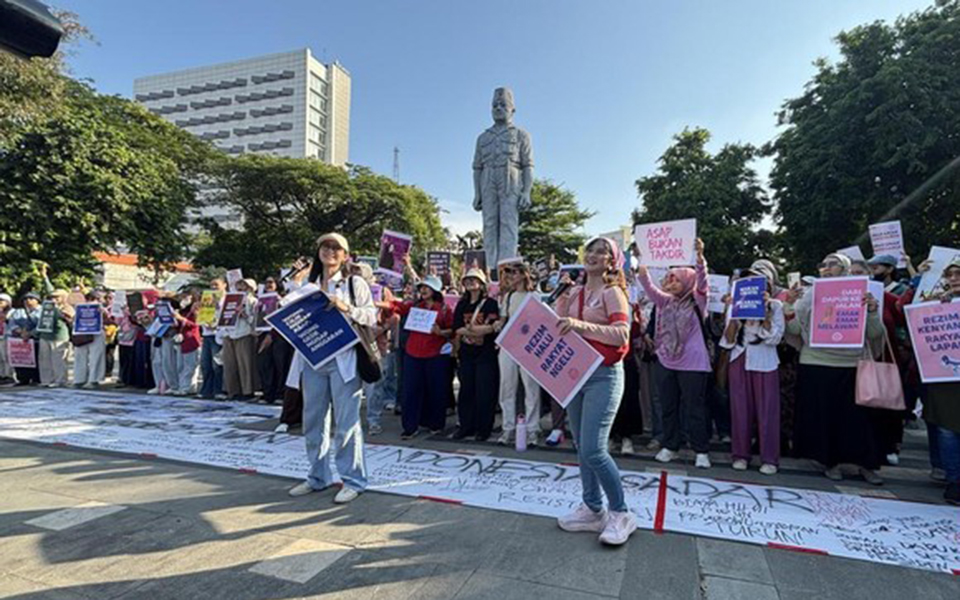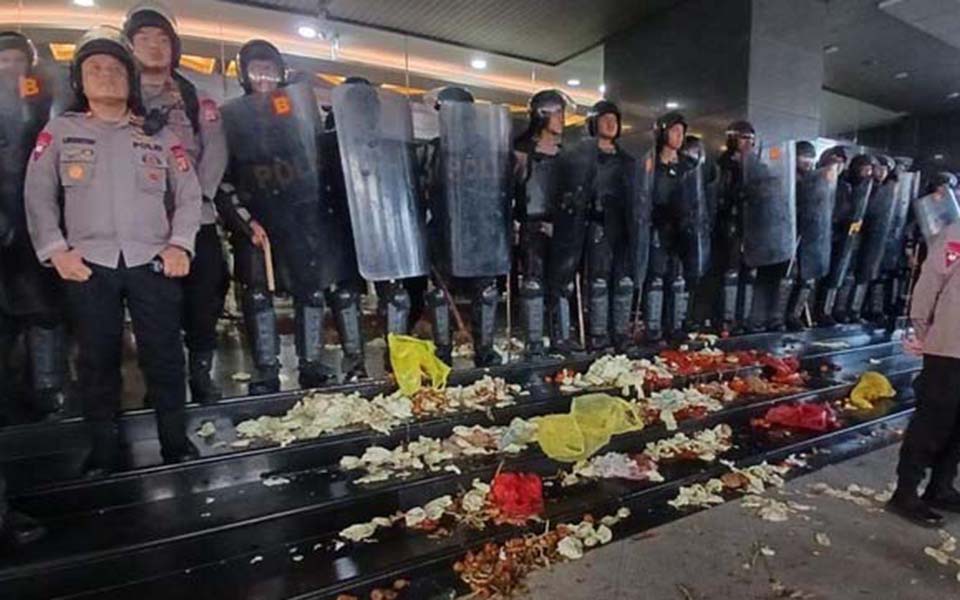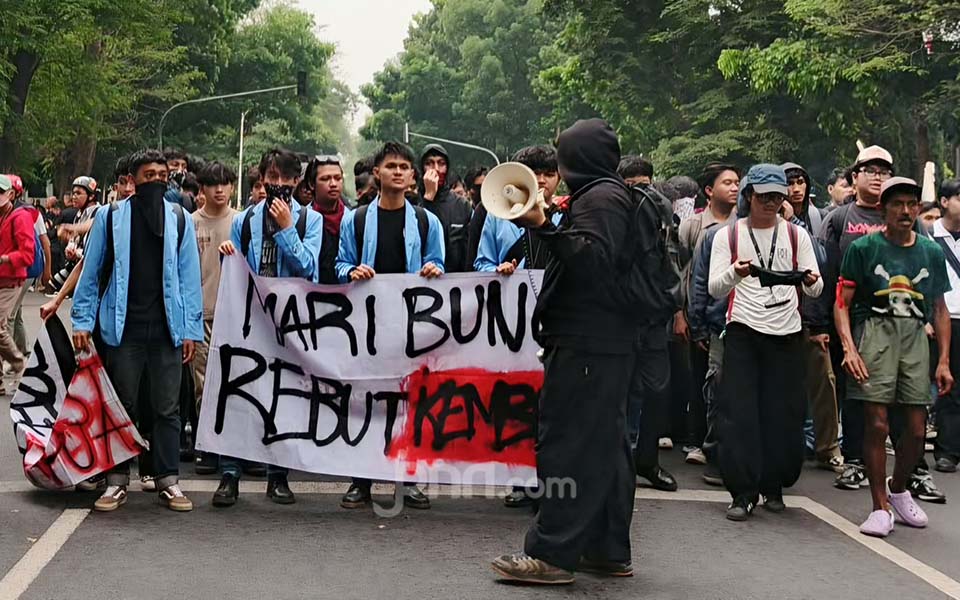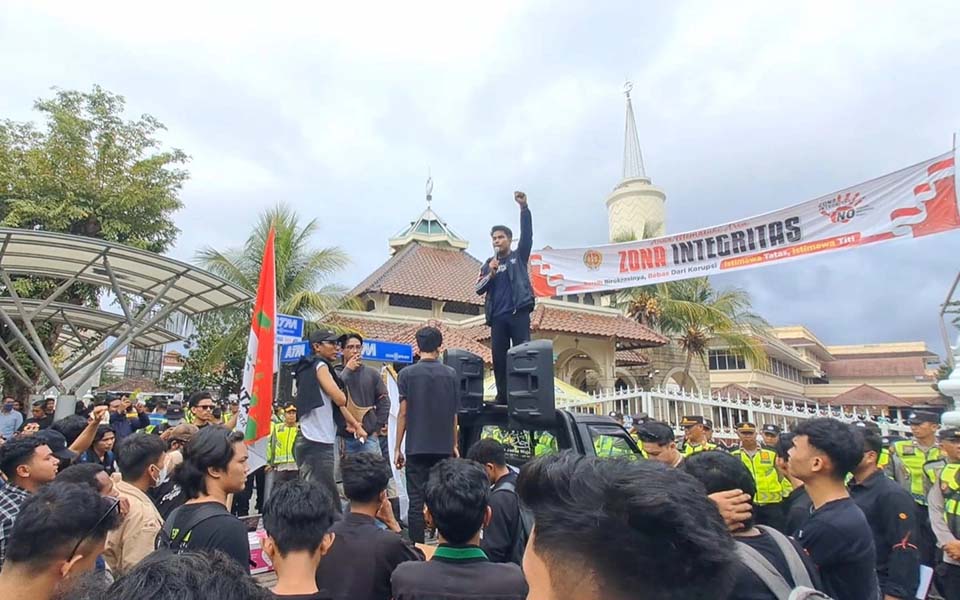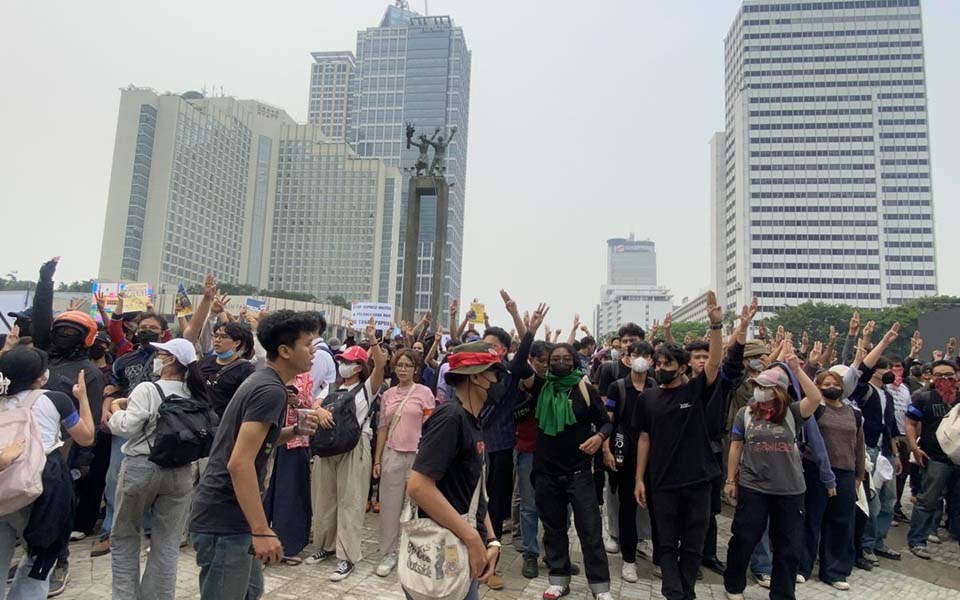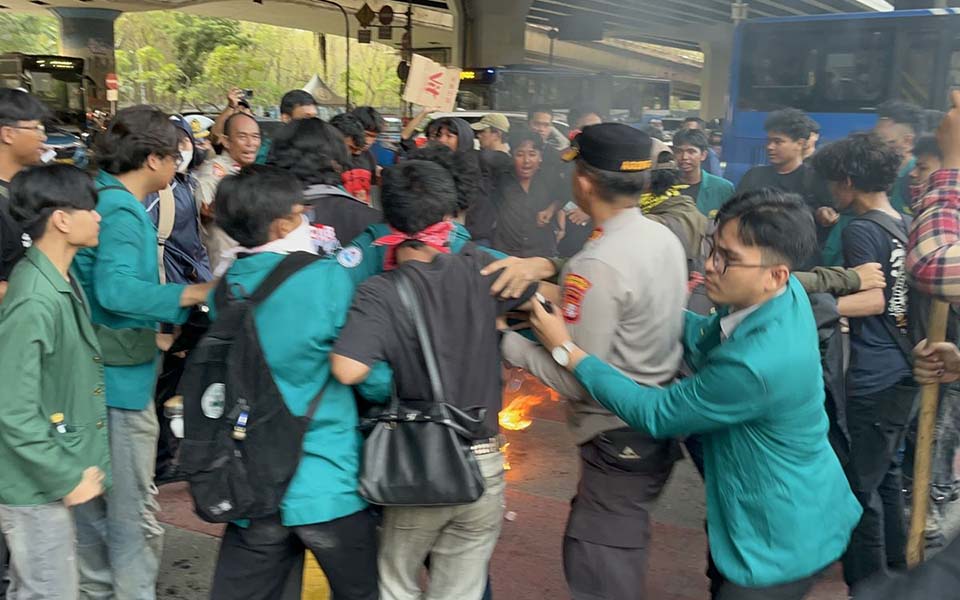



Hidayat Azriel, Jakarta – The 2026 Women's March action which was held in Central Jakarta on Saturday morning November 7 was marred by chaos. Tensions, which ended with action participants and police officers pushing and shoving each other at the intersection of Jalan MH Thamrin and Jalan Kebon Sirih, were unavoidable.
The chaos was triggered when the protesters, consisting of various organisations and women's activist groups wanted to continue the long march route to the main gathering point in the Horse Statue area on Jalan Medan Merdeka Selatan in Central Jakarta
However, the movement of the line of participants was suddenly stopped and blocked by police barricades, which triggered loud protests and pushing and shoving in the middle of the road.
Based on direct monitoring at the scene, police officers tried to direct the crowd to turn around or follow an alternative route that had been prepared. This decision to block access to the Horse Statue actually made the atmosphere on the ground even more heated and tense.
Voicing nine demands
Even though it was filled with tension, the Women's March protesters remained consistent in voicing nine main demands regarding the fulfillment, protection and enforcement of women's rights in Indonesia.
Among the urgent points articulated was the fulfillment of full sovereignty over women's bodies, the rejection of all forms of state-based oppression, as well as the ratification of long-delayed regulations, namely the Domestic Workers Protection Bill (RUU PPRT) and the Indigenous Peoples Bill (RUU Masyarakat Adat).
Apart from that, the action participants highlighted the rise in cases of femicide, namely the murder of women based on gender, which are considered to have reached the stage of a national crisis and require emergency action from the government.
"We took to the streets peacefully to voice the basic rights of women, ratify the PPRT Bill, the Indigenous Peoples Bill, and demand serious attention to the ongoing femicide crisis. It is very unfortunate that our access to the Horse Statue has actually been blocked and pushed back like this", said one of the speakers through a loudspeaker on the command vehicle.
Through this collective movement, the participants hope that the government and legislature will no longer turn a blind eye to the various structural problems faced by women, and can guarantee comprehensive legal protection for all women in the country.
The Women's March action is an annual social movement that has been adapted globally to voice gender equality, social justice and the elimination of violence against women. In Indonesia, this movement has become a consolidation platform for various civil society groups, women workers, students and indigenous communities to demand legal reform that favours vulnerable groups.
One of the main focuses of this movement is the push for ratification of the PPRT Bill which has been languishing in parliament for more than two decades without legal certainty, even though millions of domestic workers continue to be vulnerable to exploitation and violence.
On the other hand, the increasing number of femicides and the yet to be accommodated Indigenous Peoples Bill make street action an important instrument in pressing for real commitment from the executive and legislative ranks.
Notes
The PPRT Bill was in fact passed by the House of Representatives (DPR) on April 21, 2026. Because however no implementary regulations have been drafted or ratified this has delayed the law's implementation.
[Translated by James Balowski. The original title of the article was "Aksi Women's March 2026 di Jakarta Diwarnai Ricuh, Massa dan Polisi Saling Dorong".]