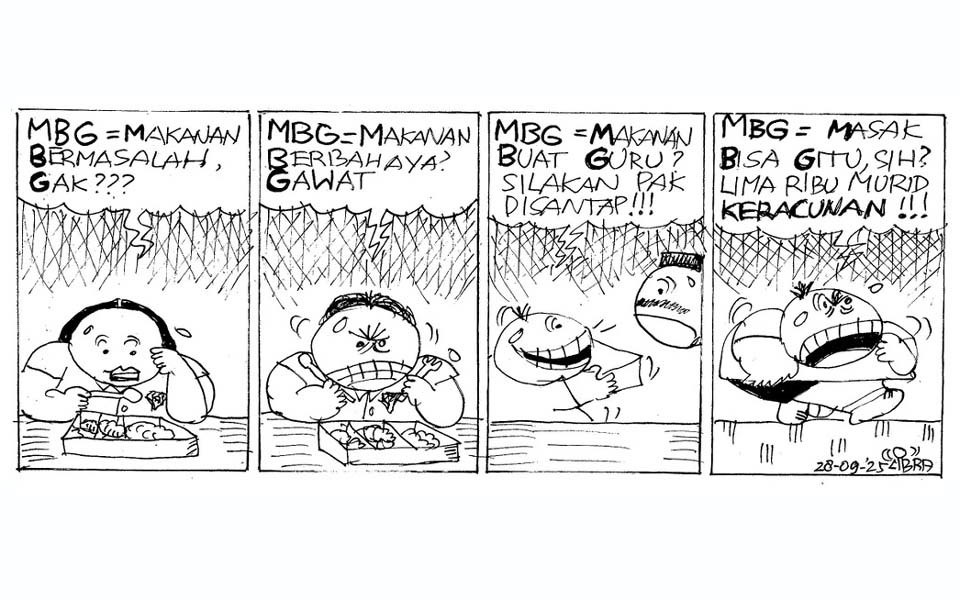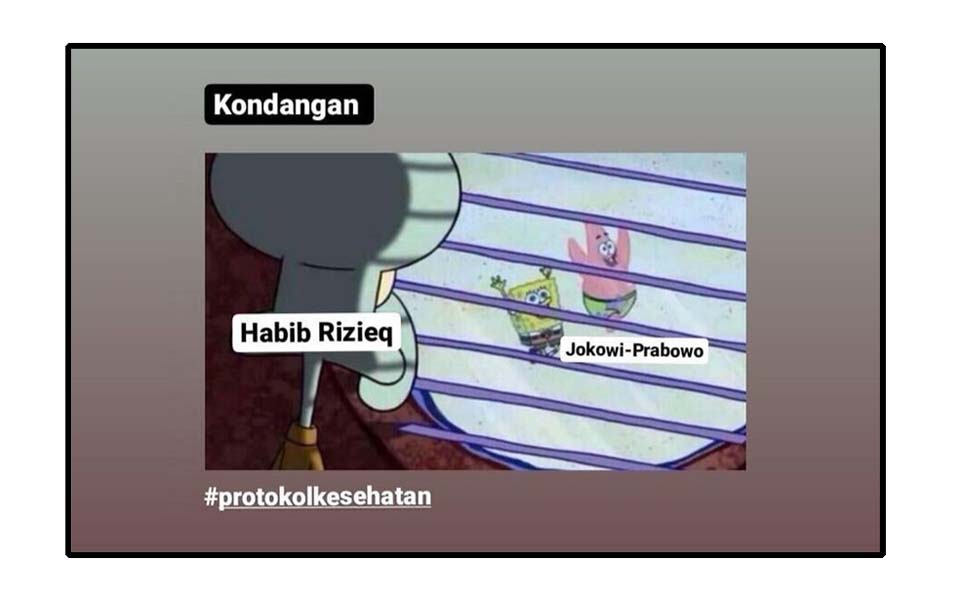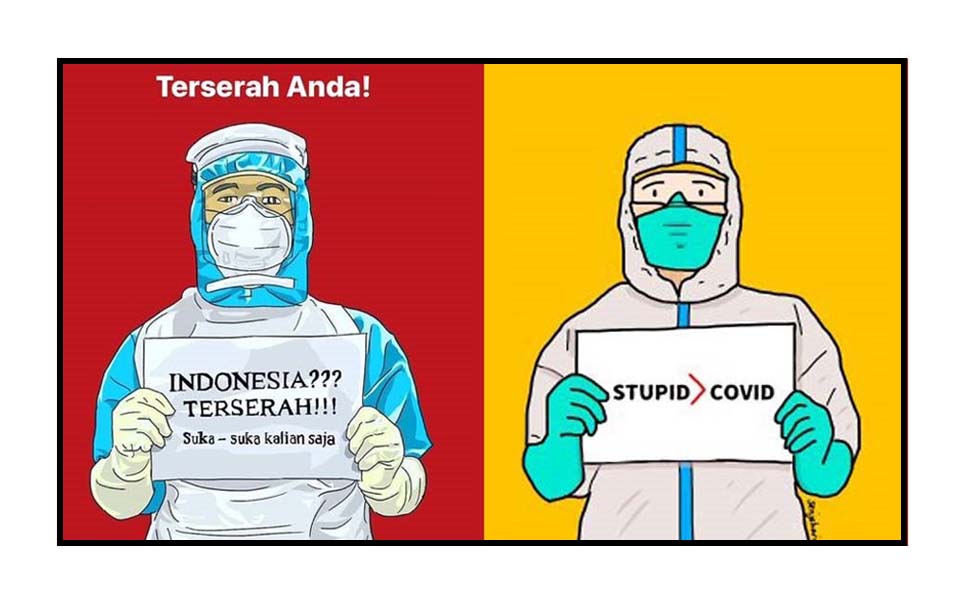



Josi: They eat
Posi: We keep watch
When it was launched in January, President Prabowo Subianto's flagship free nutritious meals (MBG) program was promoted as a concrete response to the country's stubbornly high stunting rates, and a key part of the governments' much touted "Golden Indonesia Vision 2045".
Nine months later however, incidents of mass food poisoning are being reported almost daily. Criticised by educators and health experts for being rushed, poorly planned and badly implemented, the program has now become a daily source of anxiety for many parents, who hold their breath hoping their children won't be the next victims.
According to the Education Monitoring Network (JPPI), as of mid-September at least 5,360 children have suffered from food poisoning since the program's launch. This number is believed to be larger as many schools and local governments allegedly cover up the cases.
At least three regions have declared health emergencies as they struggle to cope with the surge in cases and in some areas, students are being treated on fold-out beds in hospital halls and makeshift healthcare facilities.
In response, angry protests have been held by concerned mothers demanding that the program to be halted, while civil society groups and health experts have called for it to be suspended pending a full re-evaluation.
The government however has continued to downplay the severity of these cases with President Prabowo insisting that managing such a large program will always involve "obstacles" and "challenges", and urging people not to let the incidents be "politicised" by calls to halt the program.
On several occasions he has even doubled down by proclaiming the program's achievements and emphasising that the poisoning cases remain a tiny fraction compared to the total number of beneficiaries.
"Thirty million children and pregnant women receive food every day. Yes, there are deficiencies, and yes, there have been cases of food poisoning. But if we calculate, the percentage of errors or problems is only 0.0017 percent", Prabowo was quoted as saying by Tempo.
Prabowo went on to argue that this does not signify the failure of the program comparing the MBG's achievements to Brazil's free meal initiative, which took 11 years to reach 40 million beneficiaries, while Indonesia achieved nearly that scale in just one year.
"In just 11 months, we managed to serve 30 million recipients", he said proudly while stressing the importance of the program in helping children who he claimed survive only on rice and salt.