

Jakarta – Indonesian President Prabowo Subianto has given the coalition parties a week to discuss a proposed vice presidential candidate (cawapres) as a replacement for Gibran Rakabuming Raka.
According to the regulations, Prabowo is obliged to submit the names of two vice presidential candidates to the People's Consultative Assembly (MPR) no later than November 25 or 14 days before the plenary session on December 9, 2026.
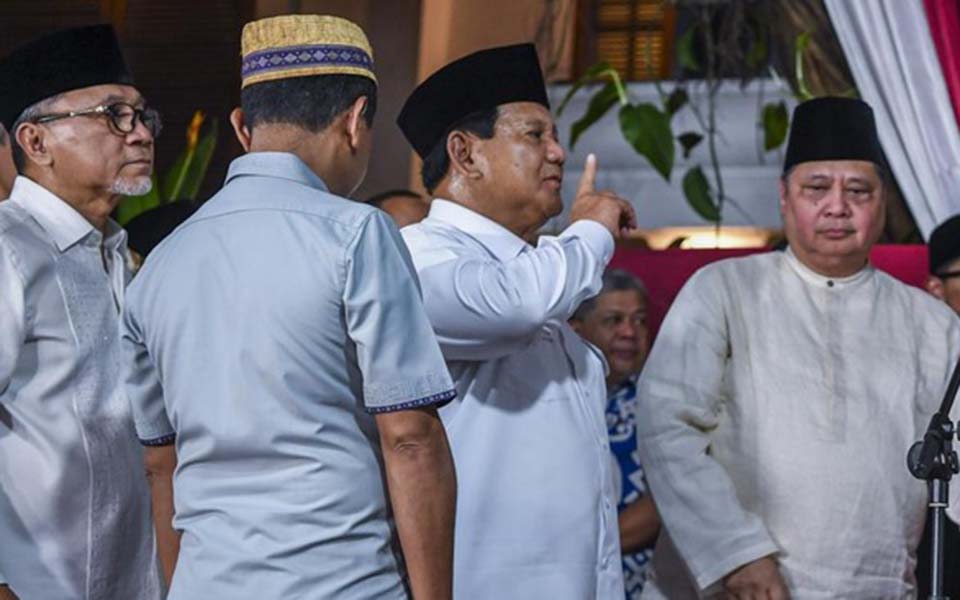
But the political parties in the Advanced Indonesia Coalition apart from Prabowo's Greater Indonesia Movement (Gerindra) Party, which supported Prabowo-Gibran in the 2024 presidential election, have agreed not to nominate any leading members.
National Mandate Party (PAN) General Chairperson Zulkifli Hasan said they had agreed that the two vice presidential candidates should come from Gerindra.
"Almost all political party chairs did not nominate their cadres. We agree that [the vice president] would be from Gerindra", said Hasan in a video received by CNN Indonesia on Sunday November 15.
Recently, three strong candidates emerged publicly. All three are from the elite of the Gerindra Party.
They are House of Representatives (DPR) Deputy Speaker and Gerindra Central Leadership Board (DPP) Managing Director Sufmi Dasco Ahmad, Coordinating Minister for Human Development and Culture, who is also the secretary general of Gerindra, Sugiono, and MPR Speaker and former secretary general of Gerindra, Ahmad Muzani.
Reluctant to 'take responsibility'
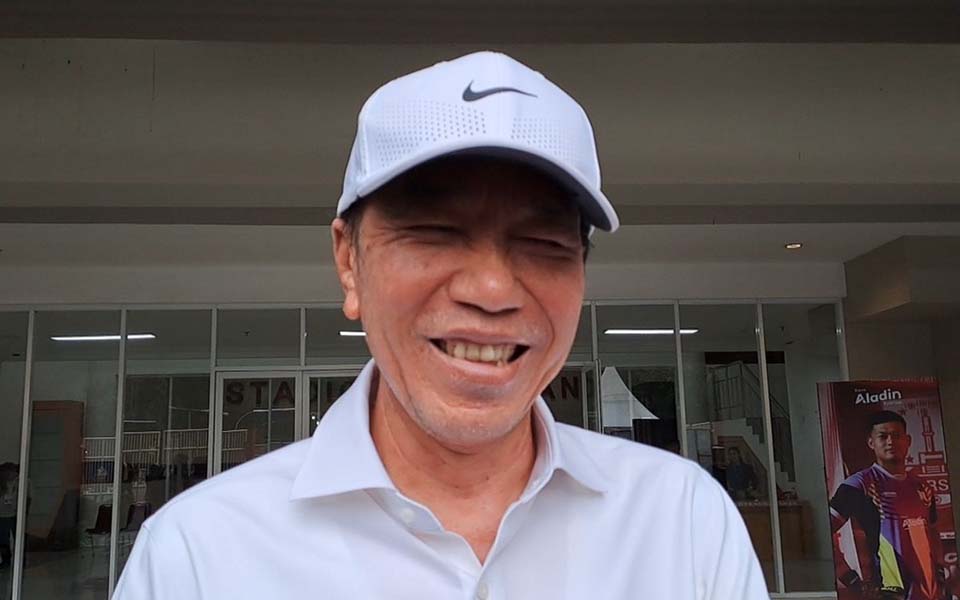
Trias Politika Strategis Executive Director Agung Baskoro is of the view that the phenomenon of political parties appearing 'reluctant' to occupy the vice presidential seat cannot be separated from the public's level of satisfaction with the government which is currently showing a downward trend.
The coalition political parties are still calculating the electoral impact of fighting for and occupying the vice presidential seat amidst declining approval ratings.
Baskoro also noted the risks faced by Gerindra if one of its members filled the vice presidential seat but was unable to resolve grassroots unrest, especially regarding the economy.
"It's very possible yeah, because the public's index finger will point directly at Gerindra, if for example yeah, the approval rating doesn't rebound when the new vice president is elected", said Baskoro told CNN Indonesia on Wednesday November 18.
"Because yeah, the rate of decline in the approval rating has emerged, this can't be denied. Yeah. So what I mean is that the situation is not as simple as imagined internally or among the elite. Among the public there are aspirations, there is anxiety, especially about the economy", he said.
He also touched on 'political ownership' or the sense of ownership of government policies, or coalition ties from political parties other than Gerindra that has the potential to decline. In other words, it has the potential to weaken coalition ties.
Especially ahead of the 2029 elections, said Baskoro, with today's political turbulence coalition fragility will occur even before 2029.
"If the president and his government officials are not sufficiently able to answer economic problems, that is related to the stability of basic food prices, employment opportunities, purchasing power, and so on", he said.
He said that perhaps in the short term, everything will be fine and perhaps the coalition would remain solid in the near future. It's just that, in the next year or two, the situation may change.
"Because the [political party] chairs right who are now coordinating ministers have the chance to become president or vice president in 2029. Even names outside of that", he said.
Importance of technocratic side
In the midst of this situation, Baskoro also hopes that of the two names proposed by Prabowo to the MPR, one name will come from an external source with a high technocratic level.
"And I again and again hope and pray that one name, if indeed it is from one of the parties, I hope it's one from a non-party. That is an economist, a technocrat, a professional, who is close to the president or a Gerindra person whose technocratic level is strong", said Baskoro.
He warned that the new vice president's task would be quite difficult, especially amidst the recent trend of poor approval ratings. Baskoro also said that it was very important for Prabowo to listen to the public's aspirations and read the state of the public, including in determining his next vice president.
He said that Prabowo has already consolidated [power] at the elite level. However, it is not yet optimal to form a coalition with the public.
"So, if example 100 percent of this is the public dose. If the approval rating is below 50, if you can reason the public is 80, the elite is 20 percent", he said.
Baskoro suspects that the other factor that makes the coalition parties unwilling nominate a vice presidential candidate is that it cannot be separated from the coalition parties' reading of Prabowo's military-style leadership style which tends to prioritise a command structure.
This leadership style is what makes other political parties politically aware that Prabowo as president is the leader of the coalition.
"Especially in the context of the vice president stepping down in the middle of the administration's term, like it or not, the president's comfort is an absolute necessity that must be understood by coalition partners", he said. (mnf/dal)
[Translated by James Balowski. The original title of the article was "Kenapa Parpol Koalisi Prabowo 'Ogah' Isi Kursi Wapres Gantikan Gibran?".]