

Jakarta – The Setara Institute for Peace and Democracy has released a report on the state of freedom of religion and belief (KBB) in Indonesia throughout 2025. In general, the state of KBB in 2025 did not show any significant improvement.
The same types of violations were found as in previous years.
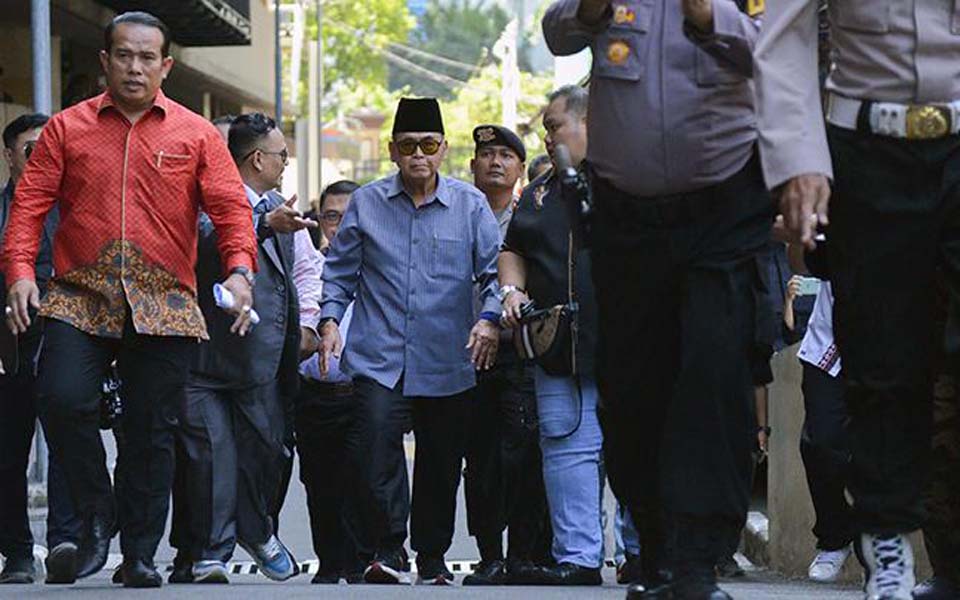
"This is evidence that the state is not yet committed to maintaining national stability through maintaining tolerance between religious communities", said Setara Institute Executive Director Halili Hasan at a presentation of the 2025 KBB report titled "Reorientation of State Policies and Actions", which was held in Jakarta on Tuesday March 10.
In the 2025 KBB report, the Setara Institute noted that there were 221 violations with a total of 331 incidents. Even though quantitatively this figure shows a slight decrease from the previous year, namely 260 violations with 402 incidents in 2024, the scale of the impact caused by the violations in 2025 shows how the country is still not fully moving quickly towards substantive progress.
Of the number of violations in 2025, 128 violations were committed by state actors, compared to 197 violations committed by non-state actors.
"One of the factors that has become a contextual trigger for the consistently high number of KBB violations over the last five years is the existence of discriminatory and intolerant regulations that target minority groups such as Christian and Catholic religious groups, as well as Ahmadiyah congregations. These regulations continue to be maintained in order to limit the space for minority groups to carry out their religious teachings and rites. Existing regulations also serve as a legitimising tool for intolerant groups to carry out acts of discrimination", explained Hasan.
Three main violations
Not much different from previous years, the state of KBB in 2025 still shows various problems that have not been addressed comprehensively. In its report, the Setara Institute noted three main KBB violations that stood out in 2025.
First, the strengthening of the contribution of KBB violations by non-state actors. The high number of violations by non-state actors shows that violations of KBB have not only surfaced due to structural violations by state government apparatus and institutions, but have experienced a normalisation at the grassroots level.
Violation of KBB carried out by non-state actors take place in a relatively wide spectrum, from soft acts such as intolerance to hard ones such as extreme acts of violence.
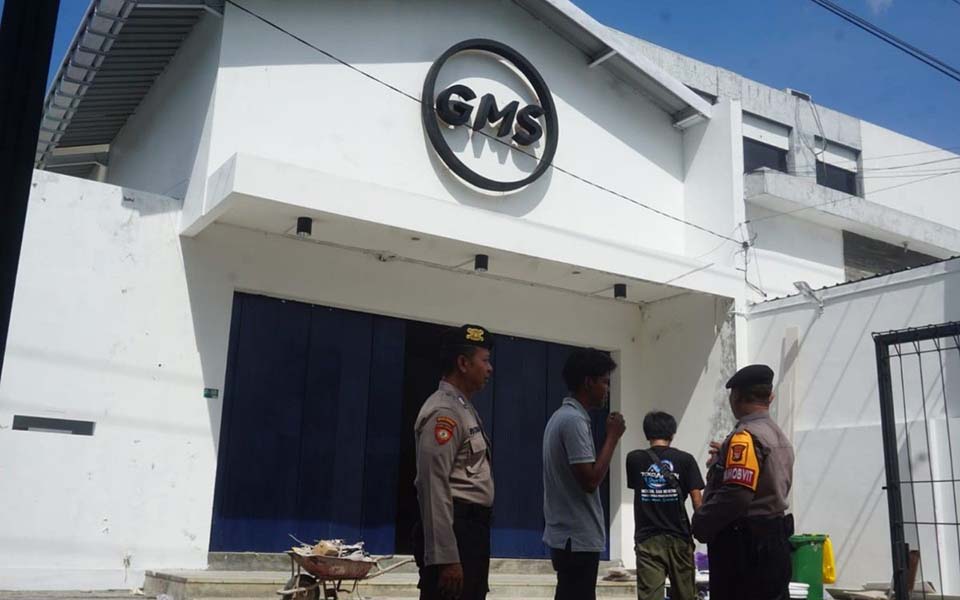
"The incident of the forced dispersal of a retreat in Cidahu, Sukabumi regency, West Java, and the attack on the Christian prayer house in Padang Sarai, West Sumatra, are concrete forms of intolerance that have been internalised in social life", said Setara Institute human rights and security sector reform researcher Ikhsan Yosarie, who also spoke at the release of the report.
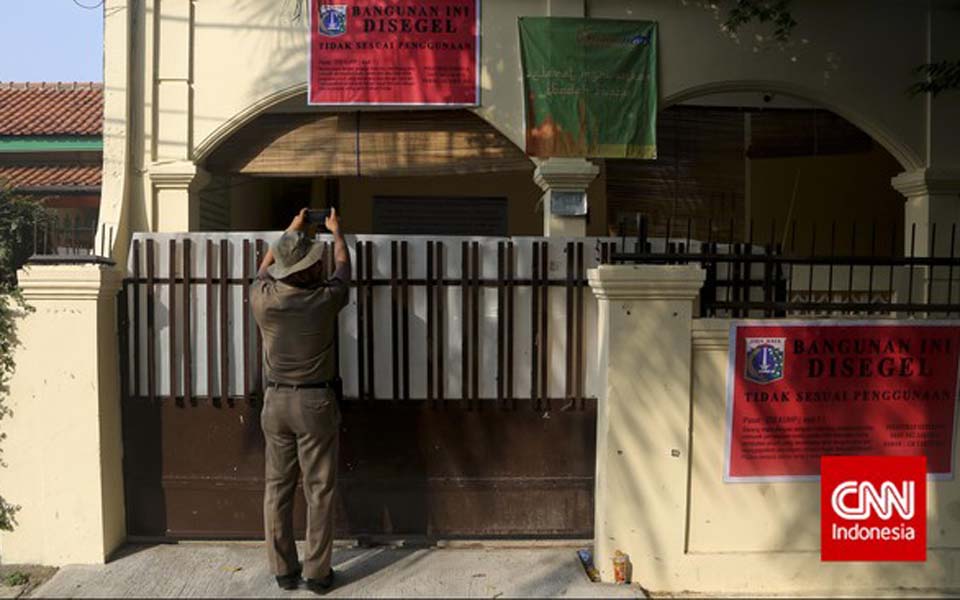
Second, the perpetuation of discrimination against the Ahmadiyah Muslim community. According to the Setara Institute's records for 2025, cases of violations against the Ahmadiyah congregations have increased from the previous year when there were eight cases, increasing to 12 cases in 2025. The dominant cases that emerged in 2025 included the organisation of the Jalsa Salana that was held simultaneously in various regions as well as the cancellation of a book review on the Ahmadiyah.
"These cases show that restrictions and discrimination against the Indonesian Ahmadiyah community are repeated and spread across various regions", he explained.
Third, weak commitment in resolving cases of KBB violations against Christian congregations. Even though there has been a slight decrease in the number of acts of violations against Christians and Catholics, this group was still had the most victims of acts of intolerance in 2025.
"The number of violations still shows an alarming figure, which shows that the problems faced by Christians and Catholics are not just incidental, but structural problems. The quantitative decline in cases does not merely reflect an improvement in the quality of protection, but rather the consistency of the victim's position which must be taken into account in order to see the root of the problem, namely systemic fragility that has not been resolved", he said.
239 victims
Throughout 2025, the Setara Institute recorded 239 victims of KBB violations. Of this number, Christians and Catholics occupied the highest position with 61 victims, followed by citizens (41 victims), individuals (34 victims), and business actors (32 victims).
Meanwhile, Muslims recorded 15 victims, Ahmadiyah 12 victims and religious figures 10 victims. These findings show that violations of freedom of religion and belief not only target certain religious and belief groups, but more broadly the negative impact is also felt by members of society in general, and it even extends into the economic sector where business actors experience losses due to social pressure and discriminatory policies based on favouritism.
"Thus, the spectrum of KBB violations no longer just touches private sectors, but has reached further into the social and economic realm", said Setara Institute researcher on freedom of religion and beliefs Harkirtan Kaur.
[Translated by James Balowski. The original title of the article was "SETARA Institute Rilis Laporan Kebebasan Beragama 2025, Catat 221 Pelanggaran".]