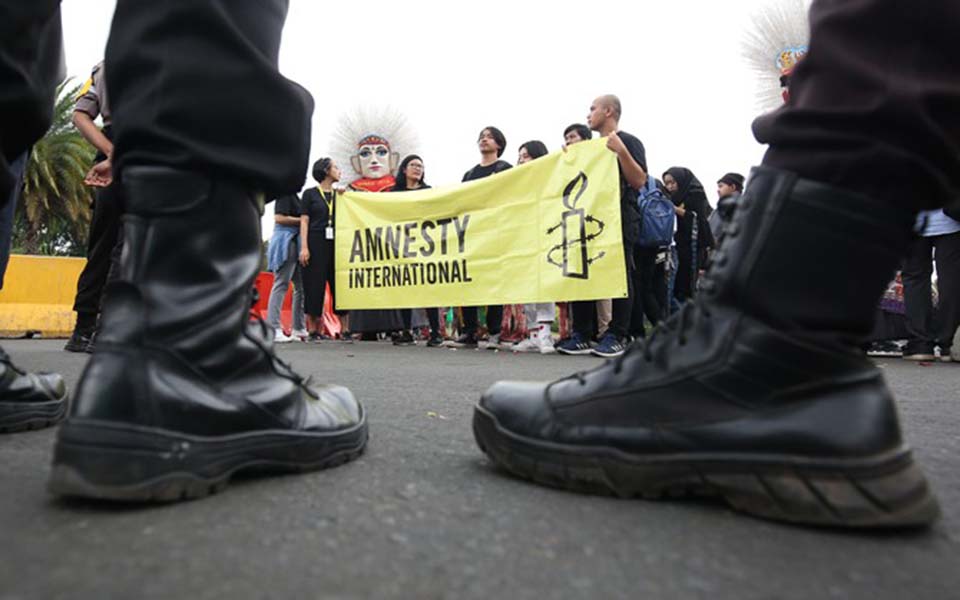


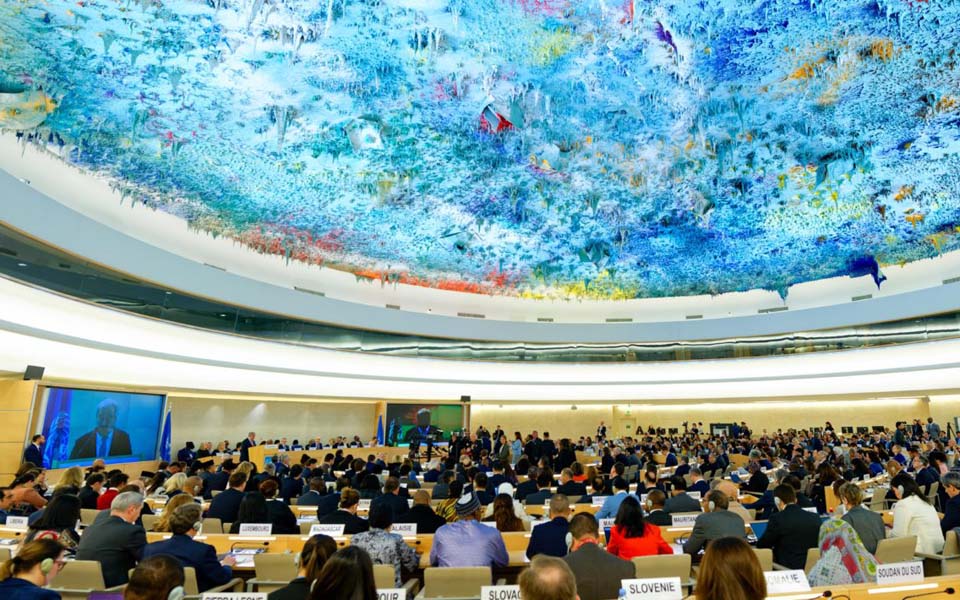
Responding to Indonesia's election as President of the United Nations Human Rights Council, Amnesty International Indonesia's Executive Director Usman Hamid, said:
"The Human Rights Minister's boasting that Indonesia 'successfully won' the position of president of the UN Human Rights Council because of the 'Human Rights Ministry' is a false pride that is not based on the facts. The position rotates according to region around the world. This year it was the Asia Pacific region's turn. Coincidentally, Indonesia was the sole candidate for this rotating position.
So it is inaccurate to say that Indonesia gained the position because it 'won' it, never mind because of the Human Rights Ministry. It is also inaccurate to say that the position was achieved because of progress on human rights at home or abroad.
The country's human rights reputation has deteriorated. In 2025, more than 5,000 people were arrested for demonstrations. 283 human rights defenders were attacked. Ironically, the Human Rights Ministry has tended to justify these human rights violations. Most recently, the Minister even praised the drafters of the new Criminal Procedure Code (KUHAP), which clearly threatens human rights.
Indonesia's international human rights reputation is weak. Indonesia tends to reject the Human Rights Council's recommendations to improve the human rights situation. In 2022 for example, Indonesia rejected 59 of the 269 recommendations in the UN's Universal Periodic Review (UPR).
These two situations create an irony when as president of the Human Rights Council Indonesia will lead the review of member states' human rights in UPRs, never mind that Indonesia will also be the subject of a UPR review.
Not only that, Indonesia's UPR reports often differ from reality. In 2022, Indonesia reported only on Papua from the perspective of infrastructure and welfare, without mentioning the ongoing violence against civilians there.
Indonesia has shown little support for human rights and often advocates for permissive approaches such as dialogue or consensus with countries suspected of human rights violations. In 2022 for example after a report by the UN High Commissioner for Human Rights concluded that human rights violations in Xinjiang, China, potentially constituted crimes against humanity
At that time Indonesia rejected a motion to discuss the report on the grounds that "it would not yield meaningful progress" because the proposal "lacked the consent and support of the countries concerned". This rejection contributed to the motion's narrow failure, with 19 votes against, 17 in favour and 11 abstentions.
Indonesia also has a poor track record of granting access to UN special rapporteurs to visit Indonesia to examine the human rights situation. In 2023, Indonesia rejected a request from the Special Rapporteur on the Independence of the Judiciary to visit Indonesia. That year, Indonesia also rejected a request from the UN Special Rapporteur on Slavery. Then in 2024, Indonesia rejected a request from the UN Special Rapporteur on Truth, Justice and Reparations.
Therefore, through the position Human Rights Council president, we can test Indonesia's seriousness by seeing whether it actively encourages members of the Human Rights Council, including Indonesia, to agree on decisive steps regarding alleged human rights violations, accepts the recommendations that are given and facilitate official visits by independent experts and UN special rapporteurs.
In Indonesia, this could begin, for example, by accepting requests for visits by the UN Special Rapporteur on Human Rights Defenders, the UN Special Rapporteur on Freedom of Expression, the UN Special Rapporteur on Business and Human Rights and the Working Group on Enforced Disappearances.
The position of UN Human Rights Council president will mean nothing for Indonesia and will be nothing more than a case of false pride without concerted support for human rights in foreign and domestic policies."
Background
The Permanent Representative of the Republic of Indonesia to the United Nations (UN) in Geneva, Sidharto Reza Suryodipuro, was elected president of the UN Human Rights Council on Thursday January 8, succeeding the incumbent Jurg Lauber from Switzerland. This is Indonesia's first time chairing the UN Human Rights Council since its establishment 20 years ago, according to the UN's official website.
As president of the UN Human Rights Council for a one-year term, Suryodipuro will preside over the proceedings of the forum, which is based in Geneva, Switzerland. The Indonesian ambassador will preside over the three sessions of the UN Human Rights Council scheduled for late February, June and September 2026.
He will also oversee the review process of the human rights records of council member states, known as Universal Periodic Reviews (UPR).
Suryodipuro stated that Indonesia has been a strong supporter of the UN Human Rights Council since its inception 20 years ago, as well as of its predecessor, the UN Commission on Human Rights.
"Our decision to move forward is rooted in the 1945 Constitution and is in line with the goals and principles of the UN Charter, which mandates Indonesia to contribute to world peace based on freedom, peace, and social justice", he told delegates.
[Translated by James Balowski. The original title of the article was "Jangan terlena kebanggaan semu sebagai presiden Dewan HAM PBB".]