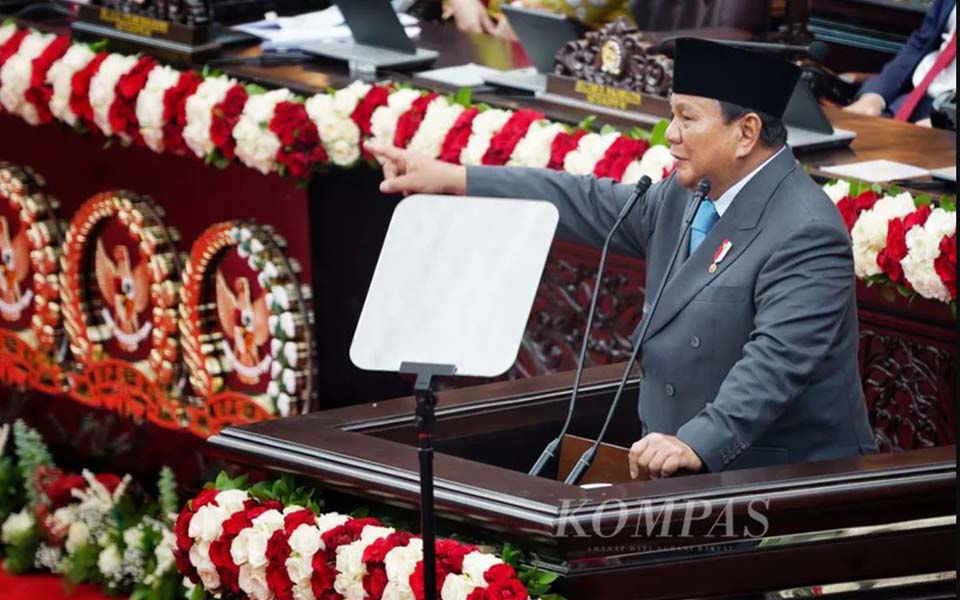


Jakarta – The Coalition for the Codification of Election Laws rejects the idea put forward by Indonesian President Prabowo Subianto regarding the desire to return the election of regional heads (Pilkada) through the Regional Representative Councils (DPRD).
The coalition said that the pretext of high political costs incurred in direct regional elections as raised by Prabowo is not the main problem. According to the Coalition, the real problem is election governance which the country has not seriously reformed.
"This idea is not just substantially misguided, but also shows a lack of empathy for the ordinary people who are facing difficult situations", said the Coalition in a press release on Sunday December 7.
"When the public needs certainty about the protection and presence of the state in handling disasters, the elites are busy discussing political engineering that has the potential to undermine the people's democratic rights", they added.
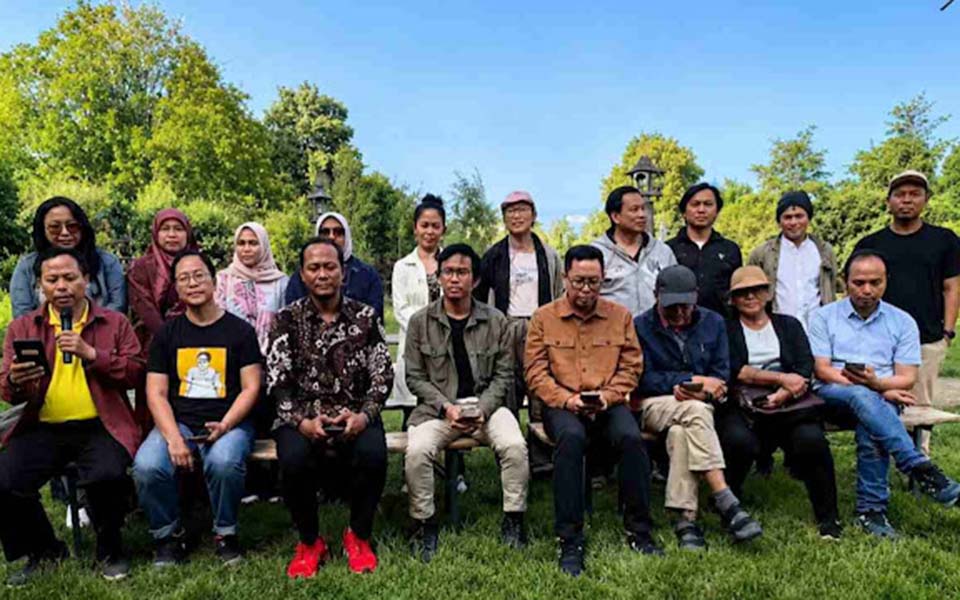
The Coalition for the Codification of Election Laws consists of the Association for Elections and Democracy (Perludem), the Andalas University Faculty of Law Constitutional Studies Centre (Pusako), the University of Indonesia Political Studies Centre (Puskapol), the Indonesian Women's Coalition (KPI) and the Network for Democracy and Electoral Integrity (Netgrit).
Then Indonesia Corruption Watch (ICW), the Centre for Indonesian Law and Policy Studies (PSHK), Themis Indonesia, Migrant CARE, the Indonesian Association of Persons with Disabilities (PPDI) and the Southeast Asia Freedom of Expression Network (SAFENet).
According to the Coalition, the high political costs are not due to the direct regional election mechanism, but rather due to uncontrolled campaign costs – including practices of money politics such as buying and selling votes and buying and selling candidacy seats.
In its press release, the Coalition quoted research from Muhtadi (2018) which showed that around 25-33 percent of voters in the 2014 elections were exposed to money politics. That figure very likely increased in the 2024 regional elections.
The coalition stated that money politics takes place on a massive scale in all electoral arenas in Indonesia, including regional elections.
Aside from this, another factor that makes political costs even more expensive is the high cost of nominations, namely all the costs that must be incurred by prospective candidates from the early stages.
These costs include consolidating political support early on ranging from political dowries (money to become candidates) paid to the political parties, financing electability surveys to spending on communications and political networks.
"Because not all of these costs are regulated in the official campaign finance scheme, the practice of funding candidates often takes place without transparency and increases the dependence of candidates on certain investors", said the Coalition.
"Thus, the high costs of regional elections are not caused by the direct election mechanism, but by the transactional and unaccountable nomination process", they continued.
In the Coalition's view solving these problems by eliminating direct regional elections is a wrong move and does not address the root cause of the problem.
If this logic is used consistently, said the Coalition, then other elections could potentially be abolished simply because of the widespread practice of money politics.
"Yet, direct regional elections are an important achievement in Indonesia's democratic consolidation post-reformasi [the political reform process that began in 1998], which expands the space for accountability, opens up public participation and encourages more open competition", they added.
Similar situation during SBY presidency
The Coalition reminded the public that the discourse on abolishing direct regional elections is nothing new.
At the end of his second term in office, the 6th President of the Republic of Indonesia, Susilo Bambang Yudhoyono (SBY), faced a political situation similar to the current context.
At that time, the House of Representatives (DPR) passed revisions to the Regional Election Law (UU Pilkada) that removed the direct election mechanism and returned the election of regional heads to the DPRD.
Yudhoyono however viewed this move as a setback for democracy because it actually opened up space for illicit political transactions behind the closed doors of regional parliaments, and reduced the people's right to directly determine who leads them.
Aside from this, the Coalition said that direct regional elections have so far been an instrument for the circulation and regeneration of national leadership. There have been many figures and leaders who emerged from the direct regional election process and gradually filled the political space at the national level.
"If the Pilkada is return to indirect elections, then the chain of circulation and regeneration of leadership will certainly be disrupted, nepotism will become rampant and create new authoritarianism", said the Coalition.
"Instead of reviving the discourse on indirect regional elections, legislators should focus on improving electoral regulations to address the issue of money politics", they added.
These steps could include strengthening campaign finance regulations, increasing the effectiveness of law enforcement, improving the audit system, strengthening the transparency of political funding and encouraging the institutionalisation of more democratic political parties.
"Based on the description above, the Coalition for the Codification of Election Laws firmly rejects the discourse of returning Pilkada to the DPRD. We also emphasise that this mechanism is contrary to constitutional principles, reduces people's sovereignty, and opens up space for illicit political transactions behind the closed doors of the DPRD", they asserted.
Earlier, when attending the climax of the Golkar Party's 61st anniversary event at the Senayan Sports Arena on Friday December 5, President Prabowo admitted that he was considering an idea mooted by Golkar Party General Chairperson Bahlil Lahadalia on regional elections through the DPRD.
This proposal emerged on the pretext that the direct regional elections that have been held have had high political costs.
"If you've already elected the regency DPRD, provincial DPRD, then why not just immediately choose the governor and regent? Done", said Prabowo.
"This is done in Malaysia, it's done in India, it's done by many countries. The UK, Canada, and Australia, the richest countries in the world use low-cost political systems", he asserted.
Prabowo also suggested that Indonesian politics should be characterised by the principle of mutual cooperation after the election process is complete.
"Once again I convey my belief that Indonesian democratic politics must be characterised by: competition while competing, once competing is finished, uniting, being compact, mutual cooperation, working together", he said. (ryn/kid)
- Western democracy may not suit Indonesia says Prabowo. Kompas.com – December 5, 2025
[Translated by James Balowski. The original title of the article was "Koalisi Sipil: Gagasan Prabowo soal Pilkada Tertutup Lewat DPRD Keliru".]