

Singgih Wiryono, Dani Prabowo, Jakarta – Three different survey institutions, LSI Denny JA, Litbang Kompas and Populi Centre, have released similar results on the issue of the election of regional heads (Pilkada) being through Regional Representative Councils (DPRD).
Litbang Kompas, for example, released the results of a telephone survey conducted on December 8-11, 2025, with 510 randomly selected respondents from 76 cities in 38 provinces.
The majority of respondents, 77.3 percent, want the direct election of regional heads to continue. Only 5.6 percent support the proposal to elect regional heads through the DPRDs, and the remainder did not respond.
Meanwhile, the Populi Centre released similar results in a survey conducted on November 30, 2025. Populi Centre Executive Director Afrimadona said that the number of respondents favouring the direct election of regional heads was very high, even reaching 89.6 percent.
"(The governor) being directly elected was 89.6 percent, appointed by the central government 5.8 percent, elected by members of the provincial DPRD by 2.3 percent, and don't know, didn't answer 2.3 percent", said Afrimadona in a statement on Friday January 9.
Meanwhile, a survey by LSI Denny JA reported a similar sentiment, with 66.1 percent of respondents disagreeing with the discourse on the election of regional heads by DPRDs.
Reflection of the public's wishes
University of Indonesia election law lecturer Titi Anggraini said that the survey results strongly signal the public's opposition of the discourse on regional heads being elected by the DPRDs.
Anggraini explained that when the majority of citizens state their wish to maintain the direct election of regional heads, this shows that the right to elect regional heads is still seen as an important part of popular sovereignty and the constitutional right of citizens.
"Public experience also shows that direct regional elections, although not yet perfect, still provides stronger control and accountability than elections conducted by DPRDs" Anggraini told Kompas.com on Tuesday January 13.
Anggraini said that in a democracy, the political elite should be sensitive and responsive to the public's aspirations. She believes that the discourse on returning regional elections to the DPRD should be stopped and not pursued by the elite, not delayed as if to test the public reaction.
"The political energy of the DPR [House of Representatives] and the government should be directed toward improving the implementation of direct Pilkada, such as reducing political costs, strengthening law enforcement, and improving the management of the stages and selection of election organisers. Not instead revoking the ordinary people's right to vote under the pretext of efficiency or stability", she added.
Political parties must listen
Election watchdog the Association for Elections and Democracy (Perludem) researcher Haykal says that the release of these survey results clearly reflect the wishes of the broader public.
Moreover there is a tendency for this desire to become stronger looking at the timing of the surveys conducted by two different institutions: LSI Denny JA in October 2025, with 66.1 percent of respondents rejecting the idea of regional heads being elected by the DPRDs, while Litbang Kompas found 77.3 percent rejecting the same idea.
"If we look at the timing of the surveys we can also see that there is a strengthening the public's [views] on this in the surveys", he said.
Haykal explained that the overall picture from this opposition should be heard by the political parties as part of public participation.
"If the parties truly understand the meaning of meaningful participation then this is the right time to step back and apologise for presenting a discourse that is opposed by the public", he said.
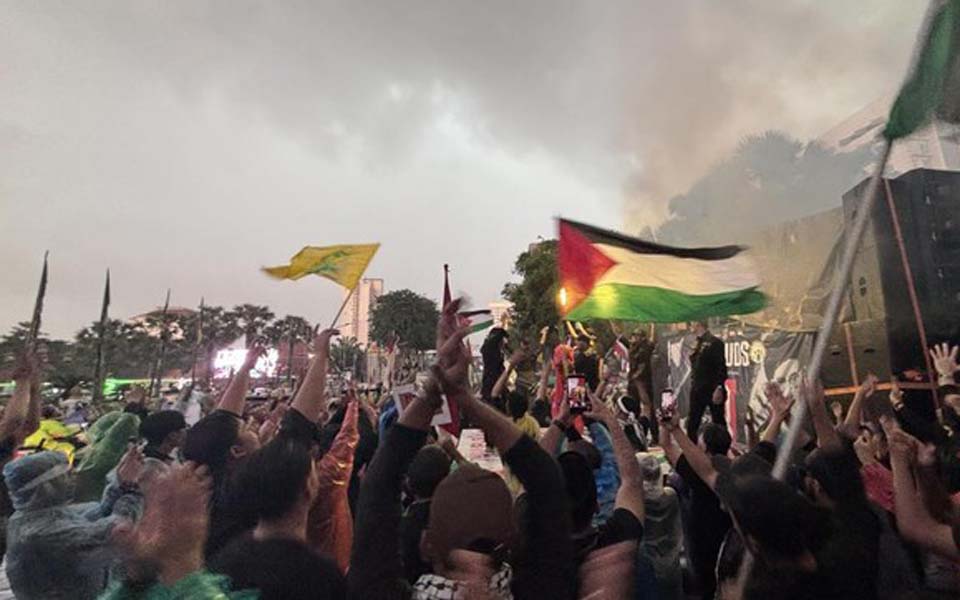
He said that if these voices are not immediately and wisely responded to, it will give birth to public unrest . One example of this unrest was the demonstrations in August 2025, actions that are suspected to be the result of the political elite’s failure to listen to the people's aspirations.
"But of course this will be greatly influenced by the policies of the political parties and elite in responding wisely to the public's wishes", he said.
Potential for demonstrations
Anggraini also touched on the experience of large demonstrations that have been repeated in recent years. She said officials and the political elite should learn from these big demonstrations.
"When the public's voice is not heard through representational channels and the legislative process, the public will seek other channels to express their opposition", she said.
Anggraini stated that a healthy and dignified democracy cannot continually rely on street pressure. Ideally, it is enough for the people's voices to be heard through credible surveys, open public discussions and transparent decision-making processes.
"If these clear public aspirations continue to be ignored, then the problem is not with direct Pilkada, but with how the political elite understands popular sovereignty and carries out their representative functions", she said.
Anggraini said that if public aspirations are not aligned with policies, then the excess will be an escalation of dissatisfaction through mass movements that will return to the streets on an even larger scale again.
"If that happens, the credibility and prestige of [President] Prabowo [Subianto’s] administration will be tarnished both nationally and internationally", she said.
The current discourse on regional heads being elected by DPRDs continues to receive support, particularly from the political parties with seats in Senayan (the DPR).
Currently, five political parties have declared their support for this discourse: Prabowo's Greater Indonesia Movement Party (Gerindra), the Golkar Party, the National Awakening Party (PKB), the National Democrats (NasDem) and the Democratic Party.
The discourse that is being echoed is over the high political costs of holding direct regional elections.
In addition to this, money politics and the friction resulting from regional elections are reasons they want to reinstate the DPRD-elected regional head election system, after it was buried during the reformasi era – the political reform process following former president Suharto's downfall in 1998.
[Translated by James Balowski. The original title of the article was "Suara Masyarakat Minta Pilkada Tetap Dipilih Langsung, Elite Jangan Tunggu Didemo".]