

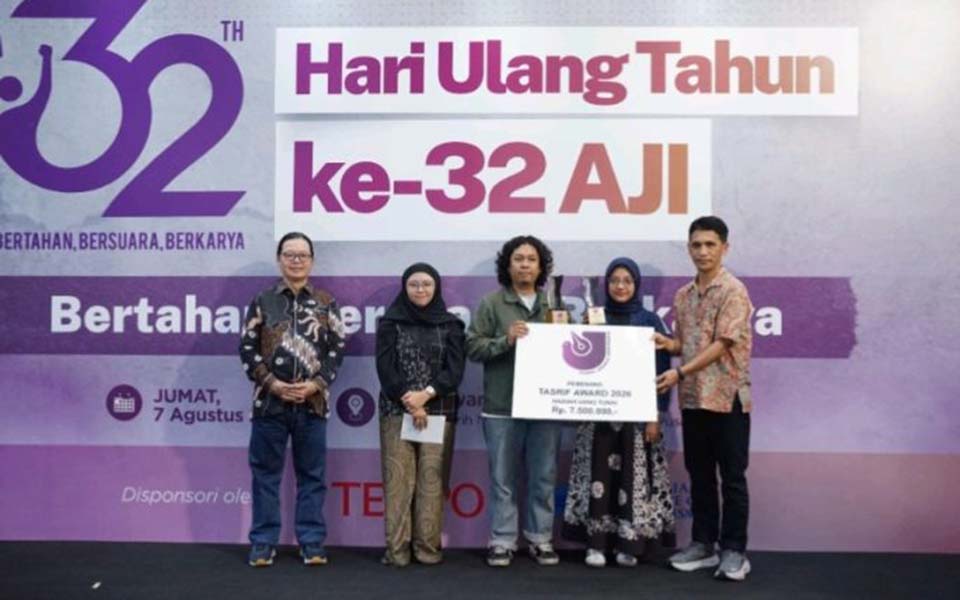
Reiner Brabar, Sorong – A documentary film about South Papua has received recognition from the world press. Pesta Babi (Pig Feast) , the title of a documentary film that records the struggle of indigenous peoples to defend their land and living space, has won the 2026 Suardi Tasrif Award from the Indonesian Alliance of Independent Journalists (AJI).
The award was given in commemoration of AJI Indonesia's 32nd anniversary on Friday evening August 7.
For the jury, the film Pesta Babi is not just an audiovisual work. The film is considered to present the voices of people who have been in a vulnerable position when faced with power, development, seizure of living space and militarisation.
The 2026 Tasrif Award jury consists of Gema Gita Persada from the Legal Aid Foundation for the Press (LBH Pers), Daniel Awirga from the Human Rights Working Group (HRWG) and Ignatius Haryanto from the Nusantara Multimedia University (UMN).
This year they chose the production team for the film Pesta Babi along with acid attack victim Andrie Yunus from the Commission for Missing Persons and Victims of Violence (Kontras) based on a number of names proposed by AJI city branches, individuals and institutions.
Haryanto said that the two award recipients were related to the issue of remilitarisation in the public sphere and the strengthening of military influence in the civil sphere.
"The first and second candidates have the same theme related to the issue of remilitarisation in the public sphere or the return of the hegemony of military power to the civil sphere which is worrying for democratic life in this country", he said.
According to the jury, the work and struggles of the two award recipients represent the spirit of journalist and lawyer Suardi Tasrif, a press figure who is known for fighting for press freedom and freedom of opinion.
Persada said that the actions of the two candidates had inspired the wider community regarding the importance of press freedom and freedom of opinion being expressed in a peaceful manner.
"The actions taken by these two candidates have inspired the wider community about the importance of press independence and expression in peaceful ways and as a form of fulfilling the public's right to information", said Persada.
From South Papua to public spaces
Pesta Babi was produced collectively by Jubi Media, the People's Earth Heritage Foundation (Pusaka), Watchdoc, Greenpeace, the Merauke Papua Legal Aid Foundation (LBH Papua) and the New Indonesia Expedition.
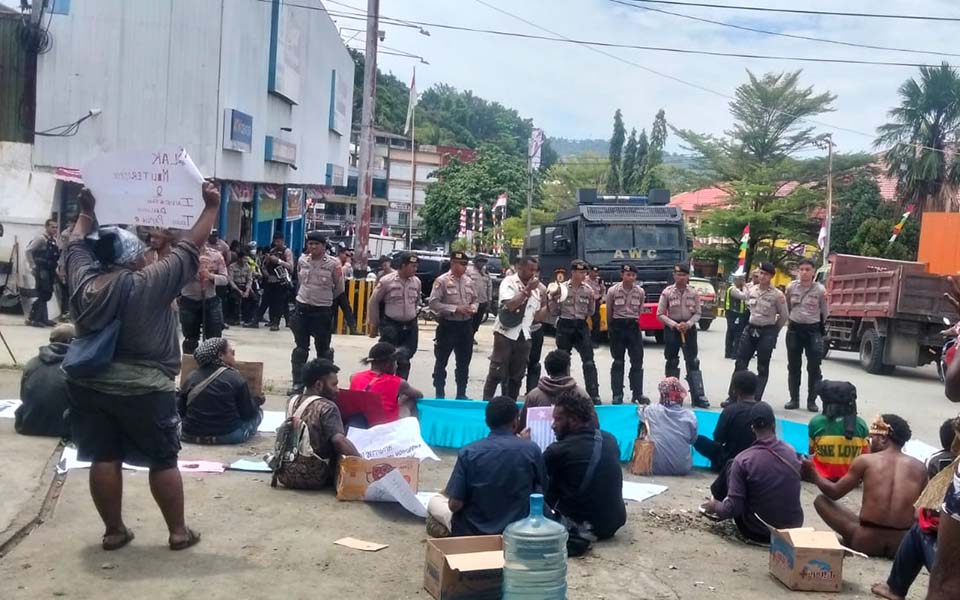
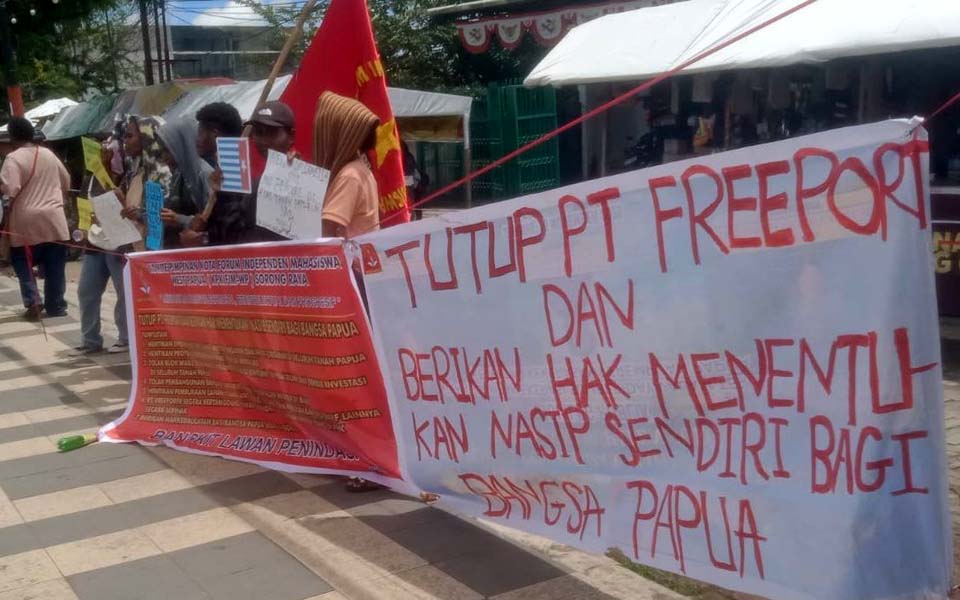
This film takes the audience into the problems of the indigenous people of South Papua who are faced with changes in forest areas, development projects, exploitation of natural resources and issues of living space.
One of the stories taken up is the struggle of Mama Yasinta Moiwend, a Marind woman from Ilwayab district, Merauke regency.
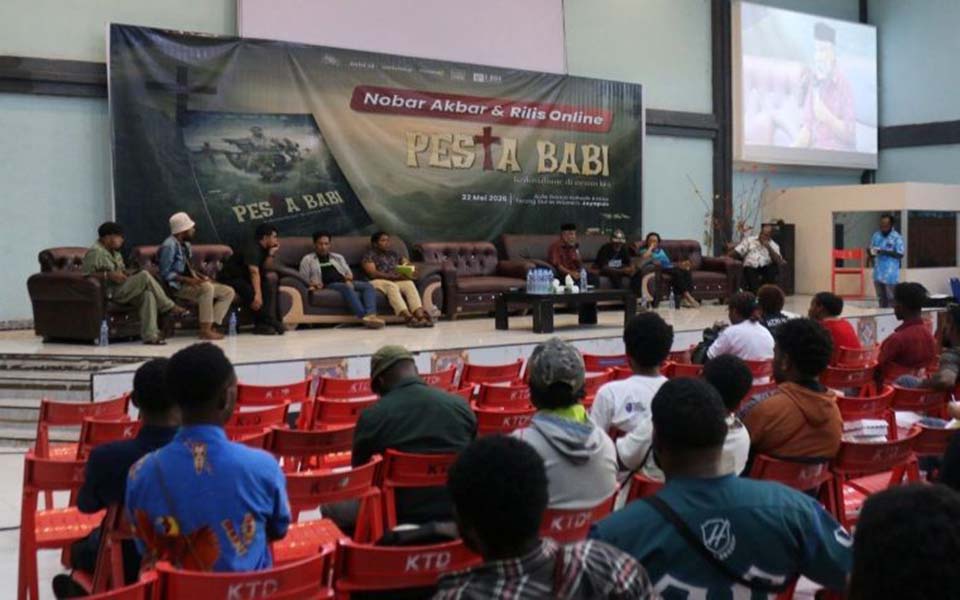
The film has expanded beyond the screen. Screenings have been held through joint viewing activities (nobar) in various regions and has provided a space for the public to watch and discuss the issues raised by the film.
In the midst of a number of screening bans in various places, Pesta Babi has actually become a wider topic of discussion.
Production team representative Cypri Jehan Paju Dale said that the courage of the Papuan people, indigenous women and indigenous communities in carrying out resistance was one of the sources of inspiration for making the film.
"We present it first of all to the people of Papua. Their resistance is legitimate. An offering to fellow journalists and NGOs [non-government organisations]. Papua is not an empty land", said Dale.
A film that doesn't stop on the screen
Pesta Babi was also followed by a solidarity movement outside the actual screenings. Based on information submitted by collaborators uploaded on social media accounts belonging to newsjubi, idbaruid and watchdoc_insta, the film has been watched more than 14 million times via YouTube and screened offline at more than 2,500 places in Indonesia and overseas, and the joint screenings with ticket prices being voluntary have succeeded in collecting 517,898770 rupiah.
These funds were then used to help residents who were displaced due to military operations in a number of areas of Papua. These include Nduga refugees in Ilekma, refugees in Kimbim village, Jayawijaya district, and refugees in Intan Jaya, Central Papua.
Thus, film is not only a medium for telling stories about indigenous peoples' problems. The screening is also part of efforts to build solidarity with residents affected by conflict and loss of living space.
When journalism takes the side of the unheard
AJI Indonesia secretary general Bayu Wardhana emphasised that the decision to award the Tasrif Award was in the hands of an independent jury and was not intervened in by AJI.
According to Wardhana, the jury's choice of the film Pesta Babi reflects the position of journalism which gives space to groups who find it difficult to express their voices.
"So we believe that the jury's choice is very appropriate in reflecting the current situation in Indonesia, how journalism has a firm position, namely siding with those who cannot speak or are voiceless", said Wardhana.
About the Tasrif Award
The Tasrif Award takes its name from Suardi Tasrif, a national press figure who is known as one of the pioneers of the Indonesian journalistic code of ethics. This award was first given in 1998 to Kontras founder Munir Said Thalib, who was assassinated in 2004, and subsequently given to individuals and groups who were considered consistent in fighting for press freedom and freedom of expression.
The 2026 awards again bring the same message that when people's voices confront power, journalism is not only required to be present, but also to ensure that marginalised voices remain heard. And this year, that voice came from Papua through the documentary film Pesta Babi.
[Translated by James Balowski. The original title of the article was "Film Dokumenter "Pesta Babi" Raih Tasrif Award 2026 dari AJI".]
Source: https://suarapapua.com/2026/08/08/film-dokumenter-pesta-babi-raih-tasrif-award-2026-dari-aji/