

Reiner Brabar, Jayapura – The Papua Indonesian Forum for the Environment (Walhi) has issued a strong critique stating that Papua is being pushed to the brink of ecological destruction by a coalition of oligarchs, capitalism and the state, hiding behind the narrative of investment and green development.
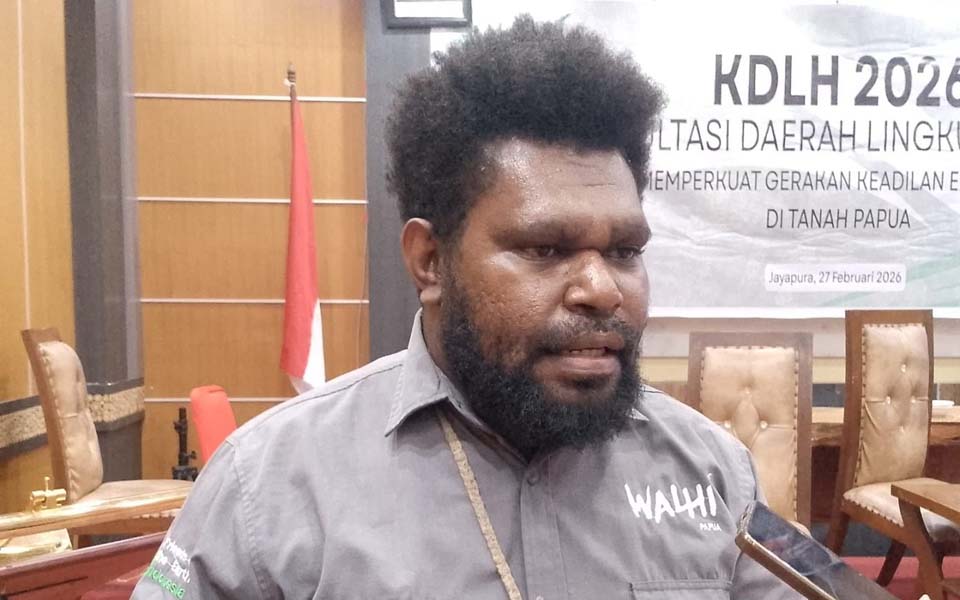
Walhi Papua Executive Director Maikel Primus Peuki referred to the relationship between the oligarchy and capitalism as an "illicit love affair between power and capital", which is systematically sacrificing the forests and indigenous communities for the sake of accumulating profits.
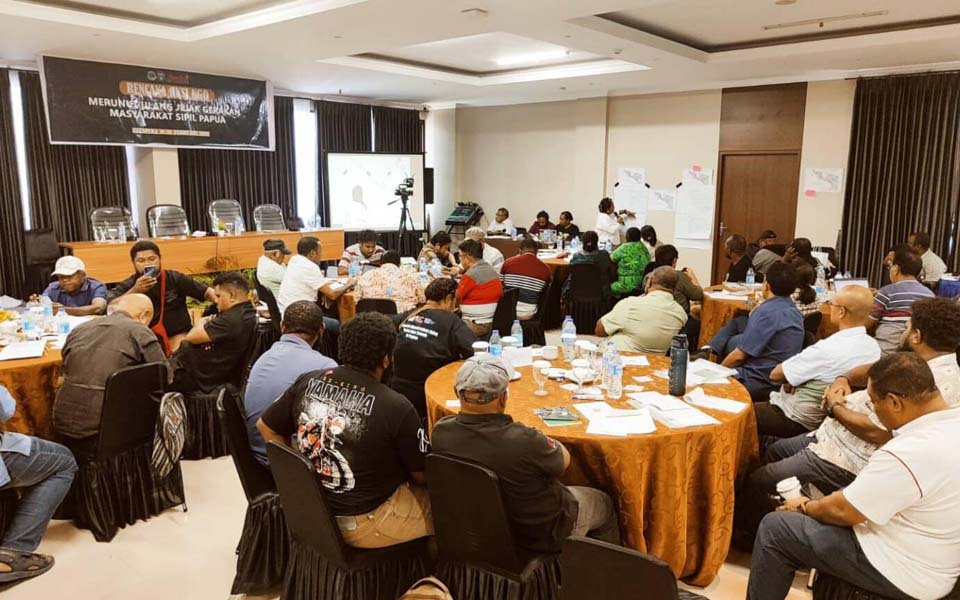
He made this statement during a public discussion held at a hotel in Jayapura city, Papua, on Thursday February 26.
The discussion, titled "Fighting the Oligarchy in the Land of Papua", featured four keynote speakers: Peuki, Umbu Wulang, Walhi Institutional Division head, Ester Haluk, a social activist and academic at the Walter Post Theological College (STT), and Naomi Marasian, director of the Limited Association for the Study and Empowerment of Indigenous Communities (Pt PPMA) Papua.
Peuki believes the state is not neutral, but rather an instrument of the oligarchy that acts through mining permits, palm oil plantations and large-scale investment projects.
"Papua's natural environment is being reduced to a commodity. Indigenous communities are marginalised on their own land, while profits flow to the owners of capital", Peuki asserted.
According to Peuki, the narrative of increasing regional revenues and clean energy is merely a cover for massive concessions on customary forests. On the ground, village communities often encounter heavy equipment entering without their free, prior or informed consent (FPIC).
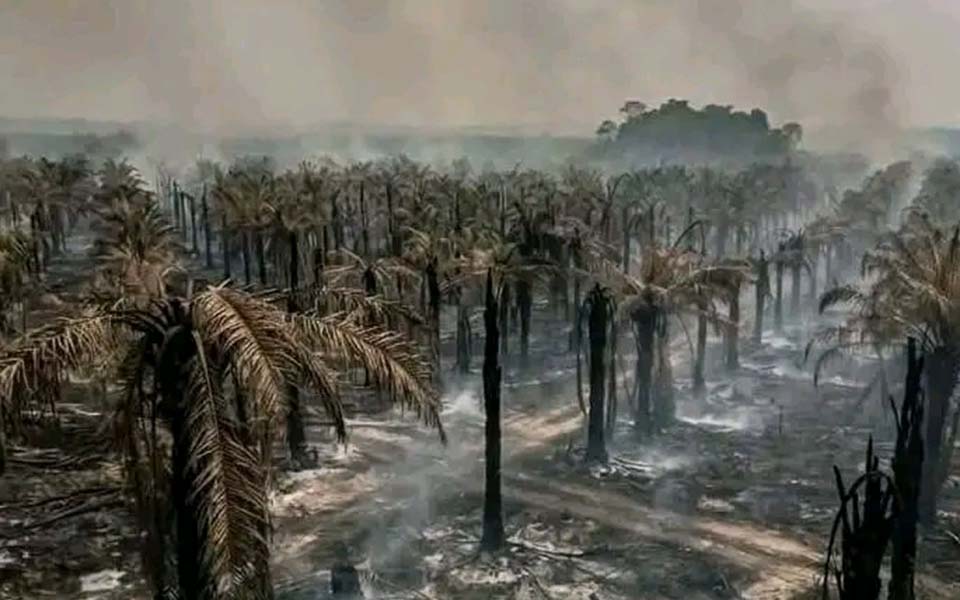
Thousands of hectares of forest are being cleared, spiritual ties with the land are being severed and local economies are being destroyed.
"This is a green illusion. The state talks about energy transition and prosperity, yet extractive permits continue to be issued. There's an addiction to permits to cover the budget [shortfall]", Peuki said.
Peuki emphasised that the impact is real, indigenous communities who subsist on sago, fish and gardens are being forced into a fragile money economy and the global market. Structural poverty exists in regions rich in resources. "Trees don't need people; people need trees", said Peuki.
Umbu Wulang added that the Papuan issue must be interpreted as internal colonialism, a process of control of living space by the state and corporations in the name of development. He highlighted the practice of "statistical poverty": rich regions are labelled poor so that large-scale mining and plantations are legitimised.
"The root of the problem is the power structure. In an oligarchic system, capital is sovereign. In indigenous communities, the people are sovereign over their land", said Wulang.
Wulang called for a reversal stating that every investment must comply with the ecological, customary, theological and economic safety requirements set by the communities themselves.
He also called for the restoration of culture and mother tongue as the foundation of human relationships, a land now being eroded by industrial expansion.
Walhi Papua emphasised that the current juncture is clear: continuing a development model based on extraction and accumulation of capital, or shifting to ecological justice that recognises the unity of humans and nature.
"Without changing the power structure, they warn, the ecological destruction and impoverishment of indigenous communities in Papua will continue to be repeated", he concluded.
[Translated by James Balowski. The original title of the article was "WALHI Papua: Oligarki dan Ilusi Hijau Hancurkan Tanah Papua".]
Source: https://suarapapua.com/2026/02/28/walhi-papua-oligarki-dan-ilusi-hijau-hancurkan-tanah-papua/