

Jakarta – The Indonesian Forum for the Environment (Walhi) says that the expansion of data centres for AI could trigger water crises in various regions if the government continues to prioritise digital investment without specific regulations ensuring the protection of water sources and the environment.
Because of this the government must ensure that AI infrastructure development does not sacrifice the public's right to water and ecosystem sustainability.
Walhi Urban Justice Campaigner Wahyu Eka Styawan said that the government must not repeat the governance errors seen in various extractive sectors by allowing investments to grow faster than the state's capacity to manage their impacts.
Because to date there are no specific regulations governing the construction and operation of AI infrastructure. All processes still use general instruments such as Environmental Impact Assessments (AMDAL) and risk-based licensing, without specific controls for water and energy consumption, cumulative impacts or potential conflicts over natural resource use arising from large-scale computing industries.
"AI is indeed an inevitable part of technological advancement. However AI infrastructure development must not sacrifice the public's right to water and a healthy environment. The government must not in the name of digital transformation create a new ecological crisis the burden of which will fall on society", said Styawan.
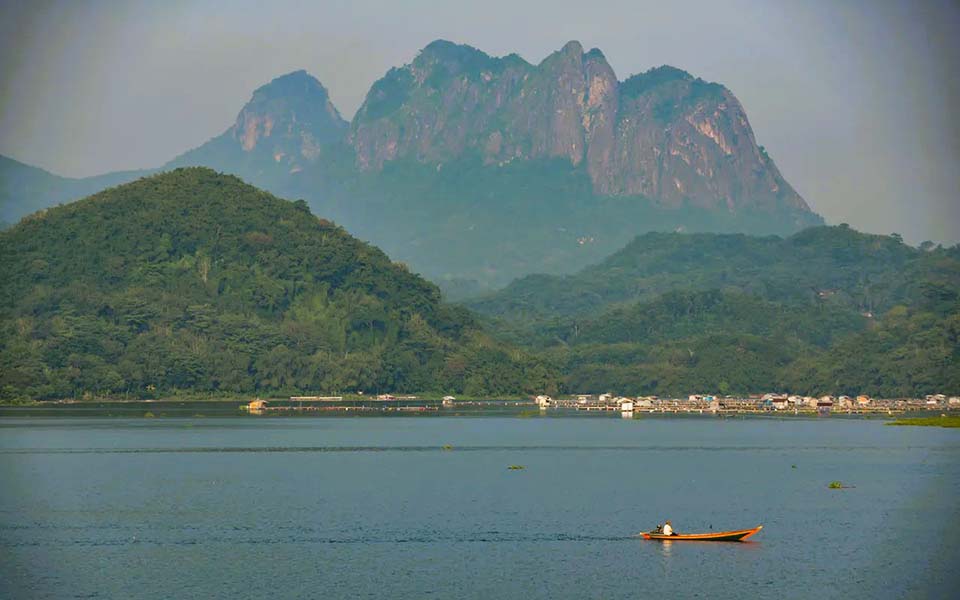
Walhi has found that the construction of the BDx AI data centre in the Jatiluhur area of West Java is projected to consume up to 384 litters of water per second or approximately 33,000 cubic metres per day. In one year, this demand amounts to around 12 million cubic metres of water.
Although this proportionally this is equivalent to around 0.20 percent of the Jatiluhur Reservoir's total potential water availability, such usage will still give rise a significant ecological burden due to the continuous 24-hour-a-day nature of the operations. Based on Walhi's environmental load projections, water extraction for AI data centres at the Jatiluhur Reservoir will be equivalent to approximately 7.87 percent of the water needs of Karawang residents or the daily clean water requirements of over 220,000 people.
Aside from West Java, Walhi has also identified the rapid development of data centres in Batam as a potential threat. Currently there are between 16 and 18 data centre projects in Batam that are either operational or under construction. This expansion has the potential to increase pressure on the Duriangkang Reservoir which is the primary water source for more than 1.3 million Batam residents.
Based on a study by Walhi, the water requirements for approximately ten AI data centre units could reach around 32 million litres per day or 11.68 million cubic meters annually. This volume is equivalent to the daily water needs of roughly 320,000 people or a medium-sized district.
Amidst threats such as reservoir sedimentation, climate change and rising drought risks, allocating water to the AI industry has the potential to reduce the water available for the public. Yet the Jatiluhur (Purwakarta) and Duriangkang (Batam) reservoirs represent strategic water sources that support drinking water and agricultural irrigation.
"The Jatiluhur and Batam cases reveal a similar pattern. AI infrastructure is being built atop strategic clean water sources that have long sustained communities. Without strict regulations, then these communities will be the first to be impacted upon by droughts, the climate crisis or dwindling water supplies", asserted Styawan.
According to Walhi, Indonesia needs to implement stricter governance regarding the development of AI data centres. The Indonesian government must enforce specific restrictions on data centres, zoning regulations, energy and water efficiency standards, mandates for using recycled water and a risk-based AI governance framework to ensure that digital investments do not compromise public interests or the environment.
Walhi is therefore urging the government to impose a moratorium on data centre construction and immediately draft comprehensive regulations governing AI data centres. These regulations must mandate assessments of environmental carrying capacity, the protection of water resources, spatial planning compliance, the implementation of Free, Prior, and Informed Consent (FPIC), information transparency and meaningful participation by affected communities.
"Until such regulations are in place, the government needs to establish a moratorium on the construction of new data centres. Technology must develop within the bounds of ecosystem sustainability. Indonesia must not sacrifice water resources, the environment, or the interests of its people in the pursuit of AI investment", concluded Styawan.
Contact person:
Wahyu Eka Styawan, Urban Justice Campaigner, Walhi National
wahyuekas@walhi.or.id, 08115501980
Wahana Lingkungan Hidup Indonesia (Walhi)
Jln. Tegal Parang Utara No. 14, Mampang Prapatan, South Jakarta
Email: informasi@walhi.or.id, Instagram: @walhi.nasional, X: @walhi.nasional, TikTok: @walhi.nasional
Mobile: (+628115501980)
[Translated by James Balowski. The original title of the article was "Ekspansi Data Center AI Mengancam Sumber Air Masyarakat, Pemerintah Harus Berlakukan Moratorium Pembangunan".]