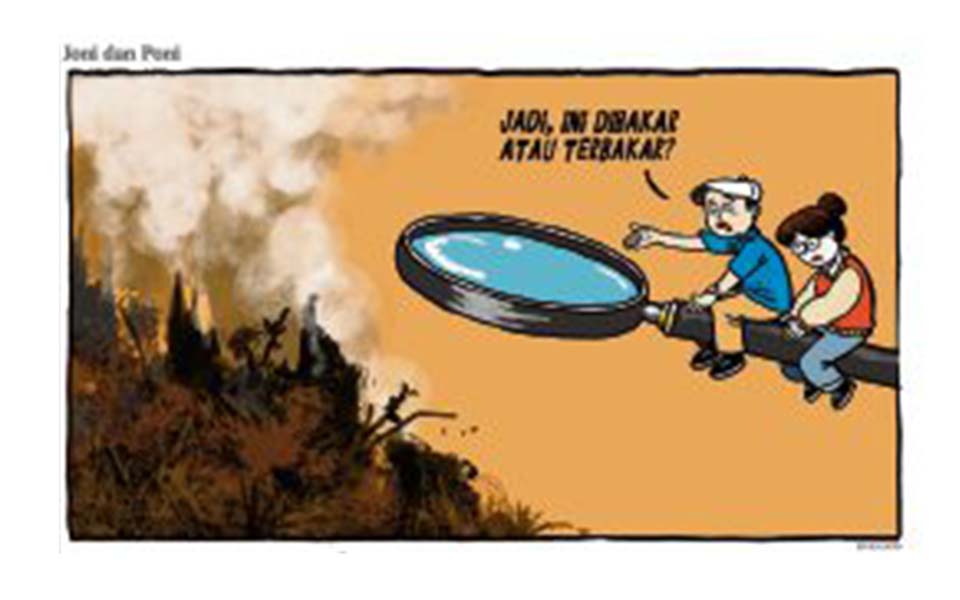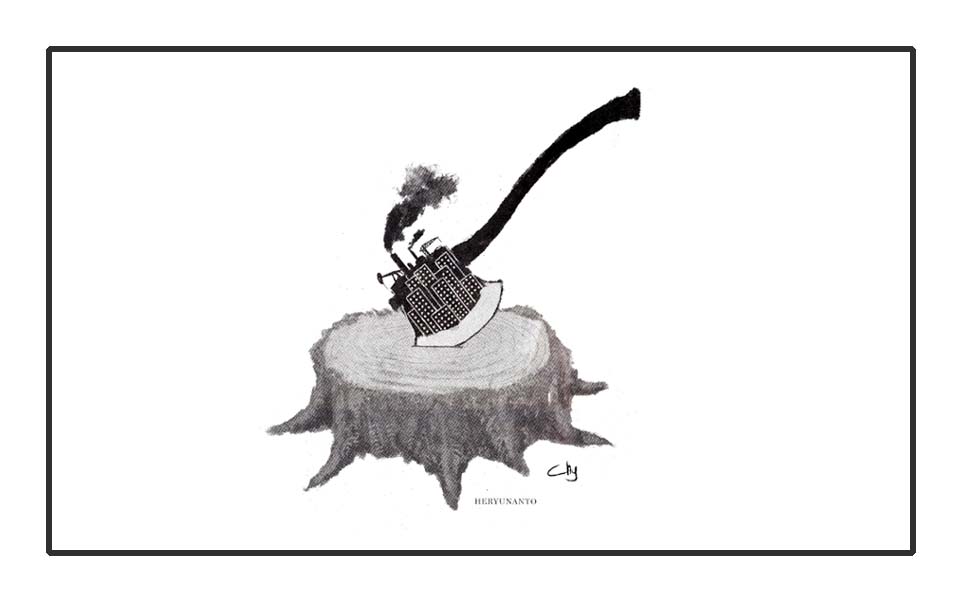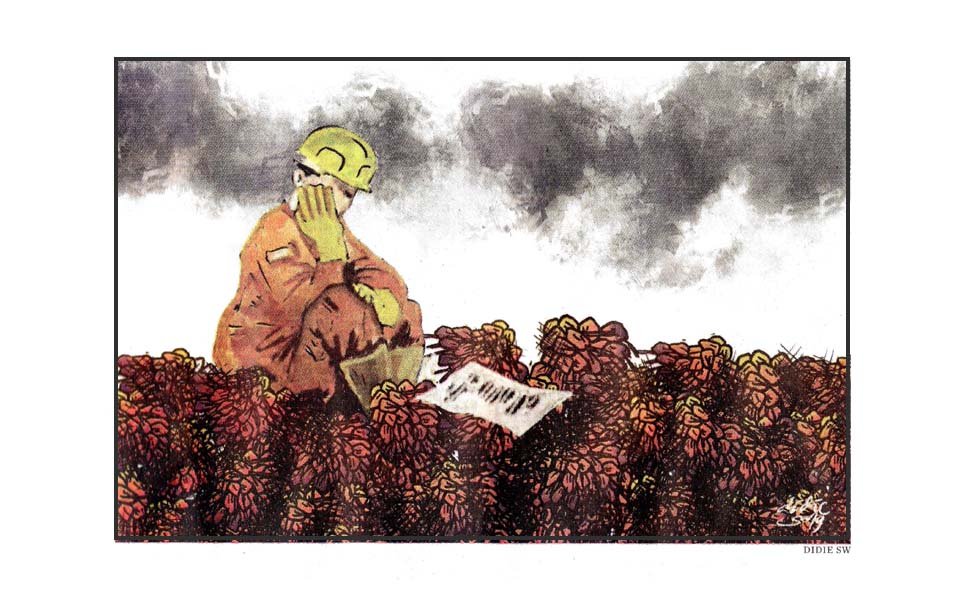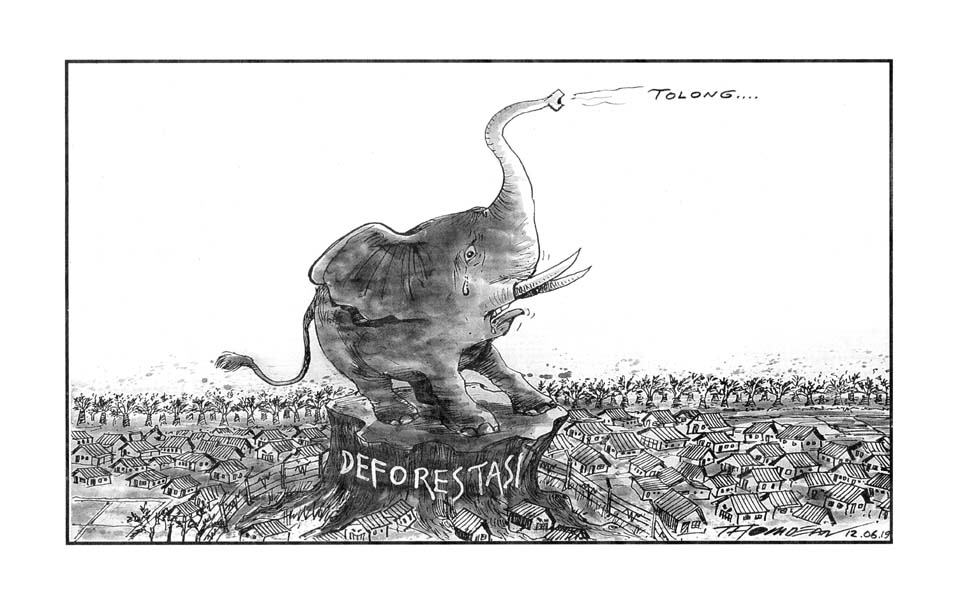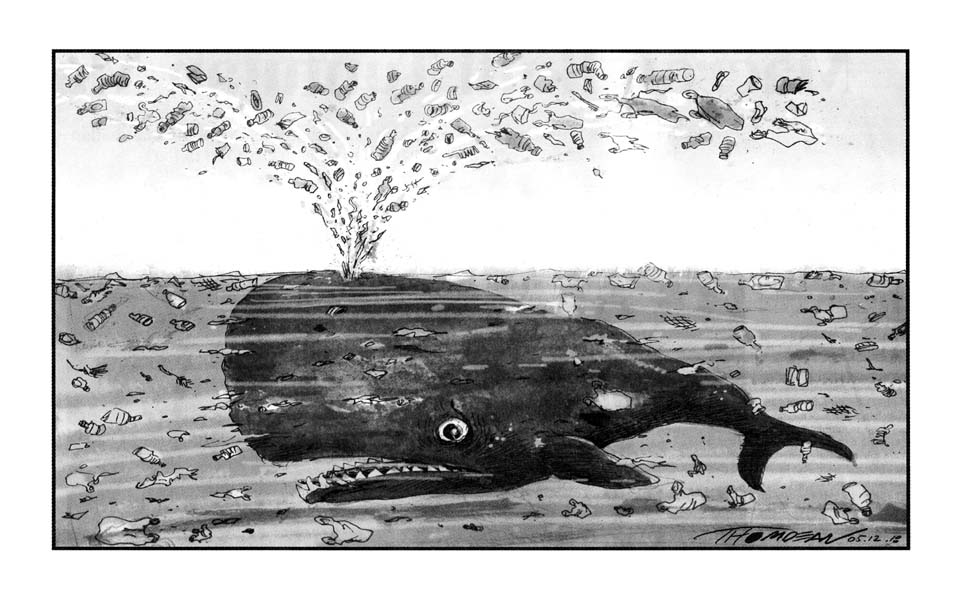


Timun: Forests need to be cut down for agriculture. Here's a permit for the utilisation of protect forests. But why do forest and land fires keep happening? We regret the long dry season. We're concerned that there are still lots of smokers in forests.
While President Prabowo Subianto has repeatedly expressed frustration with the continued failure to contain ongoing forest and land fires (karhutla) and vowed to crack down on those deliberately starting fires, environmentalist say that the government's failure to control palm oil and mining companies is largely to blame.
According to a recent analysis, nearly a quarter of the areas burning across Indonesia are located inside business concessions with some having been repeatedly engulfed in fire, exposing gaps in forestry law enforcement.
Between January and July, at least 285,914 hectares of land have been burned across the country, according to figures released by independent forest monitoring platform Nusantara Atlas.
Of this, around 68,324 ha is located within industrial concessions, roughly the size of Jakarta.
A majority of the fires came from oil palm concessions, with blazes ravaging at least 15,146 ha of area plotted for oil palm plantation, followed by 12,120 ha of mining concessions and 10,485 ha of pulpwood plantations.
Meanwhile, around 25 percent of all hot spots found in August were located in peatland ecosystems within business concessions.
While this year's El Nino may have provided extra fuel for the wildfires, the practice of deliberately burning the land to make way for agriculture and other business practices often causes the blazes to spiral out of control, said David Gaveau, founder of geospatial company TheTreeMap which operates Nusantara Atlas.
"These fires are the legacy of 50 years of forest degradation and deforestation, as well as peatland conversion [into plantations]", Gaveau said on September 2.
Various authorities have launched separate efforts to crack down on individuals and companies suspected of arson that caused spreading wildfire mostly in Sumatra and Kalimantan and the Forestry Ministry announced it had issued administrative penalties against 20 individuals and companies found deliberately burning the land.
But according the Indonesian Forum for the Environment (Walhi), the crackdown has yet to signal firm or consistent law enforcement as authorities stopped short of revoking permits of violating companies.
The group has previously lambasted the government over its weak law enforcement, deemed to enable recurring fires inside business concessions. Concerns were particularly raised about peatland that is often dried to make way for plantations. Dried peatland is highly flammable and can be ignited either naturally or by human activity.
Around 212,156 hot spots were found located within peatland ecosystems, more than two-thirds of which were detected in August alone, according to a report issued on Tuesday by peatland-focused NGO Pantau Gambut.
"If law enforcement primarily targets individuals on the ground but fails to closely investigate corporate liability and land ownership, the deterrent effect will remain limited", said Wahyu Perdana of Pantau Gambut.
Business associations meanwhile have denied responsibility while citing compliance to environmental standards, with the Indonesian Palm Oil Producers Association (GAPKI) claiming that there had been no reports of fire inside the concessions of 743 oil palm companies under the association.
[Abridged from a Jakarta post article titled Unchecked businesses blamed for raging wildfires in Indonesia.]