

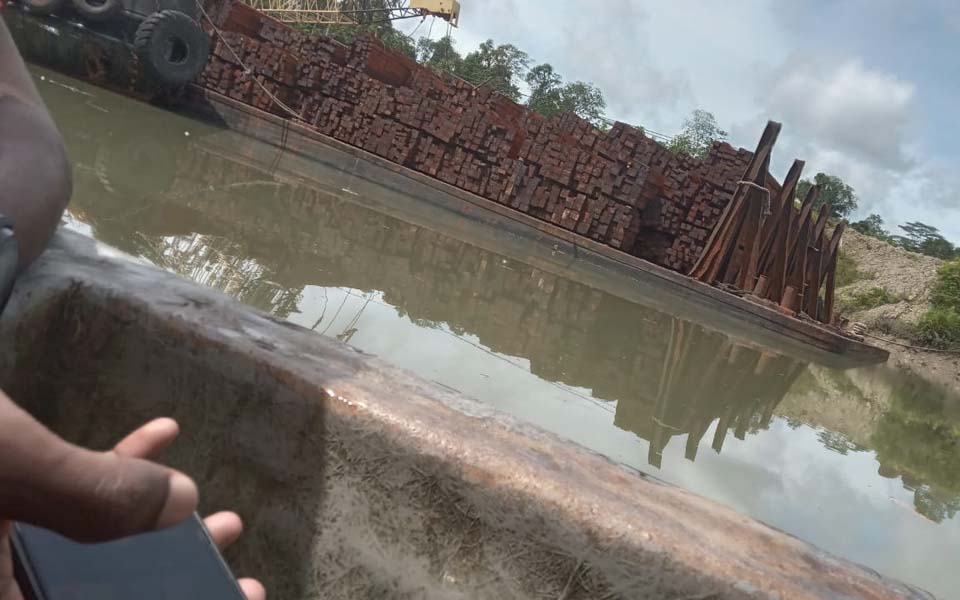
Reiner Brabar, Jayapura – The timber industry in Sorong regency, Southwest Papua, generates billions of rupiah in profits from merbau wood, but indigenous communities who own customary land only receive around 0.6 percent of the export value.
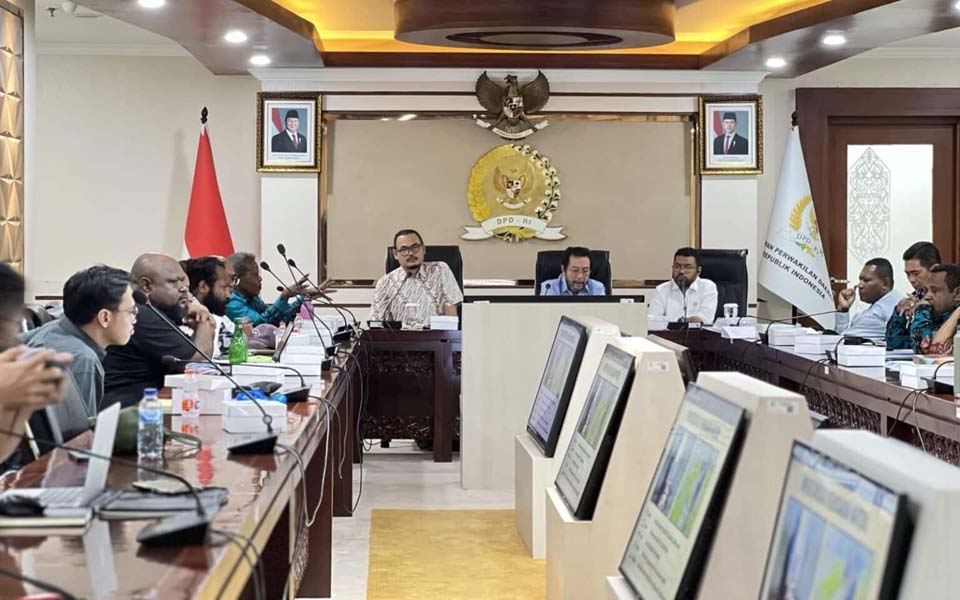
This extreme inequality was revealed in a collaborative research project between the government's National Research and Innovation Agency (BRIN) and the People's Earth Heritage Foundation (Pusaka), which was presented during a research discussion and dissemination on Wednesday January 28 in Jakarta.
The research, which was conducted in 2025 in the districts of Klamono, Moisegen, East Sayosa and Maudus, highlighted the impact of the timber industry's expansion on the Moii indigenous people who now live under pressure from logging, customary land grabbing and a customary rights crisis.
Desmiwati, a researcher at BRIN's Centre for Community and Cultural Research, stated that Papua is currently positioned as the last frontier for logging – the last region for exploitation after the forests of Sumatra and Kalimantan have been depleted.
Locally, merbau wood is valued at only around 150,000 to 200,000 rupiah per cubic meter, while the export price can reach 25 million rupiah per cubic meter, she said.
Under this scheme, indigenous communities receive only a very small share, while most of the profits are enjoyed by companies and the state, through taxes, Forest Resource Rent Provisions (PSDH), reforestation funds and profit-sharing funds (DBH).
Forced signatures
During their research, the research team discovered the practice of pseudo-approval in the release of customary land. Company socialisation activities were often held in hotels, not in villages, so only certain individuals were included.
"Residents' signatures on attendance lists were used as the basis for claiming approval for land release", said Desmiwati.
According to the research team, state and corporate power operate through administrative mechanisms that appear legal, but ultimately result in the systematic undermining of indigenous communities' rights.
"For the Moi community, the forest is more than just timber. It is a living space, a cultural identity and a source of life", emphasised Desmiwati.
Workers from outside Papua
The entry of the timber industry also triggered inter-clan conflicts, disputes over customary land boundaries and weakened customary solidarity. Kinship values have shifted to an economic orientation, while social pressures increased.
"As industrial operations progressed, kinship values, once based on custom and mutual cooperation, slowly shifted. Social pressures in surrounding villages also increased, especially as the influx of workers from outside Papua increasingly dominated the job market", she said.
On the other hand, the company's promise to employ indigenous Papuans (OAP) was not realised, even though Special Autonomy (Otsus) regulations require that 80 percent of the workforce come from the indigenous Papuans.
"Indigenous Papuans were only involved in the survey phase, after which they were pushed aside from core work", said Desmiwati.
Intimidated
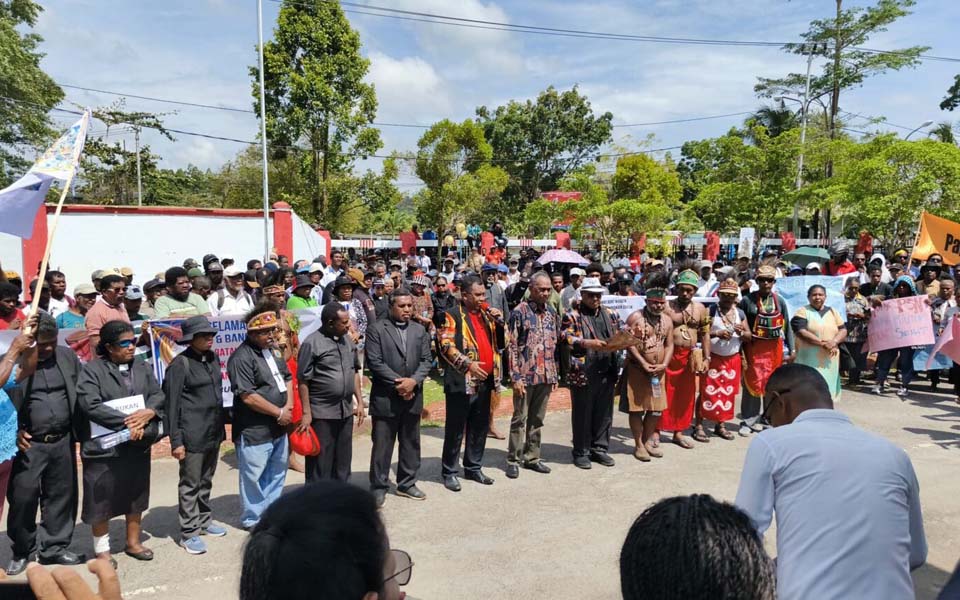
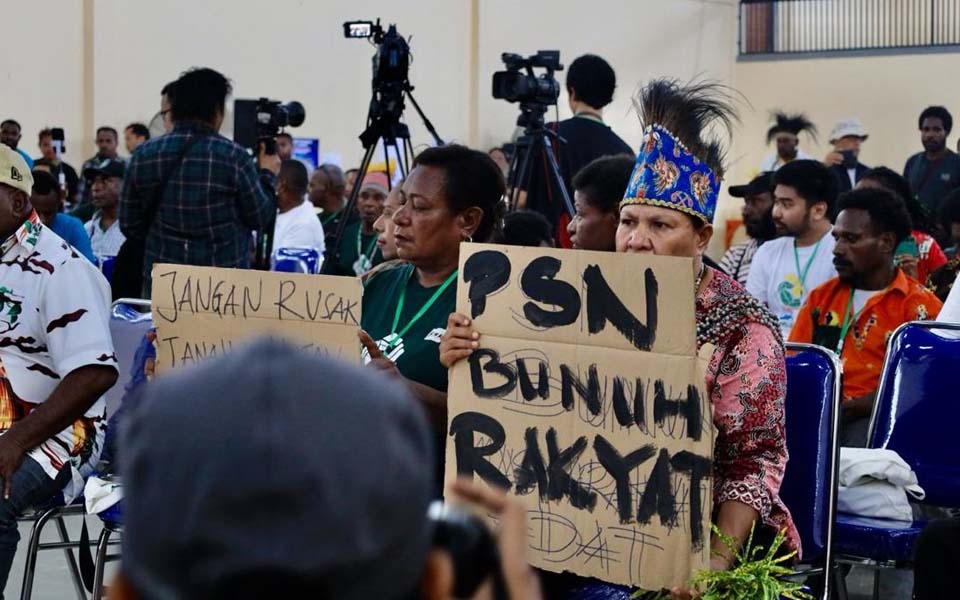
The Moi indigenous community resisted by blocking logging roads and protesting. However, the authorities' response was often intimidating, even accompanied by political stigmatisation of residents who opposed the expansion of the timber industry.
Several residents claimed to have been labelled provocateurs, anti-development and even infiltrated with certain political labels just for defending their customary forests.
Yet, she said, indigenous people's opposition is based on the belief that forests are sacred spaces, sources of life and cultural identities, not business commodities.
"Communities often incur negative stigma from the state when they resist", she said.
Desmiwati revealed that researchers found that in fact the state appears to be leaving indigenous peoples to struggle for themselves.
"The state should protect indigenous peoples, but instead appears to support corporate interests", she continued.
These findings reinforce criticism that development based on natural resource exploitation in Papua benefits corporations more than indigenous peoples while deepening deforestation, poverty, social conflict and the loss of living space for Indigenous Papuans.
Recommendations
The researchers submitted several recommendations to the government, including:
- Independent timber industry audits
- Regulatory revisions
- The establishment of an indigenous peoples' complaint task force
- Strengthening participatory mapping of customary territories
In Southwest Papua province, to this day residents still complain about massive logging activities and weak law enforcement.
From the information gathered by Suara Papua, these kind of logging activities not only took place in Sorong regency, but also in other areas such as Raja Ampat, Tambrauw, South Sorong and Maybrat.
Residents also suspect that there is backing from officials and government officials, enabling these activities to proceed smoothly.
"Logged timber from Moswaren, South Sorong, is loaded onto trucks, covered with tarpaulin and transported along public roads", said a resident who did not want their identity published.
[Translated by James Balowski. The original title of the article was "Kayu Dijual Miliaran, Orang Moi Cuma Dapat Recehan".]
Source: https://suarapapua.com/2026/01/29/kayu-dijual-miliaran-orang-moi-cuma-dapat-recehan/