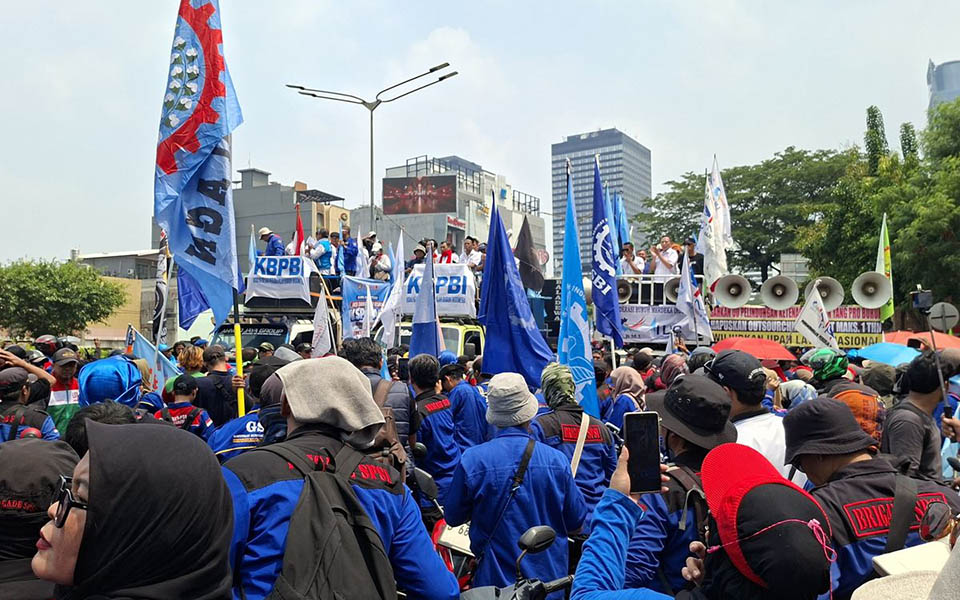


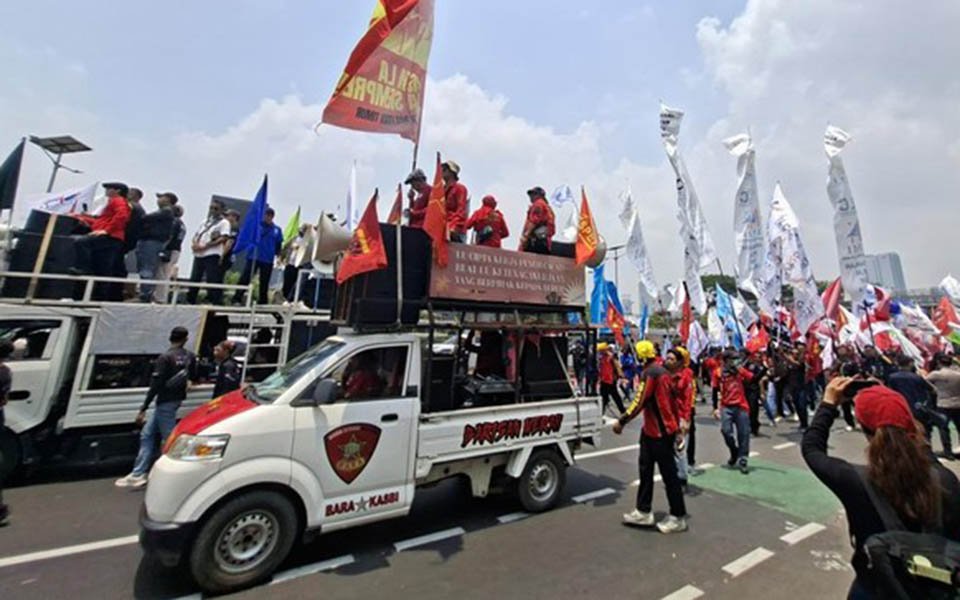
Jakarta – The Grand Coalition of Indonesian Workers' Struggle (KBPBI) is proposing a maximum temporary work contract (PKWT) period of one year in the Employment Protection Bill that is planned to be ratified in early October.
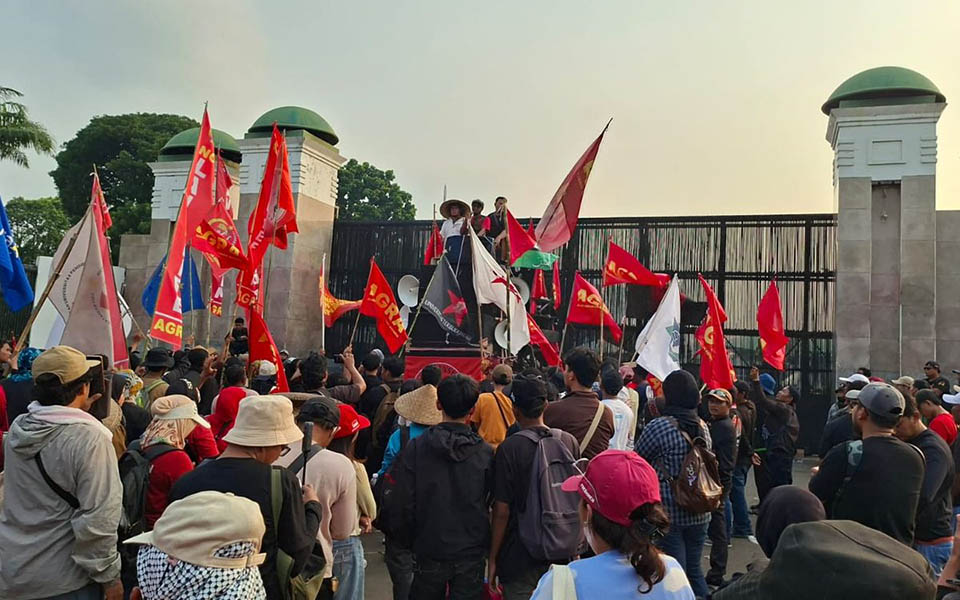
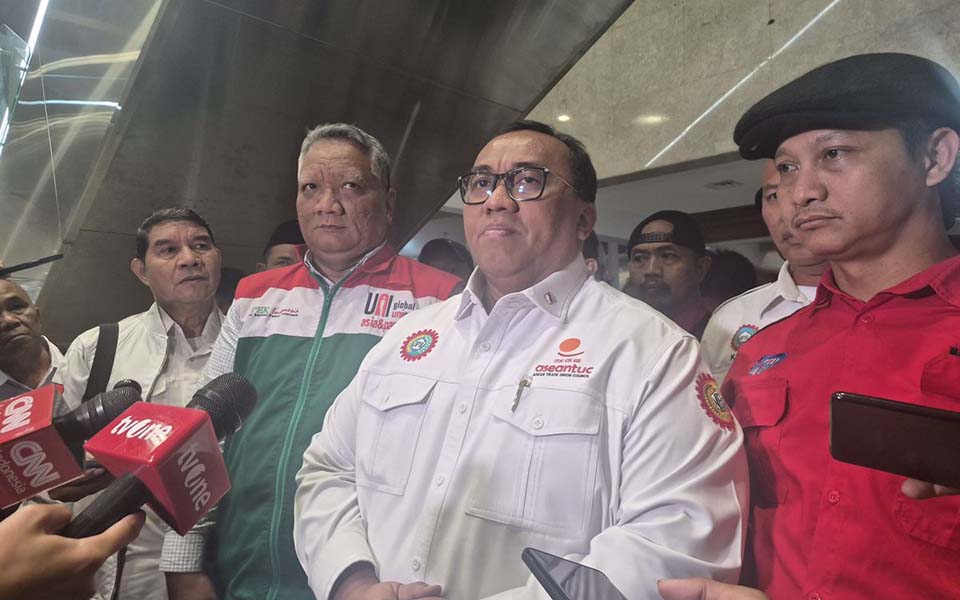
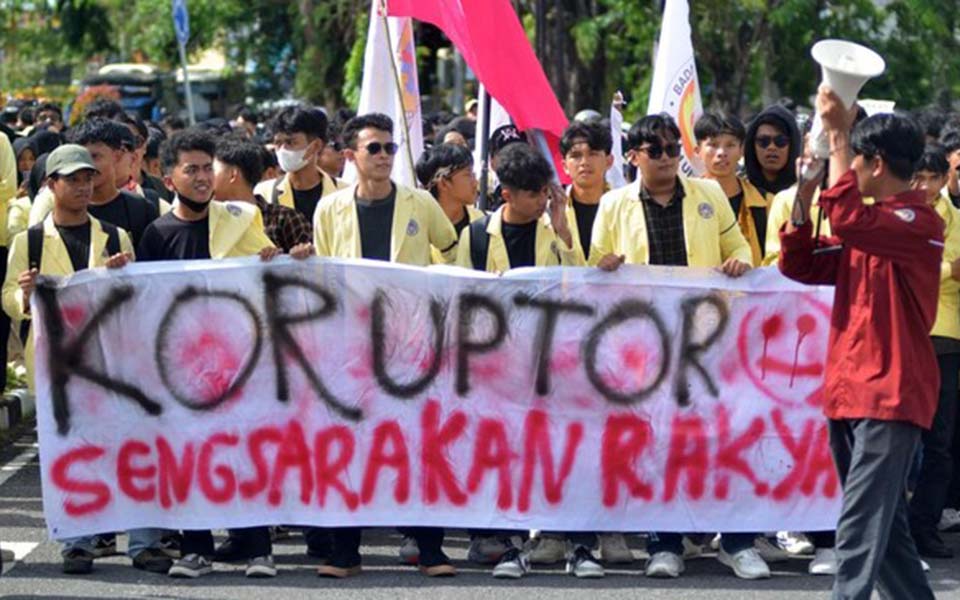
This was conveyed by the presidium of the KBPBI and Association of Indonesian Trade Unions Chairperson Rudi HB Daman at a labour demonstration in front of the House of Representatives (DPR) building in Senayan, Jakarta, on Tuesday September 29.
According to Daman, the PKWT period of five years under current laws has the potential for exploitation.
"The Grand Coalition demands that the PKWT should not be five years which has up until now resulted in exploitation and also many problems. The Grand Coalition proposes that the PKWT only be valid for one year with an extension period", said Daman in front of the DPR building on Tuesday.
Representing the thousands of workers who came to the demonstration, he said that PKWT workers should still have the right to 25 percent of their wages when the contract period ends.
"Their wages must still be as much as by 25 percent when the contract expires and receive compensation, like that", he continued.
Not only that, Daman also mentioned other demands made at today's demonstration including eliminating outsourcing, eliminating apprenticeships and providing a living wage.
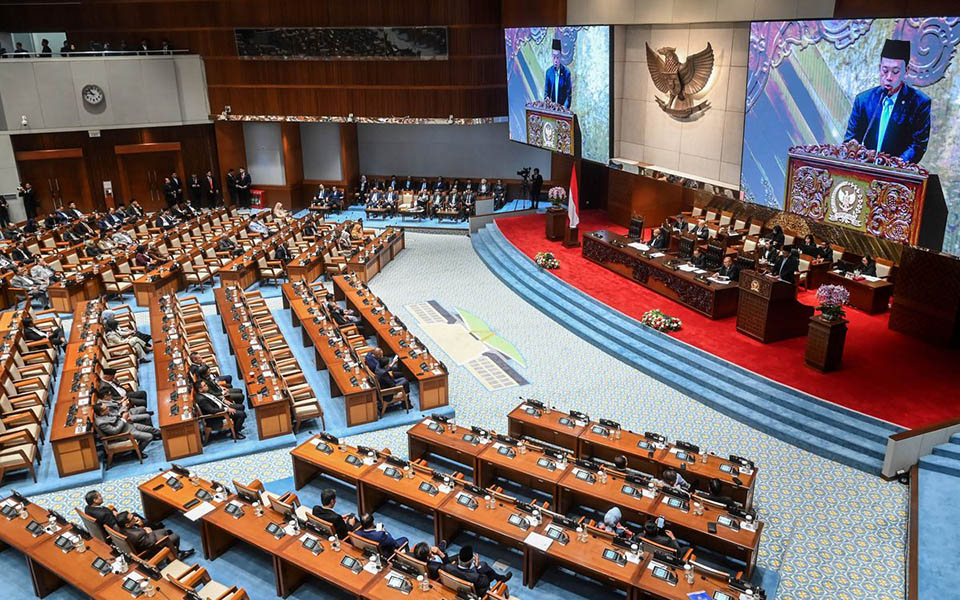
Rudi also revealed that trade unions would meet representatives of the DPR. They will ask about the aspiration process and at the same time they want to know what is in Problem Inventory List (DIM) for the Employment Protection Bill.
"Correct, correct, today it has been reported that we will be met with or be received by the DPR leadership for the purpose of indeed [we] want to ask about the process of our input and also what kind of DIM was conveyed by the government regarding the discussions on the Employment Protection Bill", said Daman.
He also emphasised their deadline for the formulation of the Employment Protection Bill. According to Daman, workers' want it to be done before October 30 or before the issuance of the Government Regulation in Lieu of Law (Perppu).
"Because if this is not completed, it will be in a Perppu, we don't want to be in a Perppu. Because if it's a Perppu it's just a one-sided presidential decision", he said.
If the demands put forward by workers are not realised in the Employment Protection Bill, Daman said they would hold a bigger action.
"Never mind the deadline, if the contents alone are not in accordance with these 11 points, friends are ready to hold a national action", said Daman.
The KBPBI, which consist of 18 trade union confederations, held the demonstration today in front of the DPR building to oversee the deliberations on the Employment Protection Bill resulting from the Commission IX meeting with the DPR's Legislative Body (Baleg).
The KBPBI believes that there is still a gap in substance between the formulation of the bill planned by the DPR and the formulation championed by KBPBI.
"The [new] labour laws must be a tool to protect working people, not a tool to further facilitate the exploitation of workers", wrote the KBPBI in an official statement on Thursday September 24.
The following are 11 demands were made at the demonstration:
1. Limit Fixed-Term Employment Agreement (PKWT) to work that is only temporary in nature and for a maximum of one year.
2. Limit outsourcing/outsourced labour, including not allowing it for labour supply; Only for contracting certain jobs between companies; Workers in companies receiving contracts for certain jobs must have Indefinite Term Employment Agreement (PKWTT, permanent) status as workers/labourers; The types of jobs that can be hired are supporting jobs, namely: cleaning services, security, catering, employee pick-up and drop-off drivers.
3. Limit apprenticeships to education participants (students) in accordance with the educational curriculum and this may not be a working relationship.
4. Protect digital platform workers by clarifying the status of the employment relationship between the worker and the applicator as employee and employer.
5. Supervise minimum wage regulations, including that the minimum wage must be calculated based on economic growth and inflation, strengthening wages for work periods of more than one year, rejecting the calculation of minimum wages with a certain index, setting Sectoral Minimum Wages that must be set at a minimum of 5% higher than the minimum wage.
6. Oversee termination of employment (PHK). Layoffs must be negotiated with the trade unions and if no agreement is reached they must go through an Industrial Relations Court decision which has permanent legal force. Wages will also continue to be paid every month until there is a final decision/appeal.
7. Implementation/Placement of Severance Reserve Funds for workers whose employment relationship ends will still be paid by the employer every month and the funds managed by Employment Social Security Management Agency (BPJS).
8. Establish a supervision commission from tripartite elements.
9. Allocate the State Budget (APBN) for job training.
10. Menstrual leave for female workers for a period of two days without requiring a sick note from a doctor and wages are still paid in full.
11. Violations of PKWT implementation will be subject to sanctions in accordance with applicable legal provisions.
(knf/isn)
[Translated by James Balowski. The original title of the article was "Tuntutan Demo Buruh Hari Ini, Minta PKWT Maksimal Satu Tahun".]