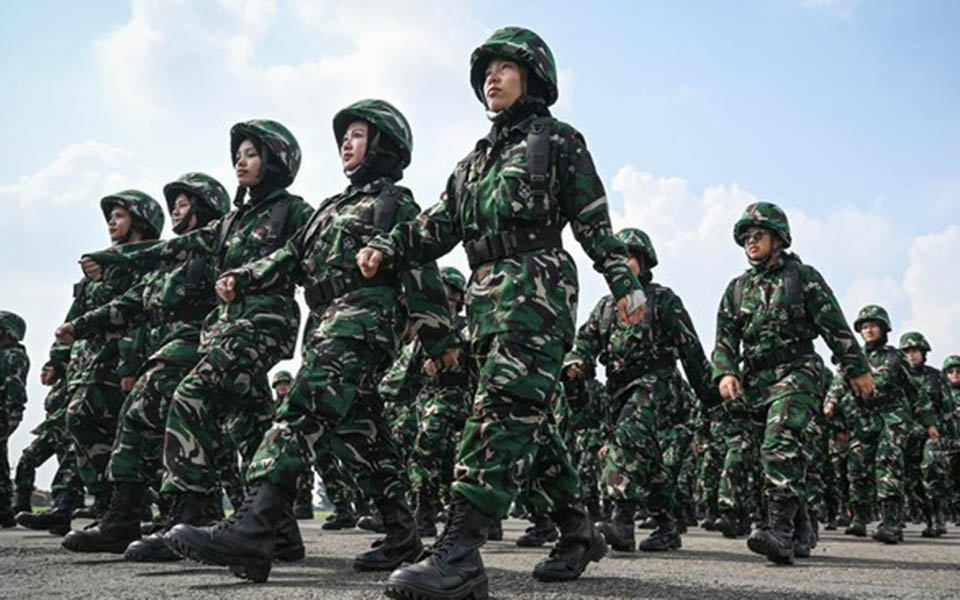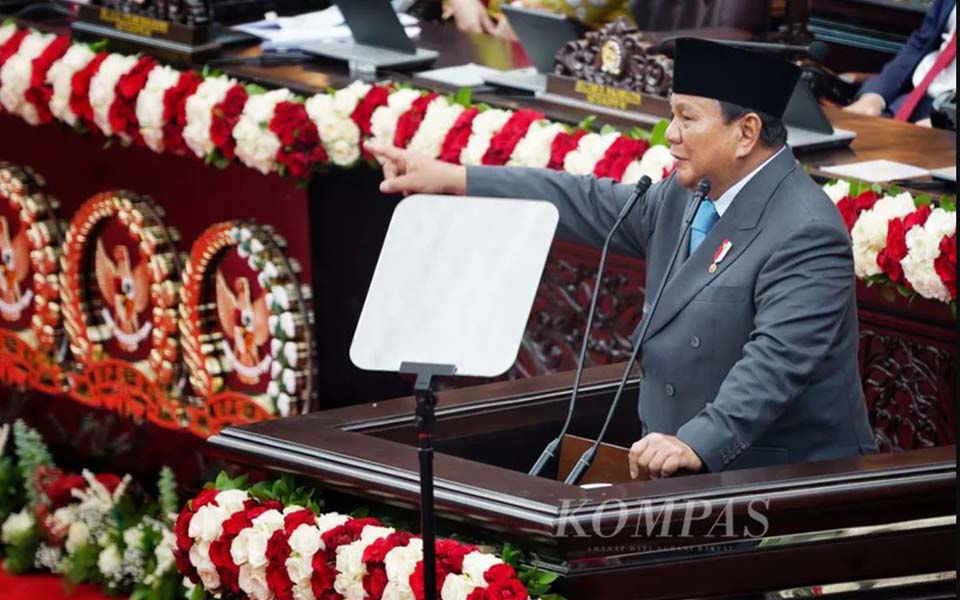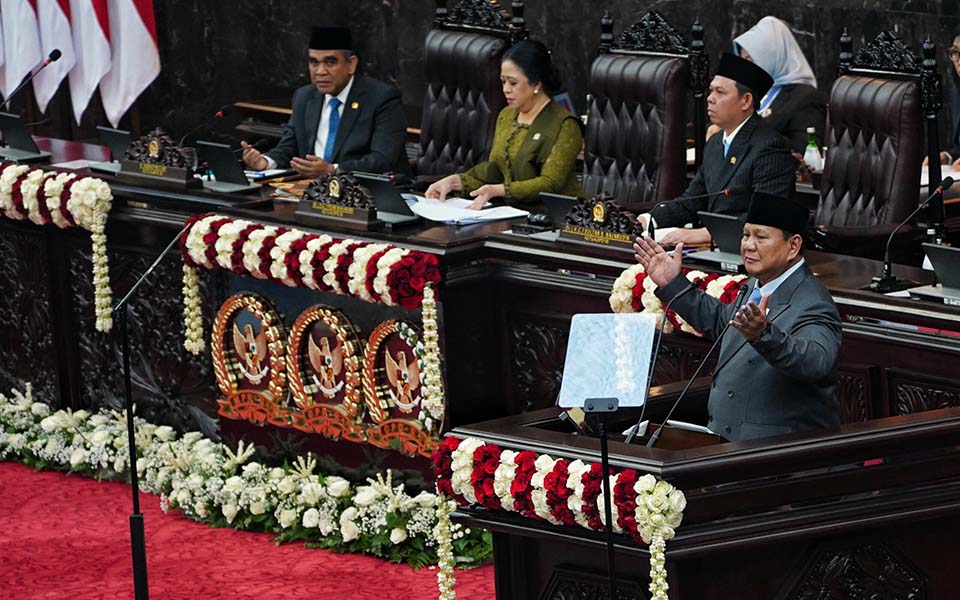


Jakarta – A grand ceremony was held in East Jakarta to mark the 81st anniversary of the Indonesian Military (TNI) themed "A TNI Strong with the People, An Indonesia that is Sovereign, Just and Prosperous ".
On this occasion, the Indonesian Legal Aid Foundation (YLBHI) and its regional Legal Aid Foundation (LBH) regional offices reiterates to the state that the TNI must adhere to its constitutional mandate. The TNI must remain professional, respect and uphold civilian supremacy and safeguard human rights.
The 1998 reformasi movement brought about a fundamental correction regarding the military's role in state affairs. Article 30, Paragraph (3) of the 1945 Constitution designates the TNI as an instrument of the state in the realm of defence. People's Consultative Assembly (MPR) Decree Number VI/MPR/2000 separated the TNI from the National Police (Polri), while MPR Decree Number VII/MPR/2000 declared that ABRI's (as the TNI was then known) socio-political role (dwi-fungsi) had caused the TNI to deviate from its proper role and hindered the development of democratic foundations. The 1998 reformasi was built upon a lesson learned at a high cost: arms must be subordinate to the law, and the law must be subordinate to the will of the people. That lesson is now being slowly erased.
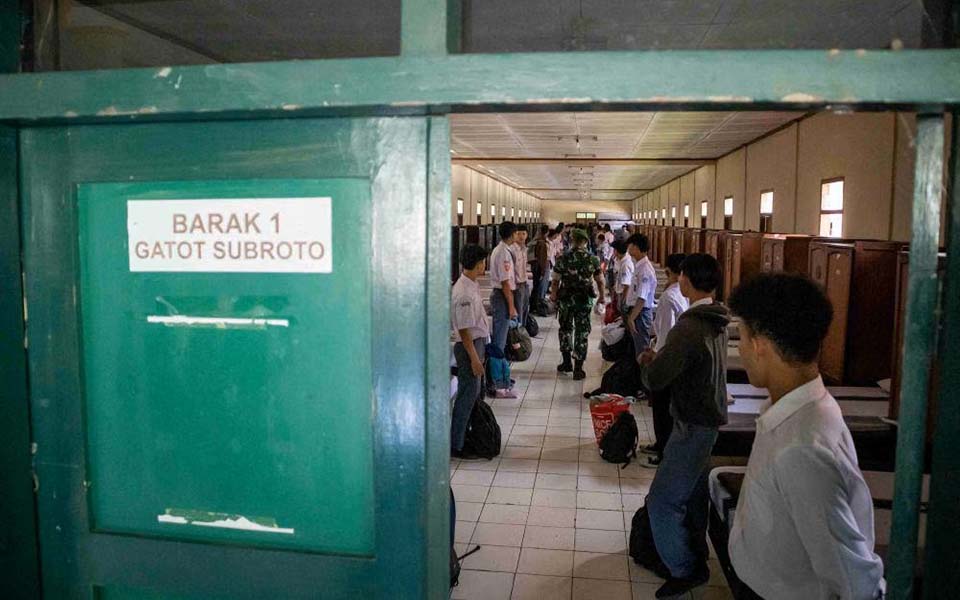
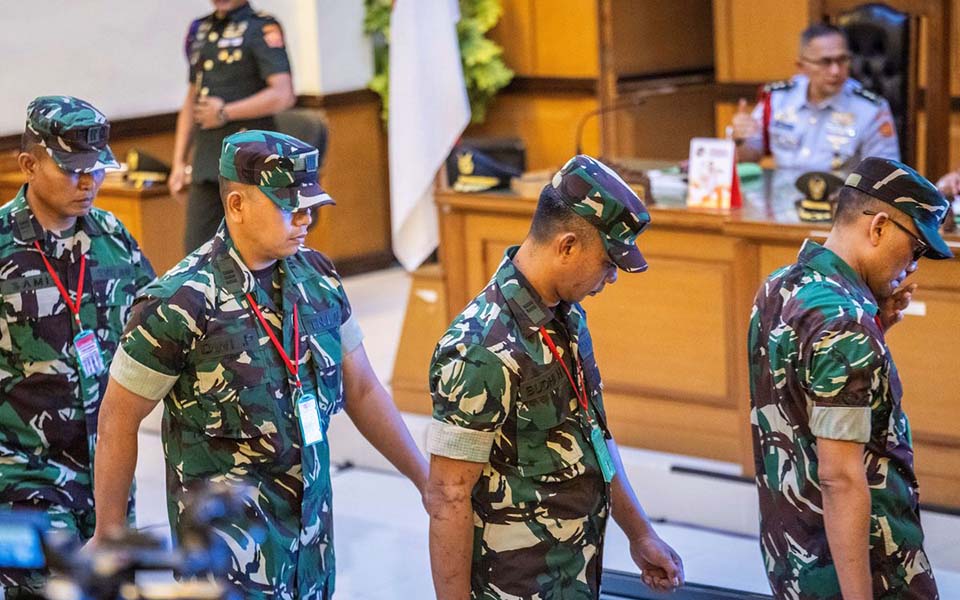
Between October 1, 2025, and September 30, 2026, the LBH-YLBHI documented 58 cases involving violence, restrictions on civil liberties and the seizure of livelihood spaces, while also mapping at least 192 Territorial Development Battalions (BTP) across 164 regencies and cities. Soldiers are now present in rice fields, in kitchens preparing free nutritious meals, in village cooperatives and even in the courtrooms where their own personnel are tried.
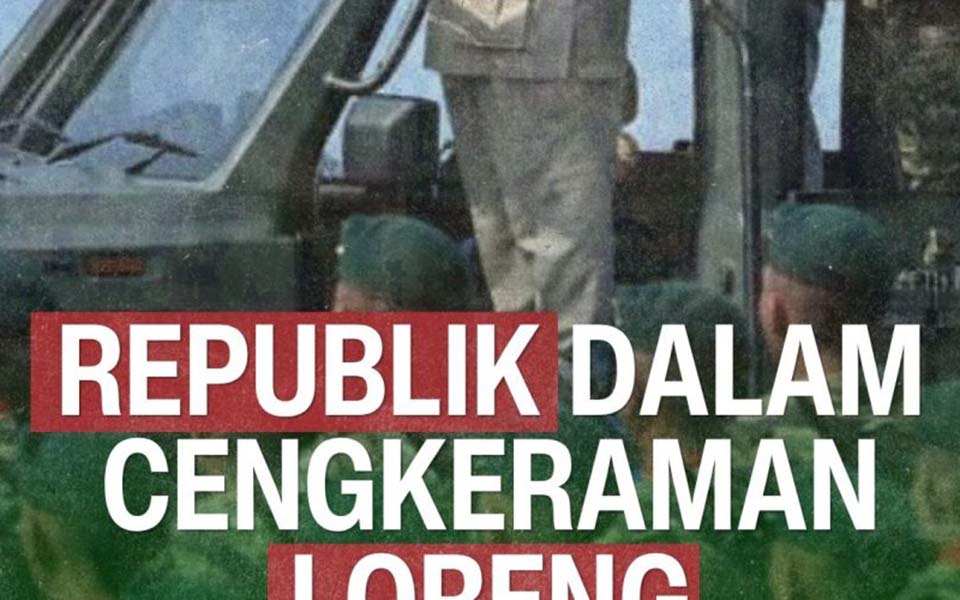
Today, the YLBHI released the findings of our monitoring conducted over the past year. This report titled The Republic in the Grip of Stripped Uniforms: The Expansion of the Military's Role and the Undermining of Reformasi was produced as part of civil society's push for the TNI and the state to improve themselves and adhere to the constitutional mandate.
The YLBHI notes that the expansion of the TNI's role during this monitoring period rests on three mutually reinforcing pillars: 1) territorial infrastructure; 2) human resources; and 3) multi-channel funding. New units provide personnel and facilities in the regions; civil assignments provide these units with tasks and access; and the budget enables both to function. All three were established without a publicly disclosed assessment of defence needs and without a formal political decision made by the state in conjunction with the House of Representatives (DPR). Once established, these pillars created fiscal obligations and institutional interests that are difficult to reverse.
Funding for this expansion does not flow solely through the Ministry of Defence (Kemhan) budget allocation, and even within that allocation, the actual expenditure differs vastly from the amounts stipulated in the State Budget (APBN) Law. While the defence budget in the 2025 APBN was set at 166.05 trillion rupiah, actual spending on the defence function reached 348.58 trillion rupiah, more than double the initial figure. This multi-channel funding pattern has serious implications for oversight. Funds allocated to other ministries, agencies, and local governments are not deliberated as defence spending, thereby bypassing the scrutiny designed for military expenditures.
In the case of ministry of Defence funding, the share of tenders in the procurement plan dropped from 41 percent in 2022 to 10.4 percent in 2025, whereas direct appointments and "exempted" procurement methods account for 55.2 percent of the 2025 budget ceiling. Notably, 148 BTP construction projects were executed through direct appointment.
This masking reveals what is termed political accumulation: the control over budgets, official positions and territorial networks that enhances the military's bargaining power in determining development priorities. This political capacity translates into economic access when territorial units are situated alongside mining concessions, unit cooperatives act as procurement providers worth 100-300 billion rupiah annually, and TNI-affiliated cooperatives sell security services to foreign companies. Civil positions held by active and retired officers also create opportunities for corruption, as evidenced by the recent case involving the National Nutrition Agency (BGN). Such practices also contravene the prohibition against soldiers engaging in business activities, as stipulated under Article 39 of Law Number 34/2004.
The YLBHI believes that the expansion of the TNI's role has placed the armed institution in a dangerous position regarding land and natural resource governance. The TNI can now simultaneously act as an enforcer of zoning regulations, a land user, a partner in managing seized assets and an entity holding coercive power. This concentration of roles creates a structural conflict of interest. Citizens defending their land find themselves facing security forces that simultaneously determine the status of, security and use the disputed property. This concentration is established through three channels: legal and administrative measures, territorial expansion and coercive operations.
The YLBHI believes that the militarisation of governance occurs when civil affairs are increasingly subject to intervention and reliance upon armed organisations for planning, implementation and financing. This process does not require a coup d'etat or the formal reactivation of ABRI's dual function. Instead takes place through decisions made by civilian officials themselves: presidential regulations, presidential instructions, ministerial circulars, memoranda of understanding and regional budget allocations. Therefore, the militarisation of governance needs to be measured against the principle of civilian supremacy which is the mandate of reformasi.
Thus, the YLBHI draws four key conclusions from this situation. First, the military's expansion into the civilian sphere is proceeding on a massive, planned and covert scale. Second, the accompanying human rights violations are structural in nature. Third, impunity has been institutionalised, shielding the chain of command. Fourth, the rule of law and civilian supremacy are being hollowed out from within.
Responsibility for this situation lies with the president as the holder of supreme authority over the TNI, the DPR for abdicating its oversight function and the ministers and regional heads who have handed over civilian affairs to the military. The YLBHI believes that, without immediate correction, Indonesia is moving toward a state governed by a command logic, where armed power can no longer be constrained by law or by the people.
Jakarta, October 5, 2026
YLBHI Management Board
- The military budget: https://bujetmiliter.today/
- Download full report: https://ylbhi.or.id/bibliografi/laporan/republik-dalam-cengkeraman-loreng-perluasan-peran-militer-dan-pengingkaran-reformasi/
- Video recording of the monitoring results launch: https://www.youtube.com/watch?v=AtVNP5e1ZKk&t=2766s
[Translated by James Balowski. The original title of the article was "Siaran Pers YLBHI dalam HUT TNI Ke-81 REPUBLIK DALAM CENGKERAMAN LORENG: Perluasan Peran Militer dan Pengingkaran Reformasi".]